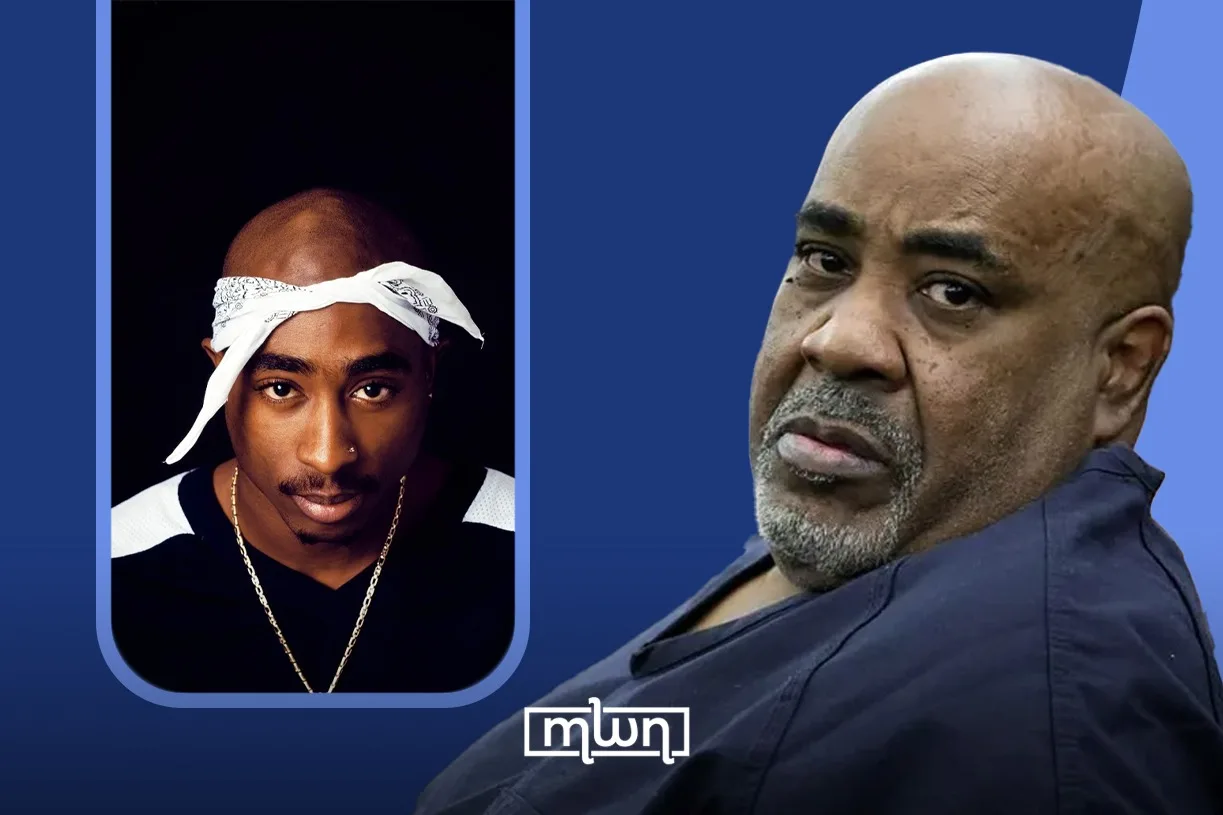
Rabat – Nearly 30 years after Tupac Shakur was killed in a Las Vegas drive-by shooting, the case that has fueled decades of theories and speculation is finally being tested in court.
Jury selection began Monday in the trial of Duane “Keffe D” Davis, the only person ever charged in connection with Shakur’s 1996 murder.
Prosecutors accuse Davis of orchestrating the killing, while Davis has pleaded not guilty. The trial is expected to begin hearing evidence on August 17.
The case could last several weeks and is expected to focus heavily on Davis’ own past statements, including material from a memoir he co-authored.
A Nevada judge ruled in June that the book could be used as evidence, despite Davis’ argument that parts of it were fictionalized.
That evidence could become one of the central battles of the trial: whether Davis’ descriptions of the night Shakur was killed amount to admissions or exaggerated storytelling.
The evidence that revived the case
For years, Shakur’s murder remained unsolved. The investigation gained renewed momentum after Davis made public statements about his alleged involvement in the events surrounding the shooting.
In his memoir, “Compton Street Legend,” Davis described being inside the white Cadillac involved in the shooting and discussed the weapon used to kill Shakur.
Prosecutors have portrayed him as a senior figure within the South Side Compton Crips who helped orchestrate the attack.
Davis has since disputed the significance of those statements and maintained that he was not responsible for Shakur’s death.
The defense has also challenged the use of a 2008 police interview, arguing that Davis believed the conversation was protected by an agreement with investigators.
A judge recently allowed prosecutors to use that interview at trial.
The competing interpretations of those statements could become crucial to the prosecution’s case.
What happened on the night Tupac was shot?
Shakur was in Las Vegas on September 7, 1996, with Death Row Records co-founder Suge Knight to attend the heavyweight boxing match between Mike Tyson and Bruce Seldon.
After the fight, surveillance footage captured Shakur and members of his entourage confronting and assaulting Orlando Anderson, a member of the South Side Compton Crips.
Hours later, Shakur and Knight were traveling through Las Vegas in a BMW when a white Cadillac pulled alongside them at a red light.
Gunfire erupted.
Shakur was struck multiple times. Knight was also injured but survived. Shakur died six days later, at just 25 years old.
Anderson was never charged in Shakur’s killing and died in a separate shooting in 1998.
The man now facing the jury
Davis is the only person charged in the case.
His arrest in September 2023 marked a dramatic development in an investigation that had remained dormant for years.
Prosecutors allege that Davis played a central role in organizing the shooting, while the defense disputes the state’s account.
If convicted, Davis faces a potential life sentence without parole.
The trial therefore represents more than an attempt to establish criminal responsibility.
It is also the first major courtroom examination of the evidence surrounding Shakur’s killing since the rapper’s death.
The Suge Knight question
Another potentially significant figure is Suge Knight, who was driving the BMW when Shakur was shot.
Knight survived the attack and has long been regarded as one of the most important surviving witnesses to the shooting. However, his involvement in the trial remains uncertain.
Knight has previously said he would not testify against Davis, and he has again indicated that he does not want to take the stand.
His absence could make the prosecution’s reliance on Davis’ own words and other evidence even more significant.
Why Tupac’s murder became bigger than the case itself
The circumstances surrounding Shakur’s death became inseparable from the turbulent world of 1990s hip-hop.
At the time, the genre was dominated by an increasingly hostile East Coast-West Coast rivalry, with Death Row Records and Bad Boy Records at the center of the conflict.
Shakur, who had joined Death Row, became one of the most visible figures associated with the West Coast scene.
His public feud with artists connected to Bad Boy Records, combined with tensions involving rival street gangs, helped create an atmosphere in which music, celebrity and street politics frequently overlapped.
His confrontation with Anderson on the night of the shooting has long been viewed as an important part of the chain of events that preceded his death.
Yet Shakur’s legacy extended far beyond those rivalries.
Born in New York and raised partly in California, he became a rapper, actor and political voice whose work addressed racism, poverty, violence and social inequality.
His death transformed him from one of hip-hop’s biggest stars into one of its most enduring cultural figures.
Now, almost three decades later, the questions surrounding his final hours are finally being placed before a jury.