Marrakech – The Port of Casablanca remains one of the busiest maritime hubs in Africa, and its cargo volumes are still climbing in 2026. The port processed 17 million tons of cargo in the first half of the year. In June alone, 3.53 million tons reached Moroccan shores through Casablanca, a 32% year-on-year increase since 2025, according to the National Ports Agency (ANP).
That volume comes with strain. The port handles roughly 35% of Morocco’s total port traffic, but it also faces frequent congestion and limited flexibility. Those pressures have pushed shipping giant Maersk to rework how cargo enters the country.
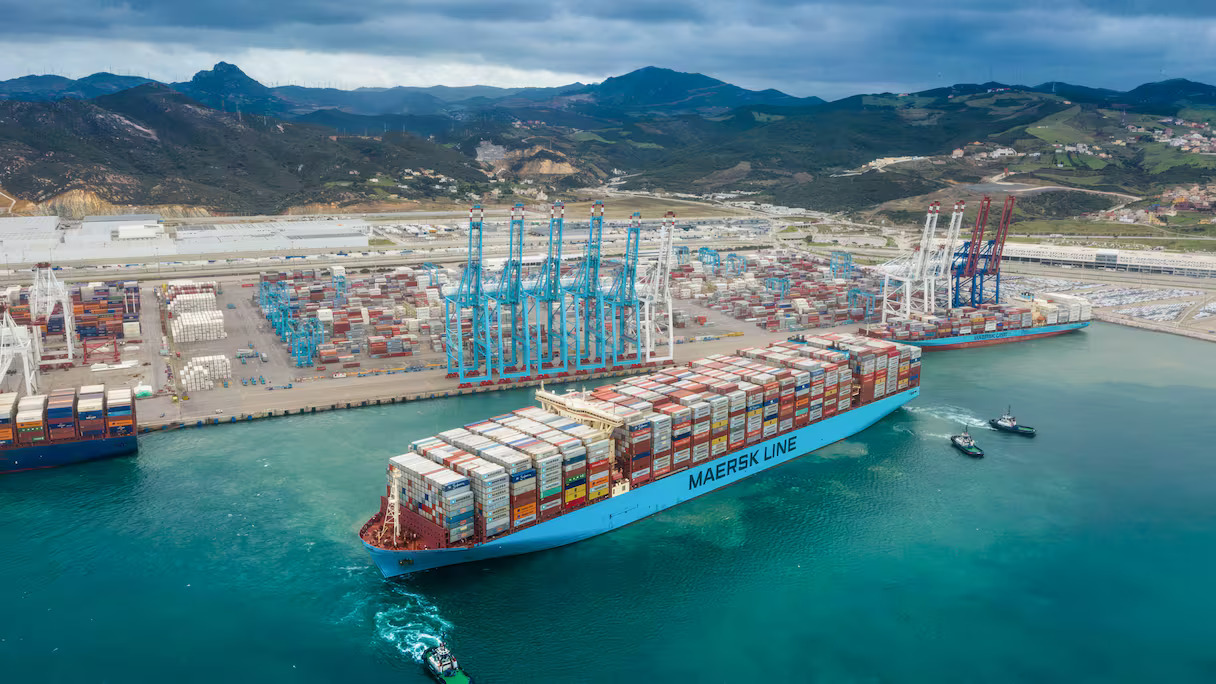
The company is now positioning Tangier as the primary maritime gateway into Morocco and connecting it to Casablanca through a high-frequency rail service. The aim is to give customers a faster, more predictable option with greater control over end-to-end flows.
Casablanca stays Morocco’s main industrial and commercial hub. Tangier, meanwhile, has grown into one of the most connected ports in the region and serves as a natural gateway to the rest of the world. Maersk’s ocean network reinforces that position, with frequent vessel connections linking Tangier to major global routes.
By integrating the two ports as a single proposition, supply chain managers can draw on stronger reliability, flexibility, and efficiency. The rail service between them is fully operational this August, with regular departures and predictable transit times that help customers manage inventory and planning while keeping goods moving.
The model extends beyond ocean shipping. Maersk offers a single point of contact across the full logistics journey, making it an end-to-end solution. It begins with the ocean leg into Tangier and a dedicated rail connection to Casablanca, then adds flexible customs clearance options, inland storage, and final-mile truck delivery.
The corridor also carries wider significance for trade between Morocco and Europe. It supports more resilient and diversified logistics, cutting dependence on any single mode of transport and improving overall flexibility.
For Maersk, the appeal lies in solving a recurring customer complaint. The solution “addresses a challenge we hear from customers every day,” according to Ruben Moratinos, the company’s Head of Sales Maghreb. Bringing the two ports together, he explained, creates “a simpler way to move cargo into Morocco’s main commercial center.”
Customers, in his account, gain “broader access to global trade flows,” more choices in managing their supply chains, and a setup that “can support growth as their business evolves.”
The timing matters as cargo volumes rise and congestion builds. The Tangier-Casablanca corridor pairs Tangier’s global connectivity with Casablanca’s industrial weight, giving businesses a more predictable and integrated transport option.
As trade flows expand, Maersk expects the approach to relieve pressure on crowded gateways while offering the operational control needed for future growth in Morocco and beyond.