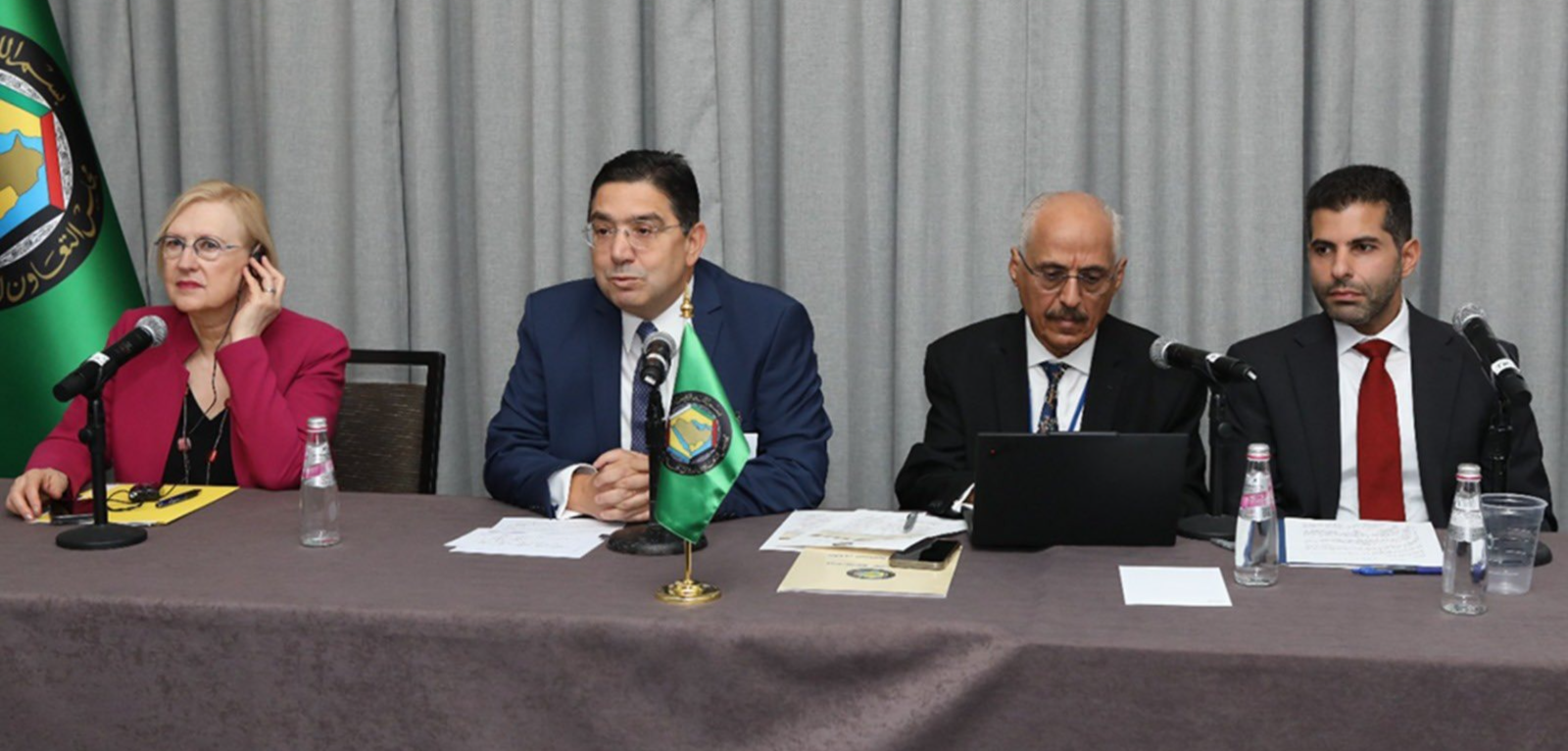
Agadir – Morocco’s Foreign Minister Nasser Bourita called for stronger international efforts to address the growing threat posed by non-state armed groups, warning that their activities are increasingly linked to terrorism, separatism, organized crime, and proxy conflicts.
Bourita made the remarks today in New York during a high-level meeting on “The Challenges Posed by Non-State Armed Groups,” organized by the Gulf Cooperation Council (GCC) on the sidelines of the 81st session of the United Nations General Assembly (UNGA).
During the meeting, Bourita reiterated Morocco’s position against non-state armed groups and condemned attacks carried out by Houthi militias against Saudi Arabia, as well as Iranian attacks targeting the security and stability of GCC countries.
He also condemned actions targeting freedom of navigation in maritime passages, saying such activities are intended to exert pressure and serve the interests of other parties.
Bourita warned that armed groups have become increasingly capable of taking advantage of weaknesses within states, operating across national borders, and linking conflicts in different regions.
The Moroccan minister pointed to the scale of the problem in Africa, where nearly 24,000 deaths have been associated with violence committed by armed groups over the past 12 months.
Read also: Morocco Reaffirms Support for Saudi Arabia After Houthi Attacks on Mecca
The minister also drew attention to the growing links between terrorist groups, separatist movements, and criminal networks. He raised particular concern over what he described as “proxy warfare,” in which states use armed groups to advance strategic interests.
According to Bourita, some states provide safe places to these groups, which he said violates international law and the principles of the UN Charter.
Against this backdrop, the Moroccan minister urged the international community to act before armed groups become more deeply established and to strengthen cooperation targeting their funding, access to weapons, illicit trafficking networks, and external support.
He also called for stronger accountability mechanisms and for closing gaps that allow groups operating as proxies to avoid consequences.
Bourita argued that countries supporting such groups should assume “the legal, political, and moral responsibility” for their actions and for the destabilizing consequences of their activities.
In his concluding remarks, the minister said international efforts should not focus solely on containing armed groups after conflicts emerge. Bourita called for measures to prevent them from influencing future conflicts and stressed the need to protect the sovereignty and territorial integrity of states, alongside the security and dignity of their populations.