Marrakech – Morocco’s diplomatic campaign at the United Nations picked up fresh momentum on Monday, as Foreign Minister Nasser Bourita worked the margins of the 81st session of the UN General Assembly in New York to widen the bloc backing the kingdom’s sovereignty over its Western Sahara.
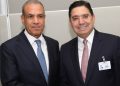
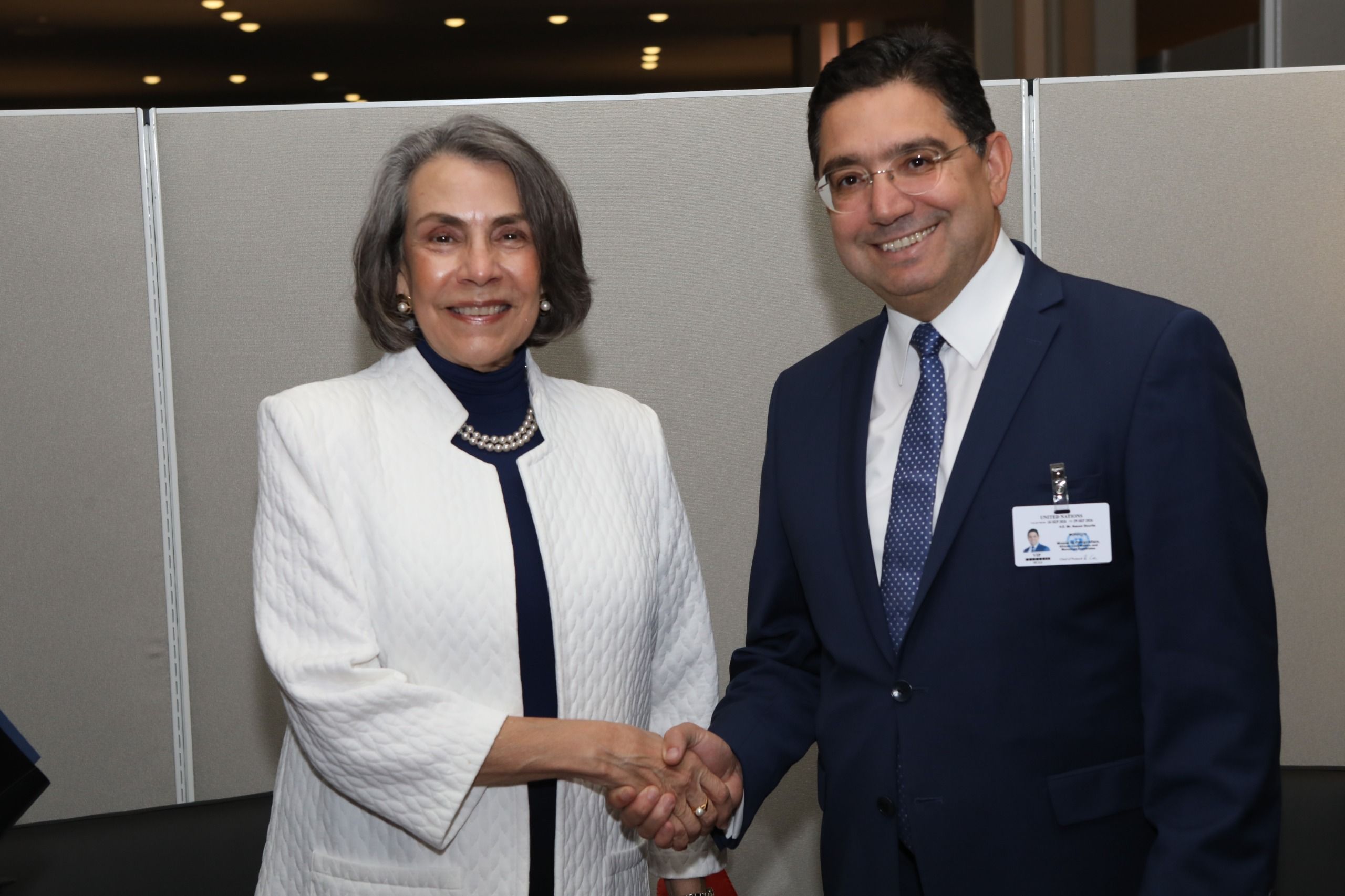
Bourita held talks with his Honduran counterpart, Mireya Agüero de Corrales, in an encounter that followed Tegucigalpa’s decision last April to suspend its recognition of the self-styled “Sahrawi Arab Democratic Republic (SADR),” the phantom entity the Polisario Front runs from Tindouf’s so-called “refugee camps” on Algerian soil. The two ministers reviewed bilateral cooperation and regional files of common interest.
Honduras had communicated that suspension to Bourita through an official letter from Agüero de Corrales, and it notified UN Secretary-General Antonio Guterres of the move.
Tegucigalpa grounded the reversal in a “sovereign decision, founded on its traditional attachment to the principles of non-interference and respect for the internal affairs of other states.”
The country, which first recognized the separatist construct in 1989 and reconfirmed that stance as recently as 2022, stood among the recent to abandon the ghost republic.
It was not alone in the run-up. Mali had formally withdrawn its recognition – held since 1980 – and declared Morocco’s autonomy plan the only serious and credible basis for a solution, while Bolivia severed all ties in February after Polisario-aligned forces lost the 2025 presidential election.
Colombia had reversed course in August, withdrawing its recognition of the self-proclaimed “Sahrawi Republic” after the inauguration of President Abelardo de la Espriella, whose government overturned the pro-Polisario line of his predecessor Gustavo Petro, while Ecuador and Panama had already pulled back in October and November 2024, respectively.
A Latin American front turns toward Rabat
Monday delivered two more blows to the separatist camp. In a joint communiqué, Chile declared its support for “the sovereignty of the Kingdom of Morocco over its entire territory, including the Sahara region,” and cast the 2007 autonomy proposal as the “just, lasting, and mutually acceptable political solution.”
The text was signed after Bourita’s talks with Chilean Foreign Minister Francisco Pérez Mackenna, held in the presence of Chilean President José Antonio Kast.
Santiago went beyond rhetoric. It pledged to “translate its support at the bilateral level” and to promote economic and commercial cooperation in the Western Sahara, strengthening investment, trade, and productive-development ties.
Chile welcomed Security Council Resolution 2797 (2025) and joined calls for talks without preconditions on the basis of Morocco’s plan. The two ministers also signed terms of reference to open free trade negotiations.
Panama moved in lockstep. Its own joint communiqué backed “the sovereignty of the Kingdom of Morocco over its entire national territory” and confirmed that its embassy “fully exercises its consular competencies over the entire Moroccan territory.”
Panama welcomed the momentum driven by Resolution 2797 (2025) and judged the 2007 autonomy plan “the only serious, credible, and realistic basis” for a settlement.
Panamanian Foreign Minister Javier Eduardo Martínez-Acha Vásquez told Morocco’s state news agency MAP that his country had resolved to support the plan, convinced the Sahara should remain “under Moroccan sovereignty.”
He described relations between Rabat and Panama City, under King Mohammed VI and President José Raúl Mulino, as at an “unprecedented level of excellence.”
Washington reinforced the trend. Congressman Joe Wilson, who chairs the Morocco Caucus in the US Congress, affirmed after meeting Bourita that the United States attaches “capital importance” to Morocco’s role, under King Mohammed VI, for peace and stability across Africa. “We are very grateful to His Majesty the King,” he told reporters.
Wilson praised the “leadership of President Donald Trump in favor of Moroccan sovereignty over the Sahara” and tied the region’s future to Rabat’s control of its southern provinces. “The very concept of peace, stability, and prosperity rests on Morocco’s sovereignty over the Sahara,” he argued.
On X, he went further, revealing that among the topics he raised with Bourita was the need to designate the Polisario Front a terrorist organization.
The cascade fits a trajectory that Moroccan author and political analyst Samir Bennis traced on Tuesday. Chile’s stance, he wrote, is “another slap” for the commentators and columnists who “prefer to look the other way and ignore the inexorable and evident international dynamic” favoring Moroccan sovereignty. With Santiago on board, he counted more than 135 countries backing Rabat’s position in one form or another.
Bennis reserved his sharpest language for Algiers and its enablers. However many billions the “Algerian regime and its allies” have spent to prolong what he branded “the great swindle of the century,” he argued, they have “failed resoundingly.”
La posición de claro apoyo de Chile a la soberanía marroquí sobre el Sáhara supone una bofetada más para todos aquellos tertulianos y columnistas que prefieren mirar hacia otro lado e ignorar la inexorable y evidente dinámica internacional favorable al reconocimiento de la…
— Samir Bennis (@SamirBennis) September 22, 2026
He dated the shift to Resolution 1754 in 2007, its acceleration to Resolution 2440 in 2018, and its culmination in Resolution 2797 last year. Their venting through “hoaxes and accusations,” he wrote, would not slow a country advancing “with a firm and steady step” against a demonization campaign waged in Spain.
The New York sequence lands against a longer retreat. More than 80 states once recognized the separatist entity in the late 1970s and early 1980s; the roster has since collapsed to a rump of ideological holdouts and Algerian clients, with no new recognition extended since 2011.
In Africa, the African Union’s Executive Council voted in July 2024 to bar the Polisario from international summits, and major powers have refused to seat it alongside the continent. A paper state with no territory, no functioning institutions, and no UN seat is watching its diplomatic scaffolding come apart, capital by capital.