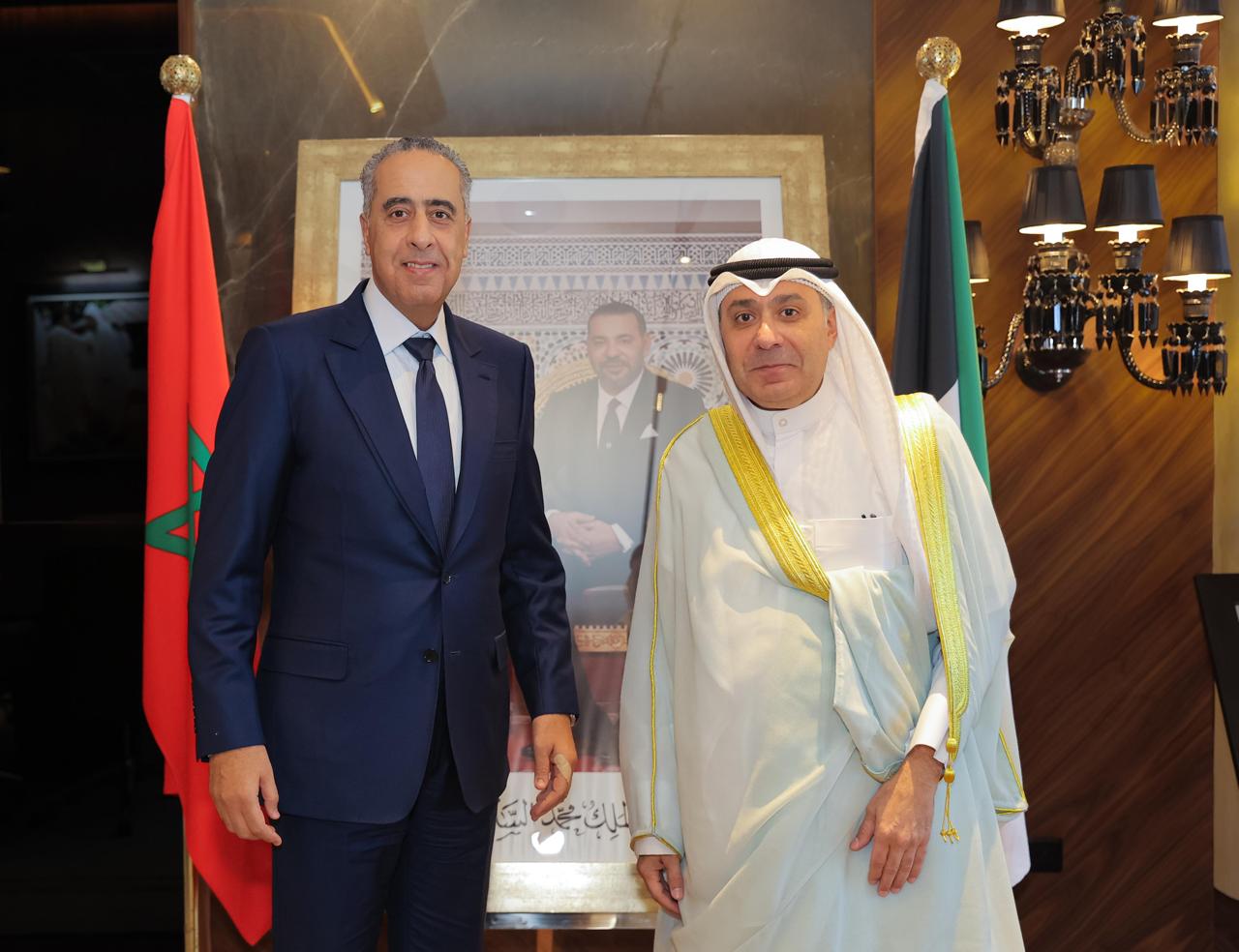
Marrakech – Abdellatif Hammouchi, Morocco’s Director General of National Security and Territorial Surveillance (DGSN-DGST), received Kuwait’s ambassador to Rabat, Ahmed Abdel Rahman Al-Bakr, in the capital on Thursday.
A statement from the DGSN-DGST described the meeting as a reflection of the “solid and historical fraternal ties” between Morocco and Kuwait, along with a shared interest in moving the partnership toward “broader and more comprehensive levels.”
The reception fell within a framework of “continuous coordination” to reinforce bilateral cooperation, particularly in “security fields of common interest.”
The two sides used the encounter to review joint working mechanisms capable of responding to “emerging security challenges” and to strengthen direct communication channels between Kuwaiti agencies and their Moroccan counterparts.
According to the statement, Morocco’s security services have become “a highly credible and trusted partner” within international security cooperation frameworks. The talks also gave both sides an opportunity to examine ways of expanding the exchange of expertise across police specializations, including efforts against transnational organized crime and terrorist threats.
Joint training programs and capacity building formed another part of the discussion, with both sides pointing to their value for the professional competence and operational readiness of security personnel in the two countries.
The DGSN-DGST framed the meeting as part of a strategic orientation toward “sustainable openness” to the regional and international environment and toward consolidating Arab security partnerships.
At its close, the two sides renewed a commitment to intensify field and operational coordination in security and intelligence work. They also agreed on the need to institutionalize the cooperation through a security memorandum of understanding, to be signed “in the near future.”
The meeting comes relatively early in Al-Bakr’s posting. The Kuwaiti diplomat presented his credentials to King Mohammed VI at the Royal Palace in Rabat on June 4, alongside a group of newly accredited ambassadors, placing security cooperation among the prominent bilateral files of his mission’s opening months.
The prospective memorandum fits a wider push by Rabat and Kuwait City to formalize institutional ties. In February 2025, Morocco’s Supreme Council of the Judicial Power and its Kuwaiti counterpart agreed to expand cooperation in training and the exchange of expertise, and began preparing a memorandum to define future areas of judicial cooperation.
Mohamed Abdennabaoui, president delegate of Morocco’s council, held talks with Kuwait’s justice minister on the same file.
The two countries also work together within broader Arab security structures. At the 42nd session of the Council of Arab Interior Ministers in Tunis in February 2025, attended by senior Moroccan Interior Ministry and judicial-police officials, Kuwait assumed the council’s rotating presidency.
That session addressed cooperation against cybercrime and narcotics, along with mechanisms for greater information-sharing among Arab law-enforcement bodies.
Kuwait has recently aligned itself with Morocco on specific incidents. In May, its Foreign Ministry condemned the attack targeting Es-Smara by the separatist Polisario Front and reaffirmed its solidarity with Morocco.
On July 6, Kuwait again expressed solidarity after Moroccan authorities announced they had foiled terrorist plots, backing measures taken by Rabat to protect the country’s security, sovereignty, and stability.