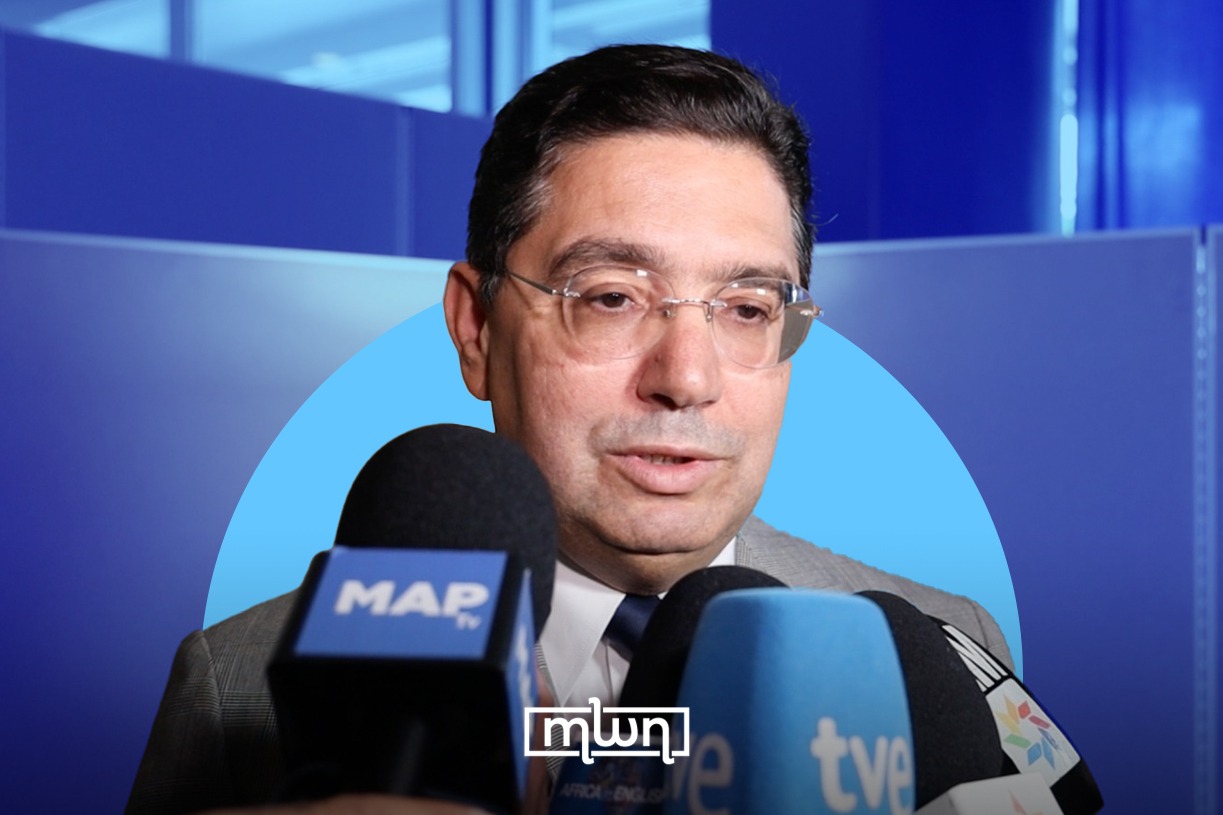
Casablanca – Morocco-Spain relations will continue to be guided by the principles set out in the April 2022 Joint Declaration, adopted after discussions between King Mohammed VI and Spanish Prime Minister Pedro Sánchez, Foreign Minister Nasser Bourita said Thursday in New York.
Speaking to reporters after meeting his Spanish counterpart, José Manuel Albares, on the sidelines of the 81st session of the United Nations General Assembly (UNGA), Bourita said the relationship is based on partnership, mutual respect, and dialogue.
He also referred to principles aimed at avoiding unilateral actions and unexpected developments between the two countries.
Bourita said these principles allow Morocco and Spain to focus on areas where they agree while managing disagreements through dialogue and consultation. He said there are “many issues” on which both sides agree and can make progress, while differences should be addressed in a spirit of good-neighborliness and cooperation.
Migration was among the issues discussed. Bourita said Morocco’s position remains clear on the return of irregular migrants and unaccompanied minors. If they are not returned, he said, responsibility lies with Spain rather than Morocco.
The minister attributed the continued difficulties surrounding returns to what he described as “controversies, obstacles and difficulties” on the Spanish side.
Read also: Spain Says It Will Work with ‘Any Government’ to Maintain Good Ties with Morocco
His comments come after weeks of tensions surrounding migration and the status of Ceuta and Melilla. Spanish authorities have been coordinating with Morocco following the mass movement toward Ceuta at the end of July, while Albares has maintained regular contact with Bourita over migration and border security.
Spanish officials have also made several statements on the bilateral relationship in recent weeks. Albares said Spain would work with “any Moroccan government” after the September 23 legislative elections to maintain good relations with Rabat. He has also rejected discussions with Morocco over the status of Ceuta and Melilla.
Spain’s Agriculture Minister Luis Planas separately backed continued EU trade agreements with Morocco, saying the relationship between Rabat and Madrid is important and should not be addressed through what he called radical rhetoric.
Against this backdrop, Bourita criticized statements by Spanish political figures targeting Morocco.
“Partnership cannot be built on unfounded indictments and sterile rhetoric,” he said, arguing that migration, the bilateral partnership and the neighborhood relationship cannot be managed through accusations or political one-upmanship.
He added that some political figures in Spain do not appreciate the value of the partnership or understand Morocco’s position on migration.
Bourita said the two countries should continue using dialogue and consultation to manage disagreements while preserving cooperation in areas of shared interest.