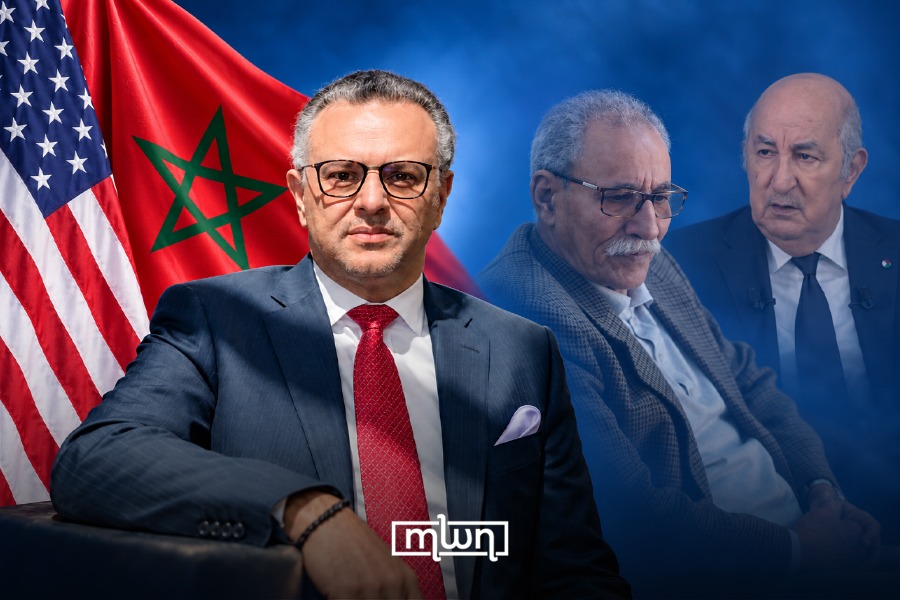
Rabat – US Senior Advisor Massad Boulos has acknowledged that the Polisario Front is obstructing the UN-led political process seeking to find a just, realistic, and agreed-upon political solution to the dispute over Western Sahara.
Boulos made his remarks in an interview with France 24, where he said the US is still waiting for Polisario to provide its “feedback” on Morocco’s Autonomy Plan, which the international community has increasingly defined as the most realistic and genuine political solution able to end the long-standing dispute.
Acknowledging that Polisario is hampering the process, Boulos said there is no way “we can achieve” a mutually acceptable solution amid the current situation.
The remarks further emphasize Polisario’s refusal to engage constructively with the UN-led process, defying UN Security Council Resolution 2797, which urged all parties to engage in the process and contribute to finding a political solution, taking the Autonomy Plan as a genuine basis.
Algeria’s regime continues to back Polisario’s reluctance as it supports, finances, shelters, and arms the Front to challenge Morocco’s territorial integrity and sovereignty over its southern provinces in Western Sahara.
For years, Algeria’s regime has continued to defy UN resolutions and refused to take part in the UN-led political process as a main party to the dispute, alleging that it is merely an observer.
Algiers also claims that Morocco and Polisario should find a solution to the Western Sahara dispute, rejecting its responsibility in the dispute.
UN Security Council Resolution 2797 of October 2025, however, put an end to the Algerian claims, clearing the ambiguity and urging it to engage in the process as a main party.
Morocco has also been clear that Algeria’s involvement is key, as Rabat does not consider Polisario a legitimate party to represent Sahrawis in negotiations.
After the UN resolution and growing international pressure, Algeria appears to be hiding behind Polisario and puppeteering the separatist group to avoid shouldering its responsibility in the UN-led process. The approach seeks to make it appear that Polisario is the party refusing to provide feedback or engage with the process.
The reality is that Polisario has long been a mechanism used by Algeria to challenge Morocco’s territorial integrity and sovereignty over its southern provinces, while continuing to push outdated self-determination and referendum claims. By hiding behind Polisario, Algiers seeks to maintain the impression that the dispute is primarily between Morocco and the separatist group, while avoiding its own responsibility as a key party to the dispute.
The France 24 journalist asked Boulos clearly whether it is because of Algeria that Polisario is not responding to the UN resolution and the Autonomy Plan, suggesting that it is because of Algeria that the separatist group is silent since Algeria does not want it to respond.
Boulos, a diplomat, had to come up with a diplomatic way to avoid directly answering a similar question, stating that Algeria’s regime has been a “good partner” to the US.
“We sincerely appreciate the role that the president of Algeria and the government of Algeria have been playing. They cannot impose a solution on the Sahara… They can encourage, definitely, and we believe that they have been encouraging…”
Asked if he is optimistic, Boulos acknowledged that there is no imminent solution that can be felt or touched due to the lack of progress in the process, with Polisario’s position continuing to hamper efforts.
Algeria’s regime engaged alongside the other parties to the dispute in talks facilitated by Washington in February.
Despite the resolution’s firm response to Algeria’s reluctance to shoulder responsibility and contribute to the UN-led process, it has been clear that Algiers does not want to acknowledge its role or shoulder its responsibility, as it continued to claim itself as an observer to the dispute.
In the interview, Boulos also sent a clear message to Algeria as he reiterated the US’ clear position, recalling US President Donald Trump’s proclamation in support of Morocco’s sovereignty over its southern provinces in Western Sahara.
He said the US worked hard to secure Resolution 2797, describing it as historic and recalling the importance of the Autonomy Plan, with Boulos stating that three rounds of negotiations took place since the resolution’s adoption while acknowledging that they were constructive and productive.
He, however, acknowledged the lack of any solution due to Polisario, backed by the Algerian regime.