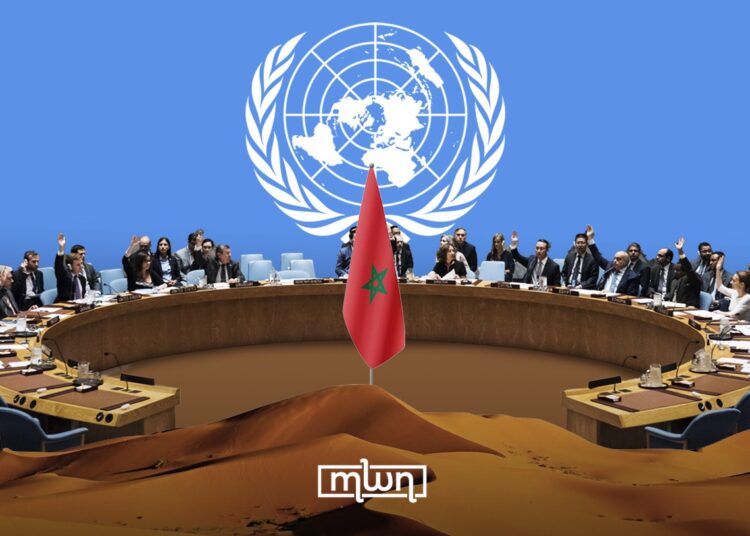
Several petitioners at the United Nations on Tuesday welcomed growing international support for Morocco’s Autonomy Plan for the Sahara, saying Security Council Resolution 2797 has established the initiative as the ultimate reference framework for the UN-led political process.
Speaking before the UN General Assembly’s Fourth Committee in New York, former Peruvian Foreign Minister Miguel Angel Rodriguez Mackay said the international community is increasingly converging around autonomy under Moroccan sovereignty as a political solution to the regional dispute over the Sahara.
More than two-thirds of UN member states now support the initiative, Mackay said, adding that Resolution 2797 consolidated this trend by establishing Morocco’s Autonomy Plan as the reference framework for continuing the political process under the United Nations’ exclusive auspices.
“More than two-thirds of the international community have agreed to support the Autonomy Plan under Moroccan sovereignty as the only political solution to the regional dispute over the Sahara,” Mackay said.
He added that the UN Security Council has established the plan “as the sole reference framework for relaunching the political process” aimed at defining the modalities for implementing an autonomy solution.
Portuguese jurist Ana Roios, meanwhile, said Resolution 2797 reaffirmed the Security Council’s support for Morocco’s Autonomy Plan and called on the parties to continue discussions “on the basis of the Moroccan Autonomy Plan” to reach a “definitive and mutually acceptable political solution.”
Addressing international support for the initiative, Roios recalled that at the 15th EU-Morocco Association Council, “the European side welcomed the adoption of Resolution 2797 and reiterated the European Union’s commitment to supporting the UN framework for settling the dispute.”
She added that several EU member states, including France, Germany, and Finland, have supported Morocco’s initiative as the basis for a just, lasting, negotiated solution.
Senegalese geopolitical analyst Abdoul Latif Aidara said Resolution 2797 marked a turning point in how the issue is addressed at the United Nations.
He pointed to the “successive recognitions of the Moroccan character of the Sahara” and the “successive withdrawals of recognition of the separatist entity” as signs of a major realignment in international positions.
Morocco’s Autonomy Plan “offers a serious, credible, and realistic basis” for reaching a definitive settlement to the regional dispute while promoting stability, integration, and development across the Maghreb and Africa, Aidara concluded.
Several speakers at the Fourth Committee meeting said Resolution 2797 confirmed an increasingly favorable international dynamic toward Morocco’s Autonomy Plan, which they described as the preferred path toward a lasting and mutually acceptable political solution to the dispute over the Sahara.
MWN with MAP