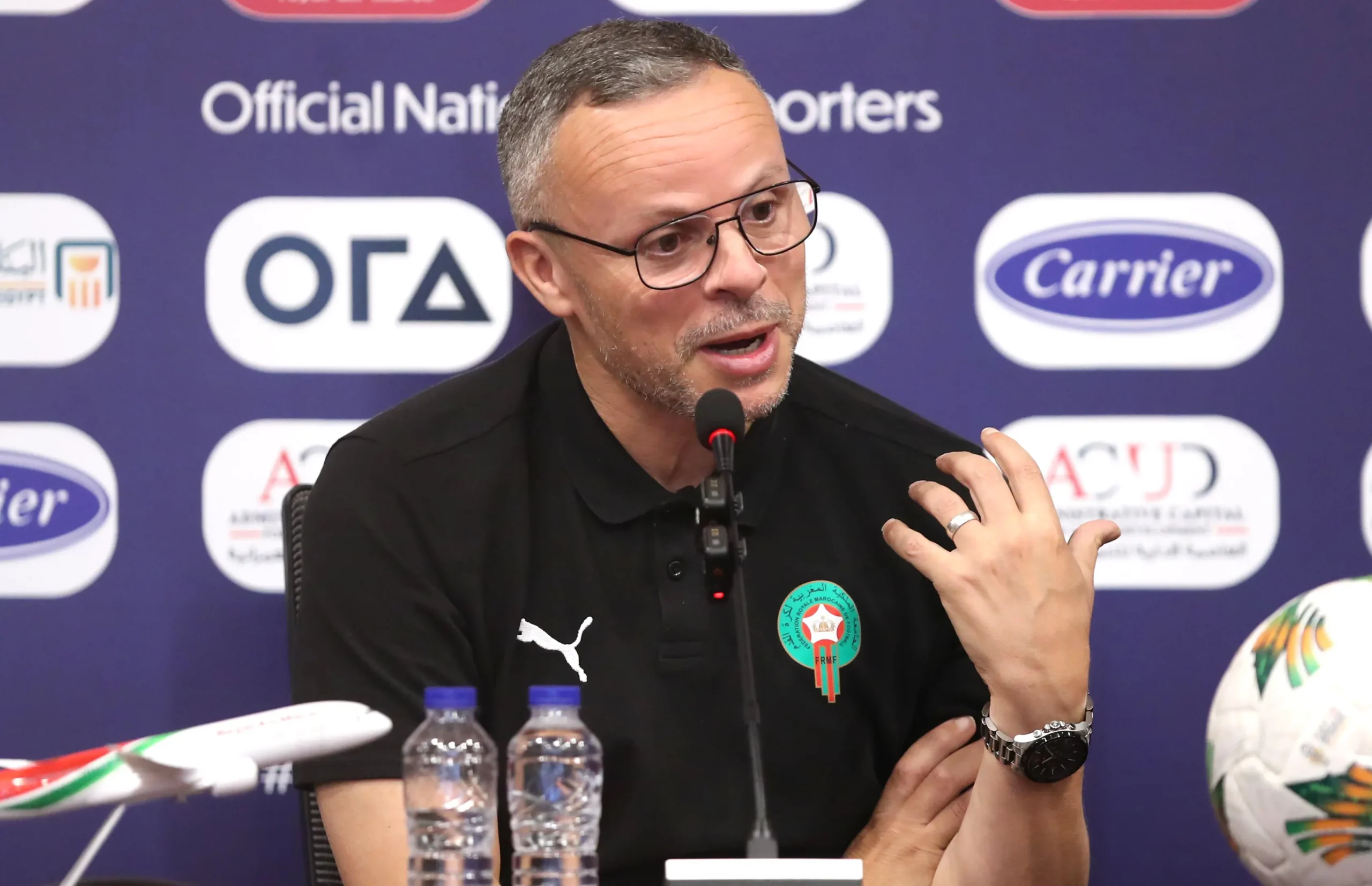
Rabat – Morocco head coach Mohamed Ouahbi has called for international windows to be used more efficiently because national-team staffs often have little time to prepare players between travel, matches, and recovery.
Ouahbi addressed the issues on Friday at the CAF strategy Conference in Cape Verde, where coaches and football officials discussed national-team preparations and the challenges created by the international calendar.
He said long-distance travel can take a significant portion of a camp away from technical and tactical work. Morocco experienced that problem during one gathering, when logistical constraints led the staff to reduce the schedule from four matches to three.
The revised program included two competitive fixtures and one friendly.
Ouahbi used travel to South Africa as an example. A round trip can take roughly 12 hours, which makes it difficult to organize four matches within the same period while still giving players enough time to train and recover.
The Morocco coach also argued that longer camps can improve the quality of preparation because players have more time to understand and apply the staff’s tactical instructions.
Arsène Wenger, FIFA’s Chief of Global Football Development, raised similar concerns during the session about the amount of work national-team coaches must complete in a short period. Ouahbi said video analysis has therefore become an important part of preparation alongside work on the training pitch.
Another challenge, according to Ouahbi, is finding opponents who serve the team’s sporting objectives.
He stressed that Morocco need matches against strong national teams because high-level opposition provides a better test for players and allows the technical staff to evaluate their progress under more demanding conditions.
The discussion formed part of the final day of CAF’s Strategy Conference in Santa Maria, Sal Island.
The three-day event, held from October 7 to 9, brought together football officials, national-team coaches, and international experts to review lessons from the 2026 World Cup and discuss priorities for African football in the years ahead.