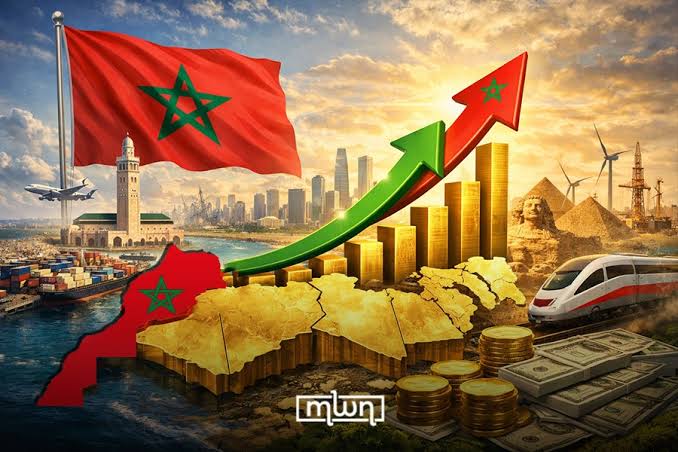
At a time when many countries are reassessing their ambitions under the pressure of economic and geopolitical upheaval, King Mohammed VI used his October 9 address to Parliament, marking the opening of Morocco’s 12th legislative term, to highlight new opportunities for economic advancement and a stronger international standing, building on the Kingdom’s achievements and its capacity to pursue reforms and develop the tools needed to meet future challenges.
The King’s reference to an exceptional period offering opportunities that may not come again was more than an expression of optimism. It defined the nature of the period Morocco is entering and the responsibilities that come with it.
As outlined in the speech, Morocco must not only continue the projects and reforms already underway but also capitalize on its achievements to attain greater economic strength and improve its ability to make decisions and implement policies in a world where competition for resources, technology, and markets is becoming increasingly intense.
The speech also reflected the continuity of the monarchy’s strategic vision, extending beyond government terms and electoral competition, while placing responsibility on elected institutions to translate the state’s broader priorities into tangible results. The opportunities identified by the King will not automatically produce achievements; they require effective administration and decisions commensurate with the country’s ambitions.
Pride in Moroccan identity as a foundation for confidence in the future
King Mohammed VI chose to revisit his 2014 declaration: “As a Moroccan, nothing else is more valuable to me than the sense of belonging to this nation.” He reaffirmed the connection between this sentiment and Morocco’s long history as a nation, its historic monarchy, its authentic religious identity under the Commandership of the Faithful, and its distinctive cultural heritage enriched by diverse influences.
This affirmation preceded the discussion of economic and institutional priorities, establishing a connection between the Kingdom’s future and the foundations of its historical continuity, while presenting national belonging as a source of responsibility rather than merely a remembrance of the past.
Moroccan identity, rooted in religious, cultural, and institutional foundations, was not presented as separate from modernization and openness. Instead, it served as a basis for confidence in the country’s ability to continue advancing without compromising its distinctive character. The King made clear that national pride should not amount to boasting about achievements or being satisfied with them, but should turn a sense of belonging into responsibility and confidence into a national duty.
From this perspective, Morocco’s ambitions extend beyond managing crises and responding to immediate pressures toward anticipating developments and preparing to benefit from them, drawing on confidence in national achievements and the ability to build upon them.
New strategic priorities and deeper institutional reforms
The speech went beyond calling for the acceleration of major projects, identifying new areas for national strategies, particularly water, energy, and food security, industrial development, the digital economy, and artificial intelligence, alongside stronger strategic reserves and more secure supplies of essential goods.
These economic priorities point toward strengthening Morocco’s capacity to withstand external disruptions and reduce dependence in vital sectors. Economic sovereignty increasingly depends on securing strategic resources and developing industrial and technological capabilities, rather than relying solely on investment volumes or economic growth rates.
However, the speech did not limit the conditions for progress to economic capabilities. The King also criticized the persistent obstacles hindering advanced regionalization and administrative deconcentration, stressing that further delays in transferring powers and resources from the central administration to regions and provinces were no longer acceptable.
After years of major investments and infrastructure projects, effective territorial administration has become essential to fully benefiting from these achievements. Development cannot advance at the required pace when certain decisions, powers, and resources remain distant from the regions responsible for implementing projects and responding to residents’ needs.
In the same context, the King linked Morocco’s economic ambitions to social and territorial equity, placing youth issues at the forefront of public policy through education, skills development, economic integration, and equal opportunities. Strengthening confidence in institutions also depends on citizens, particularly young people, experiencing the benefits of development in their lives and future prospects, making social advancement an essential component of national stability.
Firm messages to Spain and international partners
On the international front, the speech conveyed a clear position on sovereignty and the future of international cooperation, addressing Spain directly amid recurring crises involving irregular migration and the political and media disputes surrounding them.
The King stated that the existing migration cooperation model had become outdated. He criticized certain Spanish legal provisions and judicial rulings that, according to the speech, obstruct the repatriation of minors and people falsely claiming asylum, creating conditions that benefit criminal networks.
The debate therefore extends beyond security operations and border management to the responsibility of partners to address legal and institutional shortcomings that undermine effective cooperation. The King’s position also placed recurring crises within the broader context of political and media disputes, particularly those surrounding the events in occupied Ceuta.
The King was unequivocal in describing the partnership as “a sovereign choice and a voluntary commitment,” rejecting any pressure, threats, or blackmail. This reaffirmed that Morocco’s fulfillment of its international obligations does not mean accepting responsibility for the shortcomings of others or allowing cooperation to become subject to the domestic political calculations of its partners.
Rather than limiting his remarks to criticism of the existing model, the King announced that Morocco would present its international partners with a strategic document proposing a new approach based on shared development, economic competitiveness, and regional stability. This marks a shift from managing recurring crises toward proposing a broader framework for cooperation that brings together economic interests, mutual commitments, and security requirements.
Ultimately, King Mohammed VI presented a vision for a new phase built on the Moroccan state’s longstanding history and achievements, aimed at strengthening its economic and institutional capabilities and international standing without separating the ambition for greater influence from the responsibility to achieve social equity.
The institutions emerging from the recent elections now bear responsibility for implementing this direction, particularly as the King described the parliamentary mandate as a moral contract with citizens and placed practical action and responsiveness to their needs at the center of the coming term.