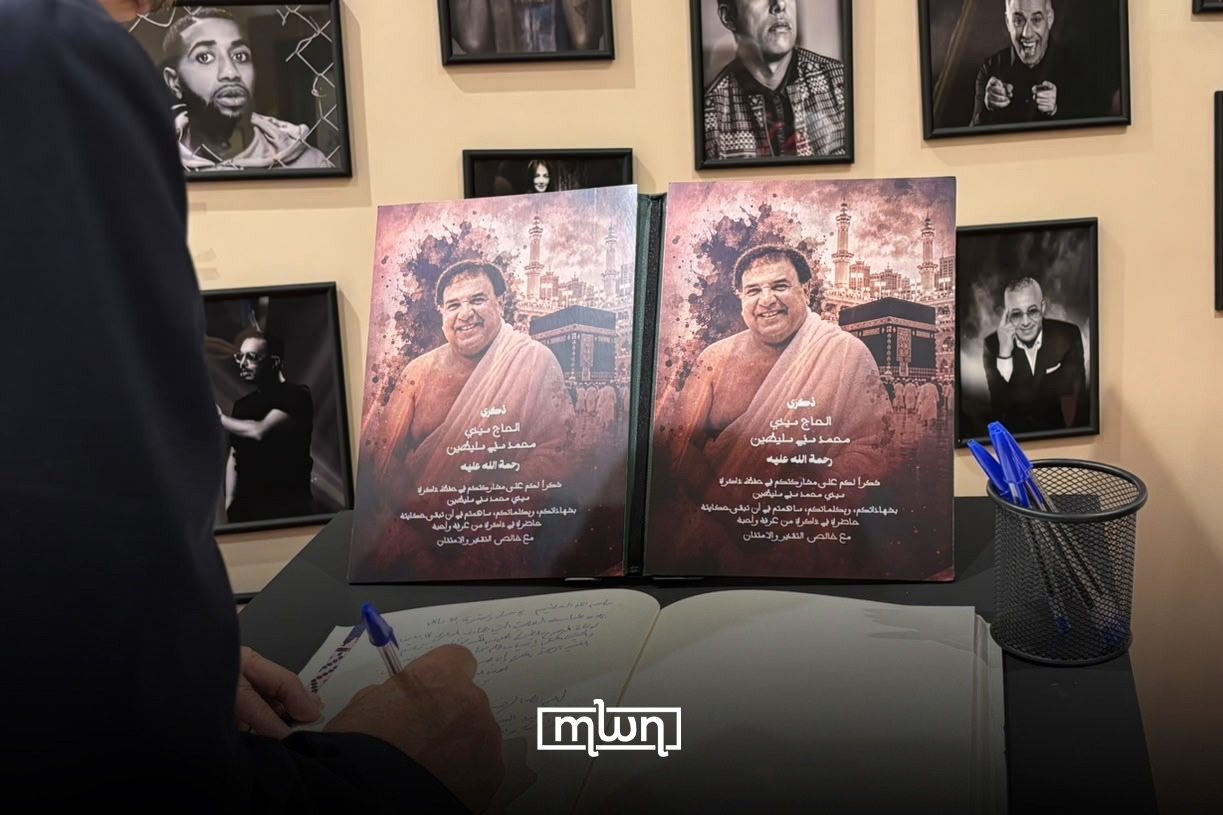
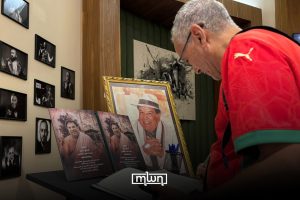
Marrakech – The family of Sidi Mohamed Sounni Slitine gathered relatives, former athletes, academics, and public figures at the Meydene Theater in Marrakech on Saturday to mark 40 days since his death.
Slitine, a veteran figure of Moroccan football closely associated with Marrakech’s sporting history, died in the city on August 31 at the age of 81.
The Mohammed VI Foundation of Sports Champions (FM6CS) records his birth date as January 25, 1945, and lists him as a professional footballer of the 1960s. Beyond his sporting career, he was also remembered for his elegance, personal relationships, social contributions, and longstanding involvement in his community.
The commemorative evening, held at the M Avenue complex, began at 5:30 p.m. and set out to retrace his football career that reached professional clubs in Europe during the 1960s.
Slitine came up through the old medina of Marrakech and the Mouloudia Marrakech school, becoming one of the city’s recognized players of the decade. Moroccan sports media called him the “King of Dribbling” and cast him as a successor to Larbi Ben Mbarek, the player known as the “Black Pearl.”
His career moved abroad early. Slitine was among the first Moroccan footballers to turn professional in Europe, with spells in Belgium and Switzerland, including the Swiss club BSC Young Boys, where he scored a hat-trick against Manchester United in the Ligue de l’Amitié (Friendship League).
He returned to Morocco in the early 1970s and joined Union Sidi Kacem, and he represented the national team on several occasions.
The choice of venue carried a family connection. Slitine was the father of Nabil Sounni Slitine, founder and CEO of NASLI Holding and the entrepreneur behind M Avenue and its Meydene cultural center.
The mixed-use complex opened in December 2021, and Meydene occupies roughly 3,000 square meters, with a 400-seat theater and an immersive exhibition space on Marrakech’s heritage. The tribute therefore unfolded at a site developed by the man’s own son.
The program was divided into two sessions, with documentary screenings, personal testimonies, and spiritual sequences, under the moderation of journalist Hassan Benmansour.
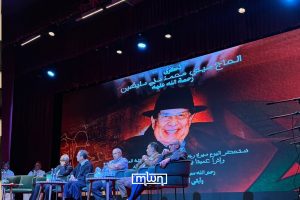
The first session traced his playing career and brought together figures from Moroccan sport, among them former national team coach Rachid Taoussi; the former international player and national coach Aziz El Amri; Said Benmansour, former member of Morocco’s World Cup organizing committee and a former head of the football refereeing committee; El Houssine Bouharoual, former president of the Royal Moroccan Handball Federation; and Jaouad Baghdad, a former secretary-general of Kawkab Marrakech.
The second session turned to his personality and social standing. Its participants included Mohamed Knidiri, a former education minister and former president of Cadi Ayyad University; Abdeljalil Lkrifa, dean of the Faculty of Arts and Humanities at Cadi Ayyad University in Marrakech; Mustapha Bensalem, an academic and former founding director of Marrakech’s National School of Commerce and Management (ENCG); Bouchra El Assimi, a lawyer and human rights advocate; and the businessman Abdessamad Eddakkhel.
The combined lineup drew from sport, media, academia, law, and business, a range meant to reflect the different facets of his life rather than his football alone.

Addressing the gathering, Nabil Sounni Slitine thanked those who had sent condolences, prayers, and messages since the family lost their father, and described their presence as “a source of strength.”
Each person in the room, he reflected, had known Slitine “in a different way” – to the family a husband and a father, to others a brother, friend, uncle, or neighbor. He recalled a modest man who “did not like to be the center of attention,” yet who “loved people and valued sincere relationships.”
Hearing others speak, he added, had revealed “sides of his personality” the family did not know, and left them feeling their father remained present through the memories he left behind.