Casablanca – Khaled Haftar, chief of staff of the Libyan Arab Armed Forces under the eastern-based General Command, is visiting Morocco for talks on strengthening military cooperation between the two countries, according to Libyan media.
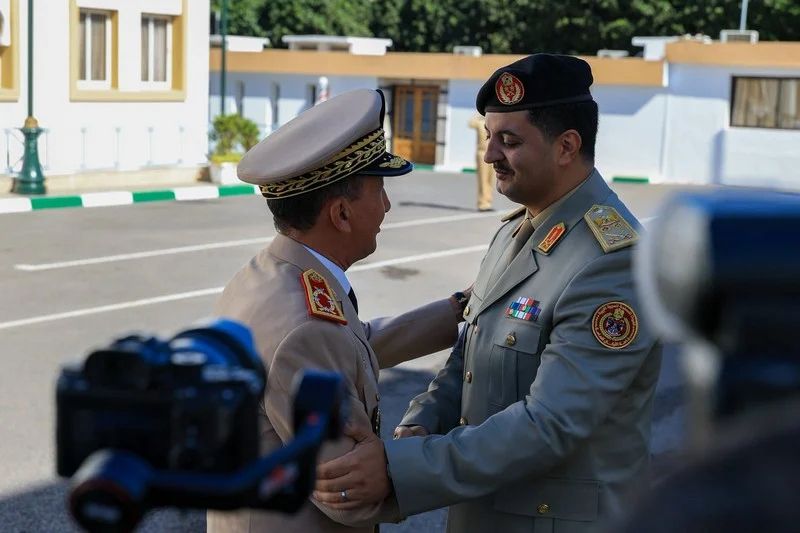
Haftar arrived in Rabat on Sunday, October 11, for an official visit scheduled to run through October 15, according to Libyan media outlet Al-Wasat. He was received by Major General Mourad El Mounir, deputy inspector general of Morocco’s Royal Armed Forces (FAR), alongside several Moroccan military officials.
During the visit, Haftar met with Lieutenant General Mohammed Berrid, inspector general of the Royal Armed Forces and commander of the Southern Zone, at the military’s general headquarters in Rabat.
The discussions focused on developing military cooperation and strengthening communication between the two armed forces, according to reports published by Libyan and Moroccan media on Tuesday.
Haftar also visited the headquarters of Morocco’s 1st Parachute Infantry Brigade, where he was received by the brigade’s commander, Lieutenant General El Khadir Boulahjour.
He attended a field training exercise involving tactical airdrops of equipment and vehicles, as well as training using virtual-reality simulation systems, Al-Wasat reported, citing a statement from the military media division of the eastern Libyan armed forces.
Haftar commended the brigade’s training standards and the discipline and skills demonstrated by its personnel. He also pointed to the importance of exchanging military expertise and benefiting from training and professional development programs to strengthen cooperation between the two forces.
Morocco and Libya have maintained diplomatic ties for decades, with Rabat supporting efforts to reach a political settlement to the Libyan crisis. Morocco has hosted several rounds of UN-backed talks between Libyan representatives, including the negotiations that led to the signing of the Skhirat Agreement in December 2015.
The agreement established a framework for a political transition in Libya, although divisions between rival authorities have continued to complicate efforts to unify the country’s institutions.
Morocco has continued to call for a Libyan-led political process and the preservation of Libya’s unity and territorial integrity. Rabat has also maintained contacts with different Libyan political actors as part of its efforts to support a lasting settlement.
Military cooperation is another area of contact between the two countries. Haftar’s visit to Rabat, which includes meetings with senior Moroccan military officials and a visit to a military training facility, provides a further opportunity to discuss defense ties and the exchange of military expertise.