
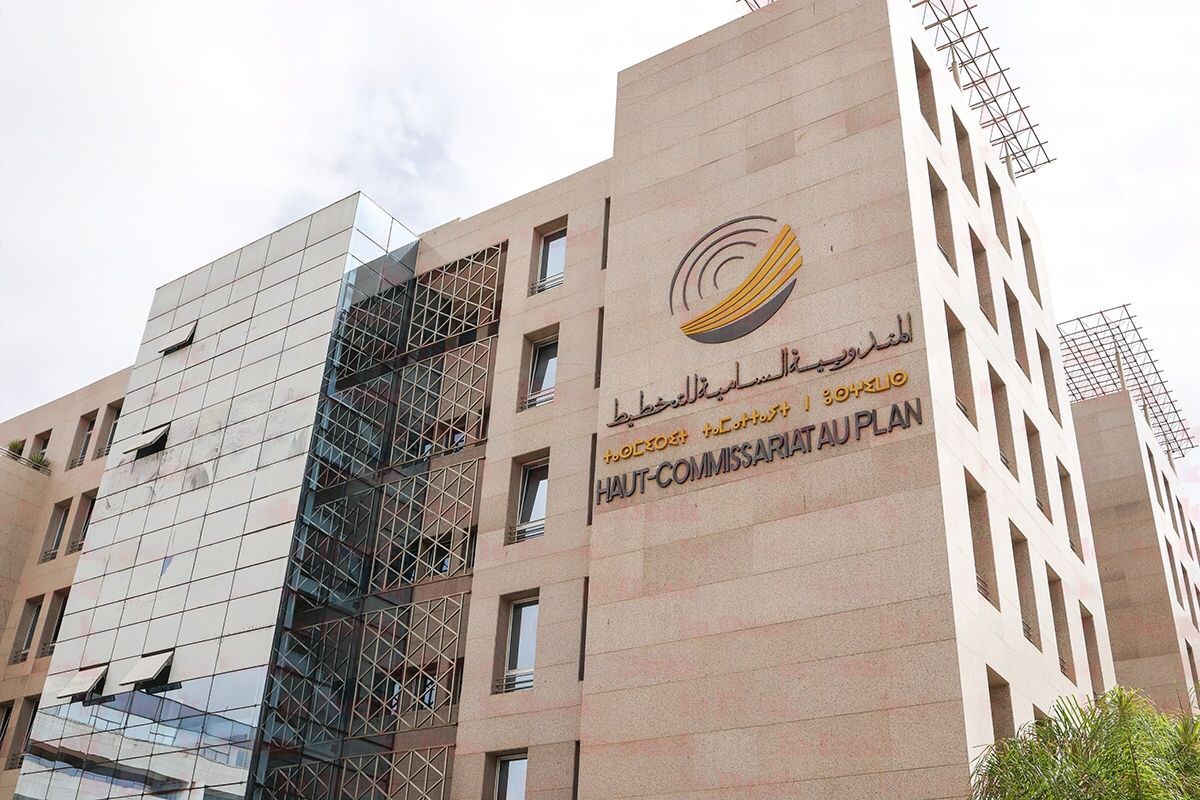
Rabat – Morocco’s economy is expected to grow by 4.1% year-on-year in the third quarter of 2026, as a strong agricultural recovery and resilient domestic demand help offset the effects of the latest energy shock, the High Commission for Planning (HCP) said.
Agricultural output is forecast to rise by 19.9% from the same period last year, making it the main driver of economic growth. Services should also remain on an upward path, with projected growth of 3.9%, supported by accommodation, food services, and non-market services.
Industrial activity, however, is expected to remain weak. The secondary sector is forecast to contract by 1.9% year-on-year, an improvement from the 3.9% decline recorded in the second quarter.
Food processing, automotive manufacturing, and electrical equipment production should show greater resilience, while textiles, chemicals, rubber products, and electronics are expected to remain below their output levels from a year earlier.
Higher import costs weigh on trade and investment
Import prices are expected to rise faster than export prices, squeezing business margins and worsening Morocco’s terms of trade.
Export volumes are forecast to grow by 6.2% in the third quarter, although the pace will slow. Imports should also decelerate, limiting the negative contribution of foreign trade to growth, which the HCP estimates at minus 1.2 percentage points.
Higher costs for imported equipment and construction materials are also likely to weigh on corporate investment. However, infrastructure projects should help sustain gross fixed capital formation, which is expected to rise by 6.2%.
Lower food prices support household spending
Household consumption is forecast to increase by 4.1%, supported by a projected 0.3% decline in consumer prices.
Food prices are expected to fall by 3.6%, particularly for poultry, vegetables, eggs, and olive oil. Lower olive oil prices alone should reduce overall inflation by 1.1 percentage points, according to the HCP.
Non-food prices, however, are projected to rise by 2.4%, mainly due to higher gasoline prices, limiting the relief for households.
Credit grows as banking liquidity tightens
Credit extended to the economy is expected to increase by 11.1% year-on-year, following growth of 8.4% in the first quarter and 11.6% in the second. The expansion should reflect stronger demand for corporate cash-flow facilities and investment loans.
Official reserve assets are forecast to rise by 19.9%, while net claims on central government should increase by 7.1%, supporting 11.9% growth in the money supply.
Meanwhile, a wider banking liquidity shortfall is expected to prompt Bank Al-Maghrib (BAM) to increase liquidity injections while keeping its key interest rate at 2.25% for a sixth consecutive quarter.
Treasury yields are forecast to rise by 19 basis points for one-year securities and 48 basis points for five-year securities. The dirham is also expected to depreciate by 2.2% against the euro and 3.8% against the US dollar.
Stock market correction expected to deepen
Morocco’s stock market is expected to face further pressure as geopolitical tensions and the energy shock compound a correction that began in January after the market’s strong performance in 2025.
The MASI benchmark index is forecast to fall by 6.8% year-on-year, following a 0.4% decline in the previous quarter. Total market capitalization, however, is expected to rise by 4%.
The HCP’s projections point to continued economic growth, but the outlook remains uneven. Agriculture and household consumption should provide key support, while industrial weakness, rising import costs, and financial market volatility continue to weigh on the economy.