
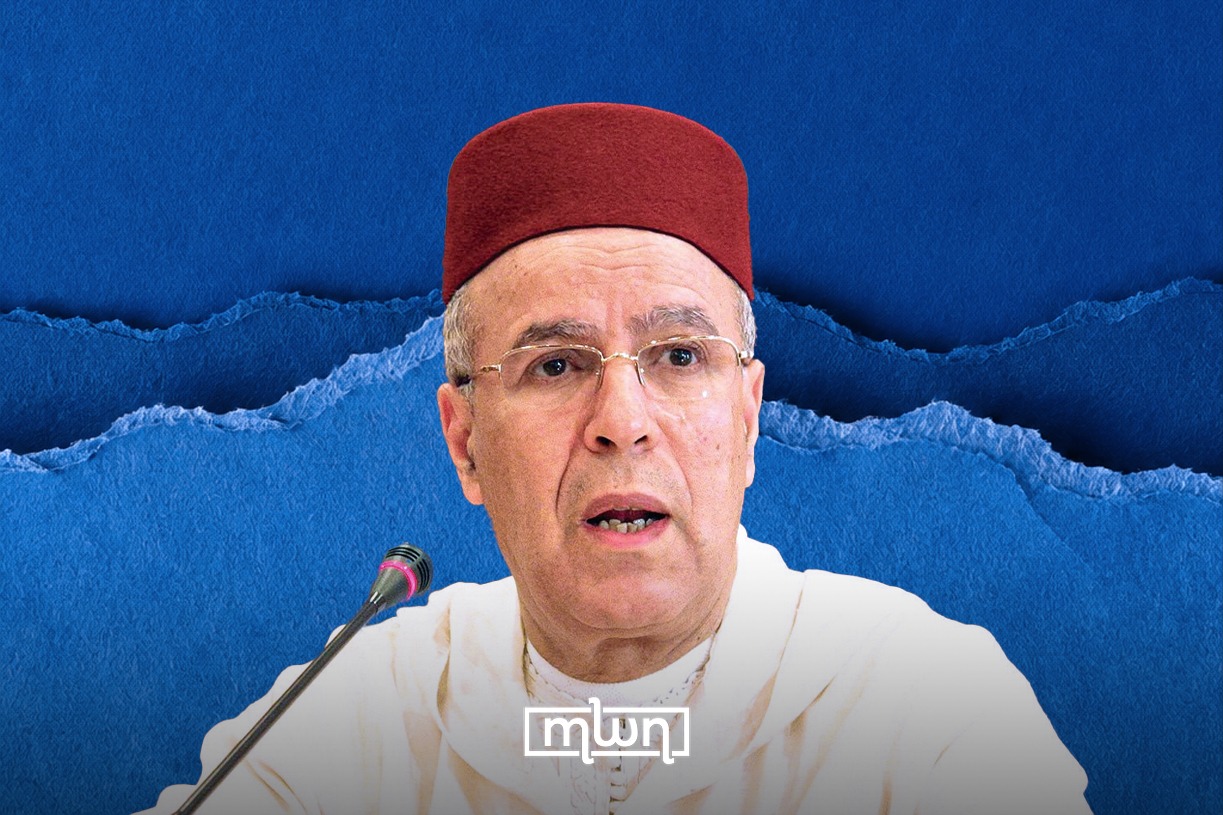
Rabat – Ahmed Toufiq, Morocco’s Minister of Habous and Islamic Affairs, has held his position since 2002, making him one of the longest-serving members of the Moroccan government.
Appointed by King Mohammed VI, Toufiq has remained in office through successive governments, overseeing religious affairs, mosque administration, and the management of religious endowments.
However, beyond his political responsibilities, the 83-year-old minister has an extensive academic and literary background. Before entering government, he established himself as a historian, researcher, university professor, and novelist.
From the High Atlas Mountains to academia
Ahmed Toufiq was born on June 22, 1943, in Marigha, a village in Morocco’s High Atlas Mountains near Marrakech.
He completed his primary and secondary education in the High Atlas region and Marrakech before pursuing higher education in Rabat.
According to his official biography published by the Ministry of Habous and Islamic Affairs, Toufiq obtained a teaching diploma in 1963 and his baccalaureate in 1964.
He later enrolled at the Faculty of Letters and Human Sciences in Rabat, where he earned a degree in history in 1968, followed by a specialized diploma in Moroccan history and archaeology in 1969.
In 1976, he obtained a postgraduate diploma in history, strengthening his academic specialization in Morocco’s historical and social development.
His professional career began in education. After working as a teacher, Toufiq joined Mohammed V University in Rabat in 1970, where he taught history for nearly two decades.
Between 1976 and 1978, he also served as vice-dean of the Faculty of Letters and Human Sciences.
A career dedicated to Moroccan history and research
Before joining the government, Toufiq held several important positions in Morocco’s academic and cultural institutions.
From 1989 to 1995, he directed the Institute of African Studies at Mohammed V University in Rabat, contributing to research on Morocco’s historical relations with the African continent.
He subsequently became director of the General Library and Archives in Rabat, a position he held from 1995 until his appointment to the government in 2002.
His academic work largely focuses on Moroccan history, society, and cultural heritage.
Among his notable publications is “Moroccan Society In The 19th Century Inoltan 1850-1912”, published in 1984, which examines Moroccan society during the nineteenth and early twentieth centuries.
Other works include studies on the Jewish community of Demnate, Islam and development, and historical relations between Morocco and West Africa.
Toufiq also contributed to the preparation of the Encyclopedia of Morocco and participated in several academic publications.
The novelist behind the minister
Although widely recognized for his ministerial responsibilities, Toufiq is also a leading Moroccan novelist.
His literary career includes several novels exploring Moroccan history, society, traditions, and religious life.
Among his best-known works is Jarat Abi Moussa (The Neighbors of Abu Moussa), published in 1997.
He subsequently published Shujayrat Hanna wa Qamar (A Henna Tree and a Moon), Assayl (The Flood), and Gharibat Al Hussein.
In 2021, Toufiq discussed his novel Jiran Abi Al Abbas (The Neighbors of Abu Al Abbas) in an interview with Al Jazeera.
The novel explores the life and historical surroundings of Abu Al Abbas Al Sabti, one of Marrakech’s most prominent religious figures.
During an interview with Al Jazeera, Toufiq discussed his interest that extends beyond the political job he occupies to historical fiction and Sufism, offering insight into the intellectual interests that have accompanied his governmental duties.
His contributions to literature and research have earned him several distinctions, including Morocco’s literary creation award and France’s Order of Arts and Letters.
More than two decades managing Morocco’s religious affairs
Toufiq entered government in 2002 after King Mohammed VI appointed him Minister of Habous and Islamic Affairs.
He retained the portfolio in successive governments, including those formed in 2007, 2012, 2017, and 2021.
His responsibilities include overseeing Morocco’s religious institutions, managing religious endowments, supervising mosque affairs, and supporting the training and supervision of religious personnel.
His tenure has coincided with significant developments in Morocco’s management of religious affairs, particularly the country’s efforts to promote religious moderation and strengthen the institutional framework governing religious education.
Morocco’s official religious approach emphasizes the Maliki school of Islamic jurisprudence, Ash’ari theology, and Sunni Sufism, under the religious authority of King Mohammed VI in his capacity as Commander of the Faithful.
Toufiq has also played a role in Morocco’s religious cooperation with African countries.
He serves as delegated president of the Mohammed VI Foundation of African Ulema, an institution established to strengthen cooperation among African Muslim scholars and promote religious dialogue.
In addition, King Mohammed VI appointed him president of the Hassan II Mosque Foundation in Casablanca in April 2010.
Recognition and personal life
Throughout his academic and public service career, Toufiq has received several national and international honors.
According to Morocco’s Higher Council for Education, Training and Scientific Research, these include the Order of the Throne at the ranks of Grand Officer and Knight, alongside France’s Order of Arts and Letters.
He has also received Morocco’s literary creation award in recognition of his contributions to literature.
According to the Moroccan National Human Rights Council’s biographical records, Toufiq is married and has four children.
After more than two decades in office, Ahmed Toufiq remains a distinctive figure in Morocco’s political and intellectual landscape.
His career brings together historical research, literary writing, academic leadership, and religious administration, reflecting a professional journey that began in the High Atlas Mountains before reaching the highest levels of Morocco’s religious institutions.