
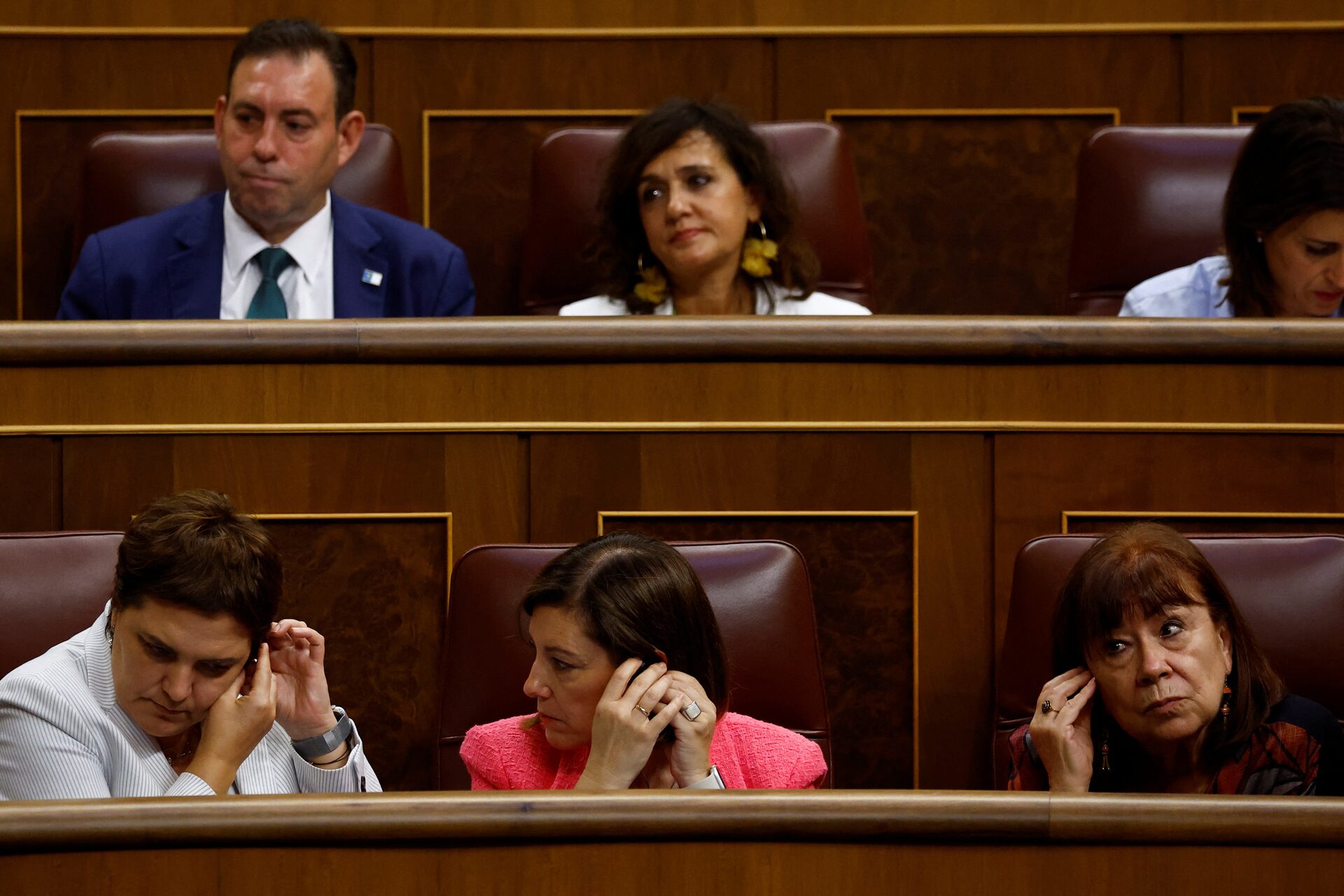
In September 2023, something new and comic happened in the Spanish Congress of Deputies: members began wearing earphones. A deputy would rise and speak Catalan, Basque or Galician, and colleagues who had understood him perfectly well for years would listen dutifully and attentively to an interpreter instead.
Politics is transactional and changeable. A language that has been marginalized by every previous administration will naturally seize the moment when the parliamentary balance of power turns in its favor. Nobody should be shocked that a weaker power bargains hard when, for the first time in history, it holds the cards.
Official status of languages has very little to do with communication, since every deputy in that chamber could have managed in Spanish. It is about who is obliged to make the effort of understanding. For centuries the answer never changed. The speaker of the small language learned the big one, and the speaker of the big one was spared the trouble.
I come to this as a Moroccan, and as a teacher of English in a country where Tamazight was declared an official language in 2011. Speakers who were told their language had been rescued went on finding it absent from the forms at the post office, the signs at the hospital and the exams at the end of school.
Read also: Where is Tamazight in Morocco’s 2024 Census?
A status won through bargaining can be withdrawn through bargaining, and a language that survives only at the forbearance of whoever currently holds the balance of power is living on tolerance rather than on right because coalitions end, and ministers change.
Languages are rarely killed by decree; far more often they are starved. A policy that quietly starves a language, with no teachers, no textbooks, no broadcasts and no jobs that ask for it, achieves everything a ban would achieve, without the embarrassment of announcing one. The family in the village can go on speaking the language at the kitchen table for another generation, but the children will notice, as children always do, which tongue the world rewards.
What would a lasting settlement look like? Ordinary and rather dull machinery. A language is truly official when the scribe at the municipal counter, the clerk who copies a birth into the register, can do it in that language without treating it as a favor. It is official when a child can take exams in it, and when a patient can read his hospital appointment in the same language he uses to talk to his sister. In brief, what the law says and what the counter does should be aligned.
I still think about those earphones. It’s true that they are clumsy devices, and I admit that a cynic could have designed a better one. Yet something crucial emerges each time a man from Madrid reaches up and puts them on: that another person’s tongue is worth the trouble.