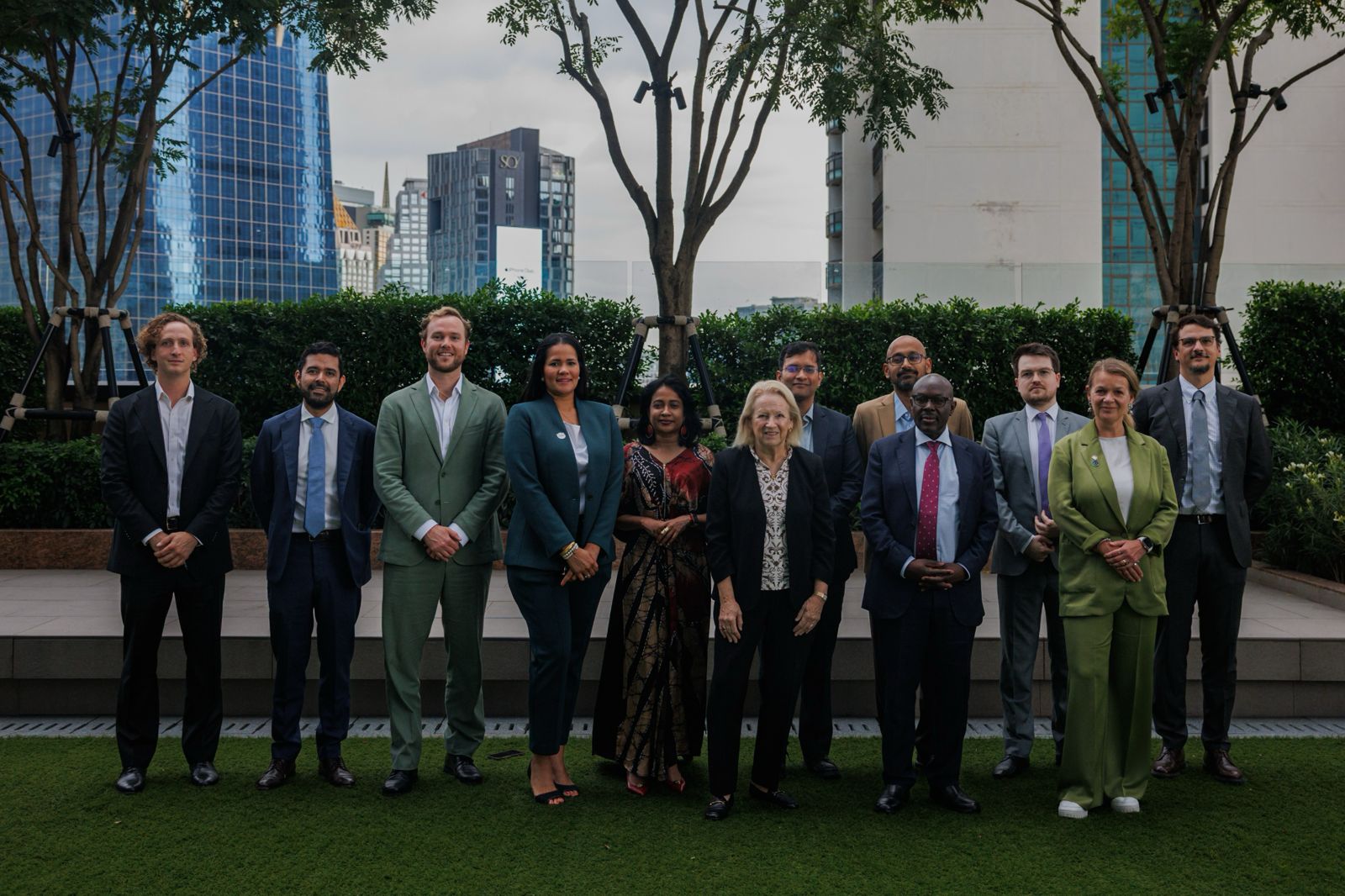
Rabat – Moroccan think tank IMAL Initiative for Climate and Development has earned a place among five global winners of the Global Capacity Building Coalition (GCBC) Accelerator, an international program that helps developing economies strengthen their ability to finance climate action.
The announcement, made on October 14 on the sidelines of the World Bank and International Monetary Fund (IMF) Annual Meetings in Bangkok, Thailand, comes as Morocco faces a substantial financial challenge in its efforts to cut emissions and adapt to climate change.
IMAL was one of 65 applicants from think tanks, public institutions, private companies, and academic organizations. Through the program, the Rabat-based organization will receive more than 12 months of support to help develop national platforms that can direct investment toward climate and development priorities.
Founded in 2022 and based in Rabat, the IMAL Initiative for Climate and Development describes itself as North Africa’s first independent, nonprofit think tank dedicated to climate issues.
The organization conducts research, supports policy dialogue, and works with stakeholders on climate action in Morocco and across African and Arab countries. Its approach draws on African, Arab, and Mediterranean perspectives, with a focus on the transition to green economies and long-term resilience.
IMAL takes its name from the Tamazight word for “future,” a reference to its focus on sustainable development and climate resilience.
For Morocco, the selection comes at a time when the government must find the resources to meet its climate commitments. The country has set ambitious emissions reduction targets, but their delivery depends in part on its ability to attract private capital and coordinate public and international funding.
The GCBC launched at COP28 in December 2023 under the leadership of Michael R. Bloomberg, the UN Secretary-General’s Special Envoy on Climate Ambition and Solutions, alongside representatives of multilateral development banks, financial institutions, and international organizations. The coalition aims to strengthen climate finance expertise and help countries advance their climate goals.
Morocco’s climate goals carry a heavy price tag
Morocco’s updated Nationally Determined Contribution (NDC 3.0) sets a target to reduce greenhouse gas emissions by 53% by 2035. The country will need an estimated $60 billion to meet that target, while its climate adaptation objectives require a further $36.1 billion.
The scale of these needs makes access to finance a central issue for the country’s climate policy. Public funds and international assistance alone may not meet the demand, which places greater importance on private investment and effective coordination between the institutions responsible for climate action.
Morocco has already introduced measures to strengthen its climate finance framework, including a national climate finance development strategy and the integration of climate considerations into public budgets.
IMAL has also contributed to discussions on a national Country Platform for climate finance. In 2025, the think tank brought together national stakeholders for a policy dialogue that helped advance the process to develop such a platform.
The proposed mechanism would connect Morocco’s development priorities and climate commitments with investment opportunities. It would also provide a framework for closer coordination between public institutions, financial actors, and development partners.
Through the GCBC Accelerator, IMAL aims to support the Moroccan government and other national stakeholders as they work to develop the platform and attract investment for climate-related projects.
A push to connect climate commitments with capital
IMAL Co-founder and Executive Director Iskander Erzini Vernoit said the selection reflects the need for stronger climate finance mechanisms in both developed and developing countries.
“Scaling up climate finance has never been more urgent,” Vernoit said, calling on developed countries to meet their financial obligations under the Paris Agreement while urging developing economies to find new ways to direct capital toward national climate priorities.
He said the partnership would help IMAL develop technical support to identify priority areas for investment and expand its work in Morocco and across Africa.
Vernoit also pointed to the need to connect institutional investors with sectoral policy objectives under Nationally Determined Contributions, particularly those related to lower emissions and greater resilience to climate change.
The accelerator offers IMAL an opportunity to advance this work as Morocco seeks to turn its climate targets into projects that can attract the necessary funding. Its broader contribution will depend on how effectively national stakeholders translate the proposed platform into concrete investment priorities and coordinated action.