
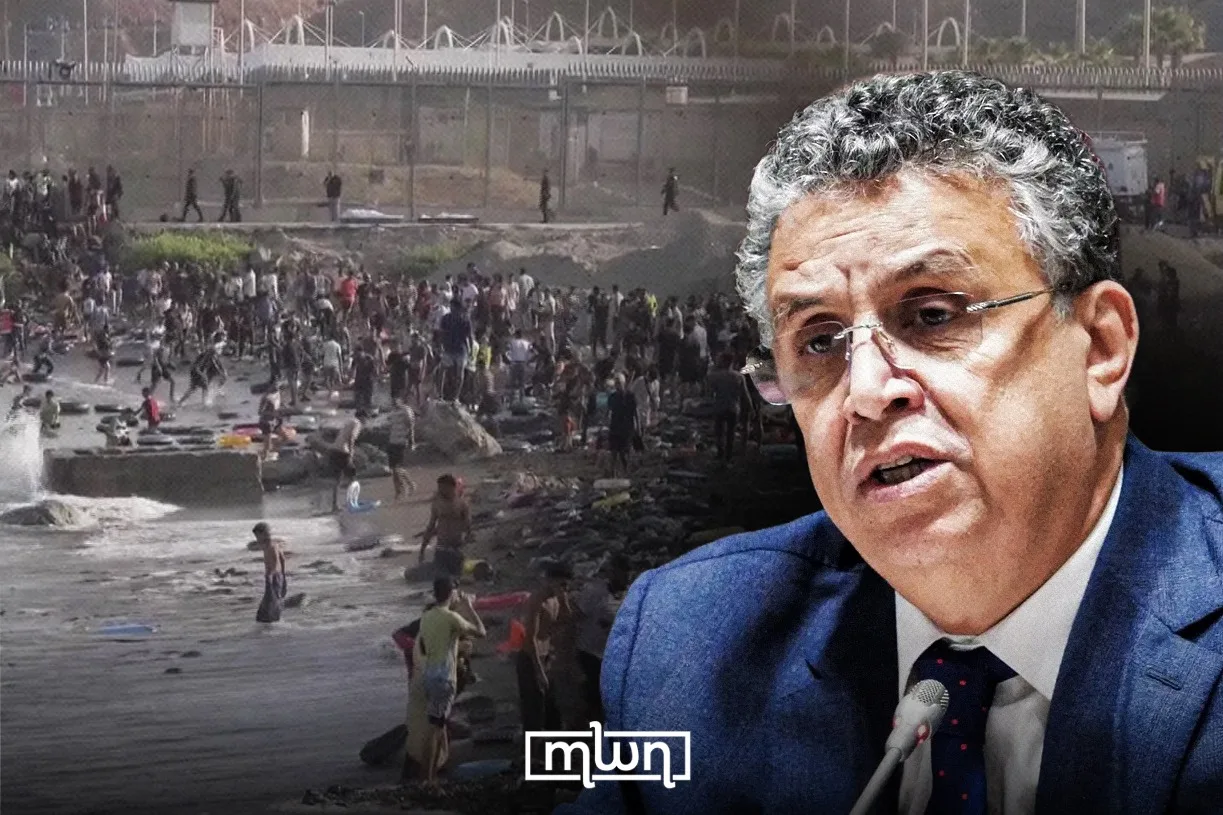
Agadir – Morocco is demanding the return of Moroccan minors currently in the Spanish enclave of Ceuta, with Justice Minister Abdellatif Ouahbi accusing Spanish authorities of repeatedly obstructing efforts to repatriate the Moroccan minors.
Speaking in an interview with German broadcaster DW, Ouahbi said Morocco has been seeking the return of the minors for years and remains committed to reaching an agreement with Spain on the issue.
“We are demanding their return. This is not an issue that emerged today, yesterday, or because of the latest incident,” Ouahbi said, adding that discussions between Rabat and Madrid have continued without reaching an agreement.
According to the minister, the main disagreement is that Spanish authorities do not want to return the minors. He alleged that when Spain agrees to repatriate minors, the process encounters procedural obstacles.
“When they agree to do so, they present us with files concerning children who are not Moroccan and have other nationalities,” Ouahbi said. “When we point out that those children are not Moroccan and identify the Moroccan children whose return we are requesting, they do not bring them, claiming that they could not find them or that they had disappeared.”
Ouahbi said Morocco remains committed to bringing the minors back, arguing that the country has a responsibility toward the children and their families.
“We remain committed, and we continue to demand the return of minors to Morocco because we are responsible for our children and for their families, and for protecting them and ensuring their safety,” he said.
Ouahbi blames Spain for minors’ situation
The Moroccan minister rejected the suggestion that Rabat shares responsibility with Spain for the situation facing the minors in Ceuta.
“Of course not. We consider the Spanish side responsible for what happened because we warned them,” Ouahbi told DW.
He argued that Morocco had previously warned Spanish authorities that allowing irregular migration involving minors could encourage further attempts to cross the border.
Ouahbi also accused Spanish authorities of changing their position on the return of minors and suggested that political considerations were influencing the issue.
“They demand the return of the minors and then backtrack on it,” he said. “It seems that the issue involves more electoral calculations than legal decisions.”
Morocco raises concerns over abuse of Moroccan girls
The minister also addressed reports concerning Moroccan girls in Ceuta, including allegations of sexual assault and other forms of abuse.
“Of course we are following it. We warned Spain about this,” Ouahbi said, referring to reports about Moroccan minors allegedly suffering abuse.
He said Morocco had repeatedly warned Spanish authorities that the children could be exposed to different forms of exploitation and abuse.
“Ultimately, we are facing a moral and political dilemma,” he said.
Ouahbi called on Spain to return the Moroccan minors, stressing that Rabat would receive them.
“We are telling Spain: Return our children to us, and we will receive them,” he said.
“We have no desire to punish any child. They are not responsible for their actions. We simply want to return them to their families.”
Ouahbi rejects minors’ right to decide their return
Asked how Morocco could convince minors who had voluntarily left the country that returning to their families was in their best interests, Ouahbi questioned whether minors should be allowed to make such decisions independently.
“Can an adolescent or a minor decide their own future? The family decides,” he said.
The minister argued that children should not be separated from their families under the justification of protecting their interests.
“You cannot separate a child from their family under the pretext that it is in the child’s best interest,” Ouahbi said. “This is a crime. Separating a child from their family is a crime.”
He further argued that international law does not permit such separation and maintained that Morocco, as the children’s country of origin, has a responsibility to protect them.
Ouahbi also accused human-trafficking networks and criminal groups of exploiting vulnerable minors, particularly girls, and using social media to influence them.
Morocco seeks dialogue with Spain
Despite the dispute, Ouahbi said Morocco does not intend to pursue an international legal confrontation with Spain.
Asked whether Morocco could resort to an international legal procedure if Spain continued refusing to return the minors, the minister said there was no such procedure under consideration.
“Spain is a friend, and we will reach an agreement with them. When you have a friend, you help them find a solution; you do not create a crisis for them,” Ouahbi said.
He added that Morocco remains ready to reopen dialogue with Madrid and expressed confidence that meetings could take place in the coming weeks.
“We want to find a common solution with Spain,” he said, describing the issue as “fundamentally humanitarian.”
Read also: Moroccan NGO ‘Don’t Touch My Child’ Raises Alarm Over Alleged Sexual Assaults on Minors in Ceuta