
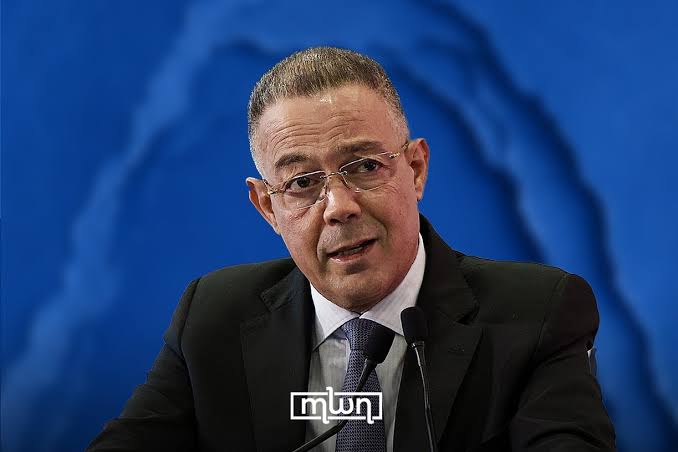
Rabat – Economy and Finance Minister Fouzi Lekjaa assured on Friday that the government will immediately revise Morocco’s social support eligibility criteria and gradually increase monthly direct assistance to families from MAD 500 to MAD 1,000.
Speaking before the House of Representatives’ Finance and Economic Development Committee during discussions on the 2027 Finance Bill, Lekjaa said the government would immediately remove some variables from the current social support eligibility index and gradually introduce household income into its calculations.
The government aims to move towards a system based entirely on income by the middle of its current term.
Lekjaa explained that the existing index, which assesses household spending rather than relying on administrative documents, initially helped improve how authorities identify families in need.
However, he acknowledged that the system sometimes excludes families from assistance because of unexpected or exceptional expenses that do not necessarily reflect an improvement in their financial situation.
He said the government has developed proposals to address these shortcomings and will present them for discussion with members of parliament.
Regarding direct social assistance, Lekjaa said around four million families currently receive a minimum monthly payment of MAD 500.
The government plans to gradually increase this amount, starting with MAD 600 in the first year and eventually reaching MAD 1,000, taking inflation and other economic pressures into account.
The minister also stressed the importance of helping beneficiary families enter the labour market, arguing that financial assistance should not discourage people from working.
He said the government could consider extending the period during which families receive support when revising the relevant legislation. However, he stressed that the program is not intended to provide lifelong assistance but rather to help families become economically active.
Lekjaa also addressed challenges facing Morocco’s mandatory health insurance system, distinguishing between people registered in the system and those who can actually access its benefits.
He said 32.7 million people, representing 89% of the population, are registered in health insurance schemes. However, only 28.6 million, or 78%, currently have active coverage. Around 4.1 million people have lost their coverage because of unpaid contributions, while another 4.1 million are not registered in any scheme.
He called for reviewing the relevant databases and adjusting contribution requirements according to people’s financial capacity. Lekjaa said expanding health insurance coverage must go hand in hand with improving access to actual medical treatment.
He also criticized the imbalance between private and public healthcare providers, saying private clinics should not account for 90% of health insurance spending while public hospitals receive less than 10%.
He argued that public hospitals should account for at least 50% of health insurance expenditure to ensure the system operates effectively.
The minister added that the new regional health groups would allow medical professionals to work across wider geographical areas. Through the public health employment system, the government also plans to give doctors and healthcare workers a share of the revenue generated by public hospitals from health insurance payments as an incentive to improve services.