
Read on app Read on app
✕
Prayer Times
  • Morocco
  • Lifestyle
  • Western Sahara
  • Login
Morocco World News
  • Home
  • Culture
  • Politics
  • Society
  • Economy
  • Opinion
  • Education
  • Sustainability
  • Tech
  • Sport
  • GITEX 2026
No Result
View All Result
Morocco World News
  • Home
  • Culture
  • Politics
  • Society
  • Economy
  • Opinion
  • Education
  • Sustainability
  • Tech
  • Sport
  • GITEX 2026
No Result
View All Result
Morocco World News

Home > Religion > The Power of Zakat in Islam

The Power of Zakat in Islam

dhikra-bouzekribydhikra-bouzekri
May, 03, 2015
0 0
A A
The Power of Zakat in Islam

The Power of Zakat in Islam

Follow the latest news from Morocco World News

Join on WhatsApp Join on Telegram

Rabat- The main topic of this paper is an outline of the role of Zakat in achieving social and economic progress by illustrating the experience of Sudanese Zakat Chamber (SZC).

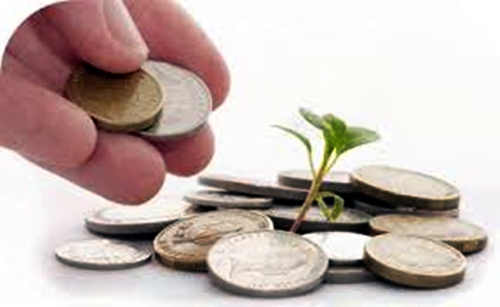
Zakat (regular charity) is one of the five pillars of Islam. Literally, it means “growing” and “purification” of the individual soul. It is described as a “tax”, but sometimes distinguished from a tax because Zakat is related to religion and has fixed rates, whereas a tax is related to government and has certain rules for setting rates. Zakat requires wealthier people to give a portion of their annual revenue to poor people: everyone must contribute 2.5 percent of their annual savings to help poor to achieve a life of dignity and a higher quality of life.

The first act of the Zakat Chamber of Sudan (SZC) was passed in 1980. In 1984, compulsory Zakat was collected by the State of Sudan. In 1986, it was separated from regular taxes. In the 1990s, it was set up with its complete administrative and independence structure. In 2001, it was announced that Zakat would be payable and invested in public wealth in order to ensure and foster economic growth. The amount of the Zakat collected in 1990 has increased, and multiplied by a factor of 690 by 2003.

There are many figures that need to be understand about the collection and disbursement of Zakat: 61 percent of the amount collected is allocated for poor and the needy; 14.5 percent for Zakat collectors; 7.5 percent for the administrative fees; 6 percent for the indebted; and 2 percent for the reconciled – a freeing slave, 0.5 percent for the wayfarer, and the rest of the amount (8.5 percent) for other social and economic purposes (development projects). Zakat funds are spent on school uniform and books for poor students and on health care and medical insurance. Part of the fund is allocated for financial resources for rural development, especially the rehabilitation of cultivated lands, houses for poor families, and assistance for orphans by building houses. It also provided for the distribution of means of production, such as machines to increase productivity.

Moreover, the economic and social benefits are that Zakat reduce class struggles, and launched the establishment of a strong middle class by offering a chance for the unemployed to set up their own businesses. It protects needy people by distributing and spreading wealth.  It also liberates individuals from debt and interest.

The SZC makes people aware of the importance of the Zakat in social and economic development. Its main goal is to encourage economic and social progress by maximizing Zakat collection to end extreme poverty.


TweetShareShareSendShareScan

Recent News

The Criminal Chamber of the Casablanca Court of Appeal on Thursday handed down its verdict in Morocco's high-profile "Sahara Escobar" case, sentencing former Wydad Athletic Club president and former senior member of the Authenticity and Modernity Party (PAM), Said Naciri, to 10 years in prison.

Former Wydad President Said Naciri Sentenced to 10 Years in Prison in ‘Sahara Escobar’ Case

June 25, 2026
UM6P’s FEMMPACT II Ends With Showcase of 18 Women-Led Startups in Rabat

UM6P’s FEMMPACT II Ends With Showcase of 18 Women-Led Startups in Rabat

June 25, 2026
Haiti striker Wilson Isidor expressed pride in his team's performances at the 2026 FIFA World Cup, saying the tournament marked the beginning of a promising future for Haitian football despite their group-stage elimination

Haiti Striker Wilson Isidor: “We Held Our Own Against World No. 6 Morocco.”

June 25, 2026
Ibn Tofail University Tops Moroccan Public Universities in THE Impact Rankings 2026

Ibn Tofail University Tops Moroccan Public Universities in THE Impact Rankings 2026

June 25, 2026
Morocco Records 0.3% Drop in Electricity Production Through April

Morocco Records 0.3% Drop in Electricity Production Through April

June 25, 2026

USEFUL LINKS

  • About
  • Privacy Policy
  • Contact
  • Careers
  • Terms Of Use
  • Cookies Policy

TOPICS

  • Mawazine 2025
  • Environment
  • Politics
  • Lifestyle
  • Sports
  • Western Sahara

REGIONS

  • International
  • Maghreb
  • Middle East
  • Africa

Download our App


Download the Morocco World News app on Google Play for Android

Download the Morocco World News app on the Apple App Store for iPhone and iPad

Copyright 2026 Morocco World News. All rights reserved. Morocco World News is not responsible for the content of external sites.
Read about our approach to external linking.

Welcome Back!

Login to your account below

Forgotten Password?

Retrieve your password

Please enter your username or email address to reset your password.

Log In
  • Login
No Result
View All Result
  • Home
  • Culture
  • Politics
  • Society
  • Economy
  • Opinion
  • Education
  • Sustainability
  • Tech
  • Sport
  • GITEX 2026

Useful Links

  • Prayer Times

Useful Links:

  • Prayer Times

All Right Reserved © 2025 Morocco World News .

Contact us
Are you sure want to unlock this post?
Unlock left : 0
Are you sure want to cancel subscription?