 Join on WhatsApp
 Join on Telegram
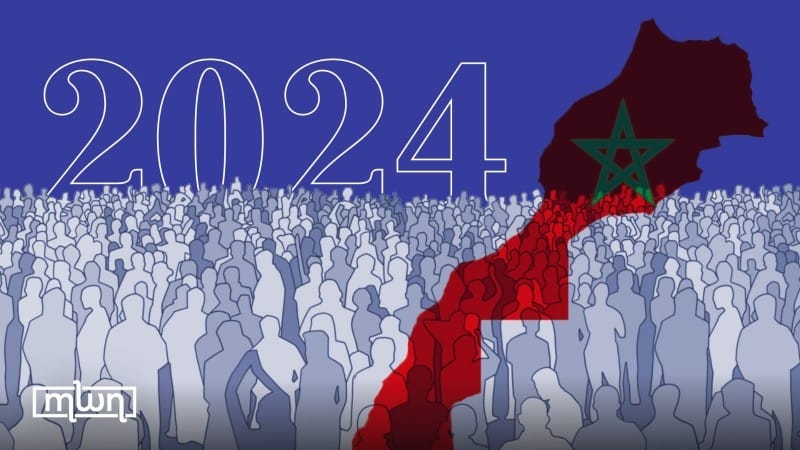
Rabat — The latest census conducted in September reveals that Morocco’s total population has reached 36.8 million.
The population is heavily concentrated in five regions, which make more than 70% of the total population.
According to detailed information from the High Commission for Planning (HCP), the Casablanca-Settat region tops the list with 7,689,000 citizens, followed by Rabat-Sale-Kenitra (5,133,000), Marrakech-Safi (4,892,000), Fez-Meknes (4,468,000), and Tangier-Tetouan Al Hoceima (4,030,000).
HCP said the remaining population is spread across other regions, including Souss-Massa which holds 3,020,000 inhabitants, while Dakhla Oued Eddahab includes 220,000 inhabitants.
The regions contributed 86.2% of the total population growth between 2014 and 2024, with annual growth rates ranging from 0.79% in the Marrakech-Safi region to 1.25% in Tangier Tetouan Al Hoceima.
HCP acknowledged a decline in population growth as the census shows that the population increased by 2,980,088 in 10 years since the last census in 2014.
The data shows an average annual growth rate of 0.85% during this period, down from 1.25% between 2004 and 2014.
The exact number of the country’s national population stands at 36,680,178 Morocccans and 148,152 foreigners.
The number of foreigners residing in Morocco increased by 61,946 between 2014 and 2024, with an annual growth of 5.6%.
The population based in urban areas reached 23,110,108 people, with an increase of 2,677,669 from 2014 to 2024– equivalent to an average annual growth rate of 1.24%.
Meanwhile, rural areas witnessed a population growth of 13,718,222– an increase of 302,419.
“Since 1960, Morocco’s population has more than tripled, increasing by over 25 million people by 2024, although the rate of demographic growth has been steadily declining over this period. The average growth rate dropped from 2.6% between 1969 and 1982 to 1.25% between 2004 and 2014,” HCP reported.
The detailed census data shows that seven cities are home to nearly 40% of the urban population.
The most populated is Casablanca, followed by Tangier, Fez, Marrakech, Sale, Meknes, and then Rabat.
The fact sheet shows household numbers standing at 9,275,038 in urban areas and 3,101,108 in rural areas.
The number increased by 1,961,232, representing an annual growth rate of 2.4%.
In urban areas, the increase is by 1,366,187 households, while in rural areas, the increase is by 595,054.