


 Join on WhatsApp
  Join on Telegram
 Rabat – Algeria’s worsening economic downturn and internal crises have led many to turn to social media as a refuge to voice their opposition to the situation.
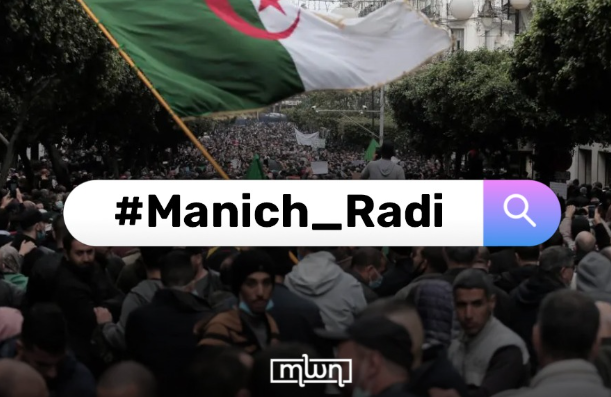
A recent campaign under the hashtag “Manish_Radi,” meaning “I am not satisfied,” has gone viral on social media platforms like X.
Through this hashtag, Algerian people are expressing their discontent and demanding change, highlighting the widespread dissatisfaction with both growing economic hardship and the government’s restrictions on basic freedoms.
“I am not satisfied I am not satisfied brother, I want to see my country like the other countries, like Saudi Arabia, Bahrain and Qatar. They are telling us about security and safety. I am not only looking for safety and security,” one participant in the campaign said in a video.
Many other Algerians shared videos, sharing their support for the campaign. In their videos, participants would share the number reflecting the provinces they come from and voice their involvement in the campaign seeking to change the situation in Algeria.
Algerian political analyst Oualid Kebir commented on the viral hashtag, saying that the campaign allows Algerians to express their growing dissatisfaction with the current political and economic situation in the country
“Videos shared by citizens highlight the misery they are experiencing, fueled by widespread discontent over purchasing power and ongoing arrests of activists speaking out against the regime,” Kebir told Morocco World News (MWN).
He said that this reflects a potential resurgence of the hirak movement, or another form of protest which the Algerian regime fears could escalate into a larger challenge.
Kebir also cited a concerted effort by Algeria’s intelligence services to cover up the internal crisis, while for domestic audience making claims that Algeria is under external pressure and facing conspiracies. He pointed to recent accusations against France, where Algerian officials summoned the French ambassador to accuse French intelligence of “hostile” maneuvers against Algeria’s security.
During the meeting, Algerian officials allegedly presented evidence of French involvement in “destabilizing activities,” including attempts to smuggle weapons into Algeria. France dismissed these claims as “baseless” and “fanciful.”
Kebir also highlighted the clear dissatisfaction among the Algerian population during the September elections when many boycotted the voting process.
Tebboune secured a second term in the presidential elections with an overwhelming 94.65% of the vote. However, reports of voting irregularities, a record low voter turnout and strong opposition criticism have cast a shadow over his apparent landslide victory.
Brewing crises
Algeria has been among the countries that witnessed the rise of the Hirak movement, a campaign advocating for change in response to the country’s socio economic challenges.
Amid soaring food prices and growing frustration with the country;’s regime policies limiting citizens’ rights, including freedom of assembly and speech, the movement gained significant momentum.
The movement emerged after former president Abdelaziz Boutflika announced his decision to run for a fifth term in 2019.
After mounting public pressure and protests, Boutflika stepped down, paving the way for a new election. This led to the election of Abdelmadjid Tebboune.
For a brief period, there was a glimmer of hope that his presidency could mark a new chapter in Algeria’s political landscape.
This hope, however, has been gradually fading as the government continued its crackdown on freedom of speech and the use of terrorism law against activists and movements opposing the military regime’s policies.
Current dismay
Most recently Algeria’s regime has been facing controversy for the arrest of French-Algerian writer Boualem Sansal.
He was detained in Algeria for a few weeks under unclear circumstances. Sansal is known for his literary work and criticism of societal and political challenges, including religious extremism and authoritarianism.
Many reports and experts warned about deteriorating human rights in Algeria due to the ongoing crackdown and arrest of human rights movements and activists.
In 2023, a group of UN experts expressed concern about the Algerian regime’s decision to dissolve associations like La Ligue Algérienne pour La Défense des Droits de l’Homme (The Algerian League for the Defense of Human Rights) as well as Le Rassemblement Actions Jeunesse (Youth Action Assembly).
“Acts of limited meditation and repression against the human rights movement must end,” UN Special Rapporteur on the situation of human rights defenders Mary Lawlor said as part of her assessment of the situation.
She stressed that the decision to dissolve the human rights association reflects “an alarming crackdown on civil society organizations.”
Last year, an Egyptian human rights institute reported that there are over 2,560 activists facing terrorism charges in Algeria.


