 Join on WhatsApp
 Join on Telegram
Doha – Over the past decade, the National Agency for the Development of Oasis Zones and the Argan Tree (ANDZOA) has made significant strides in its areas of operation, particularly in the Souss-Massa region, among others.
As the agency looks ahead to the next ten years, it faces major challenges in accelerating the development process in these regions, particularly in the context of nationwide drought and climate change.
In an exclusive interview during the International Agriculture Fair in Morocco (SIAM), Latifa Yaakoubi, Director General of ANDZOA, highlighted the remarkable progress made in the oasis and argan zones. This progress is reflected in the improved development indicators that have met or even surpassed the objectives set within the agency’s intervention strategy.
Notably, the poverty rate has dropped from 13.4% in 2007 to 6.01% in 2022. Public investments totaling over MAD 125 billion were made between 2012 and 2022, contributing to a substantial increase in the GDP of the oasis and Argan zones, reaching approximately MAD 145 billion in 2021— a growth of nearly MAD 49 billion since 2012. Moreover, 123,871 jobs were created between 2013 and 2022 within ANDZOA’s area of operation.
According to ANDZOA, access to essential services has also seen marked improvements. The availability of drinking water has increased from 79.74% in 2012 to 95.87% in 2022, while rural electrification rates rose from 95.07% to 99.61% during the same period. Additionally, road accessibility in these regions has expanded from 72.19% in 2012 to 87.17% in 2022.
Education has been another area of focus for ANDZOA, with gross enrollment rates showing significant progress between 2012 and 2021. Primary education enrollment increased from 90% to 98%, lower secondary education from 65% to 92%, and upper secondary education from 45% to 63%.
To mitigate the impact of drought and climate change on water resources, considerable efforts have been made by various stakeholders through the construction of dams, threshold recharge of groundwater, and other water-saving structures.
ANDZOA and its partners have mobilized nearly MAD 3.92 billion, with MAD 2.14 billion through partnerships, MAD 1.19 billion under the rural development program, and MAD 596.1 million via international cooperation.
Looking ahead, ANDZOA is developing a new development strategy for the oasis and Argan zones from now into 2030. This development will focus on three strategic goals: increasing the resilience of territories and ecosystems to climate change, improving the social well-being of rural and urban populations, and diversifying the zone’s economy to enhance competitiveness, positioning it towards high-value-added sectors.
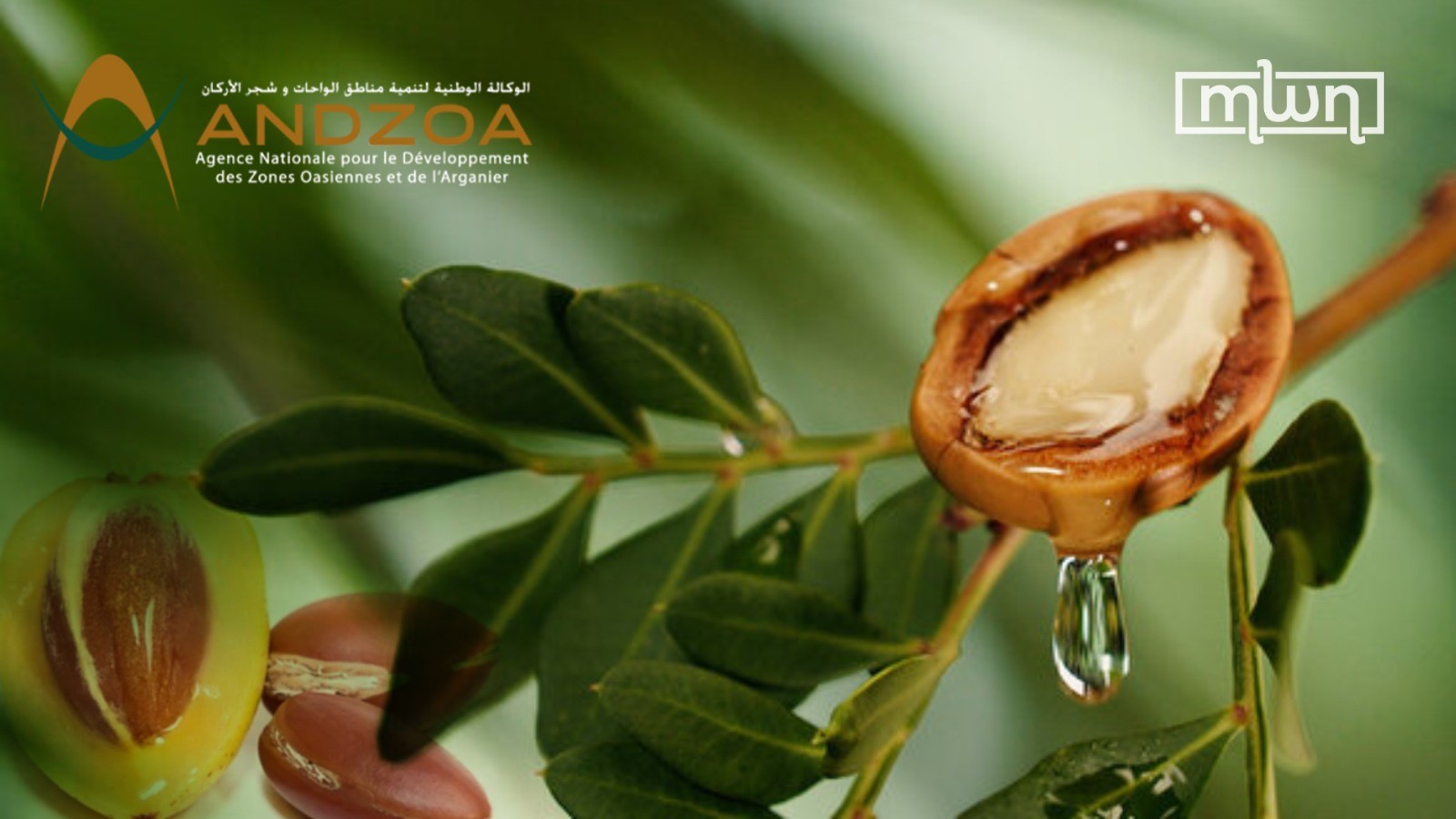
The argan tree, often referred to as the “tree of life,” holds immense value not only for its oil-rich almonds but also for its crucial role in promoting sustainable development and mitigating the effects of climate change in the region.
The United Nations General Assembly proclaimed May 10 as the International Day of the Argan tree, recognizing the vision of King Mohammed VI to promote and develop the Kingdom’s agricultural diversity and wealth.
According to the economic analysis of the argan sector in Morocco, the argan forest has decreased from around 1.4 million hectares at the turn of the century to around 820,000 hectares today. This is due to illegal grazing, logging for charcoal production, overgrazing by camel herders, agricultural intensification, urbanization, infrastructure development, climate change impacts, and deforestation.
Morocco aims to catalyze international cooperation to support women entrepreneurs in the argan sector, argan cooperatives, civil society, scientists, and local argan producers in thriving, innovating, and creating value.
Read also: ANDZOA Presents 2030 Strategy for Oasis and Argan Zones