 Join on WhatsApp
 Join on Telegram
While the Algerian separatist group, the Movement for the Autonomy of Kabylia (MAK), prepares to symbolically announce its independence from Algeria on December 14, many Moroccans will be closely following the aftermath of this move.
Certainly, and despite the highly toxic relations between Rabat and Algiers, many Moroccans are categorically against the MAK out of the conviction that the unity of countries in their neighborhood should be preserved.
Others might be tempted to support the Algerian separatist group because of Algiers’ decades-long investment in propping up the Polisario Front that seeks an independent state in Moroccan Western Sahara. It has also recently sponsored an insignificant Moroccan separatist movement hoping for a secession of the Moroccan Rif region.
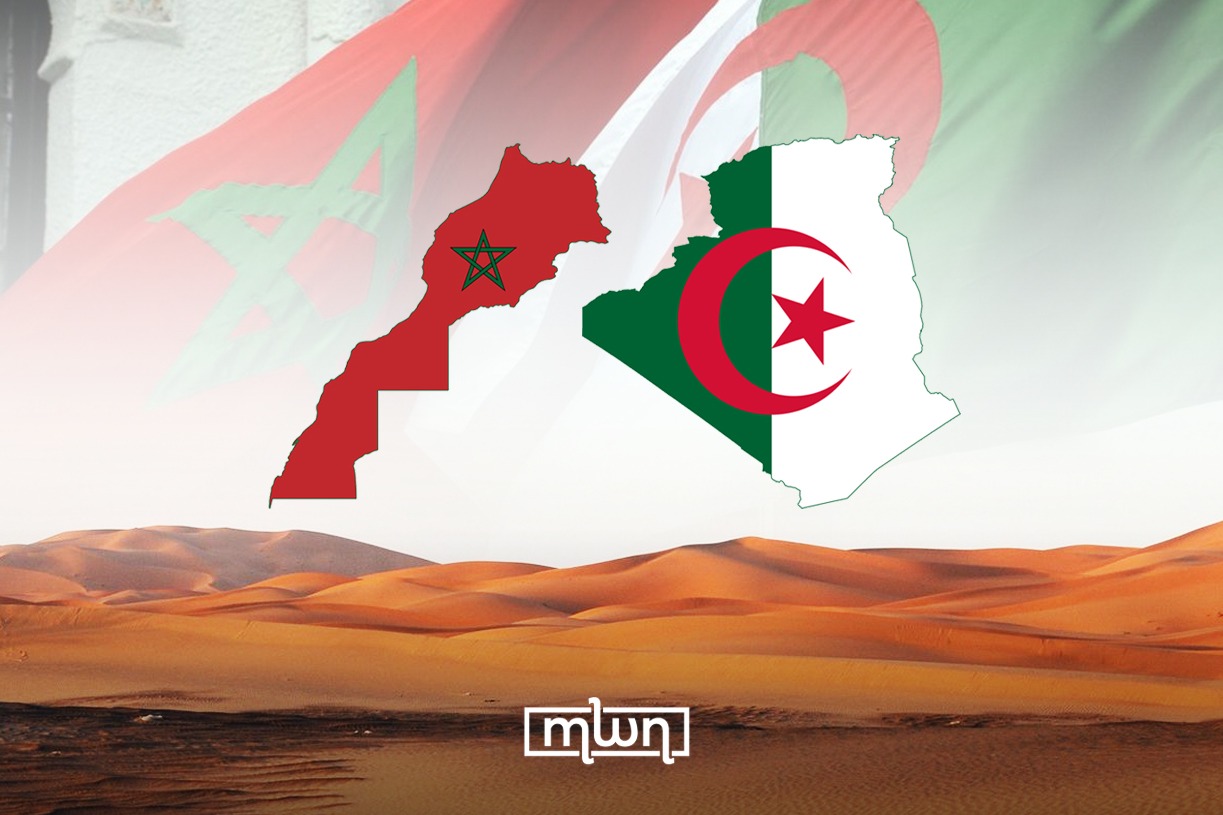
Despite Algiers’ active role in undermining Morocco’s territorial integrity, one can argue that Moroccans should reject the MAK.
Denying separatists legitimacy
From time-to-time Moroccan diplomats brought up the issue of Kabylia during fiery exchanges with their Algerian counterparts in international bodies. However, Rabat has not to date opened any representation for MAK in the kingdom, a seemingly wise thing to do.
Recognizing MAK will give legitimacy to any separatist movement in the Middle East and North Africa. Many countries in the region face the specter of partition because of foreign interventions, civil wars, and the aftermath – be it in Libya, Sudan, Yemen, or Syria.
Any further Balkanization of the region will worsen security and add more challenges to other countries which, for many years, had to deal with the rise of armed radical groups and influx of tens of thousands of refugees from war-stricken nations.
In the case of a destabilized Algeria, Africa’s largest country, this would have negative repercussions on the Maghreb, Sahel, and Mediterranean regions.
An observer not a partaker
Some Moroccan influencers have actively promoted the issue of a potential Kabylia independence. While they are entitled to their opinions, let’s remember how Moroccan diplomacy acted cautiously vis-à-vis a major event that shook up Algeria in 2019 during the anti-government protests known as “Hirak.”
At the time, the former Minister of Foreign Affairs Salaheddine Mezouar resigned as the president of the General Confederation of Morocco’s Enterprises (CGEM) when he was rebuked by the Moroccan Ministry of Foreign Affairs for making statements that backed the Hirak. The ministry described the comments as “irresponsible’’ and “reckless.”
The Kingdom was keen on not positioning itself in a way that would make it appear as meddling in Algerian domestic affairs, even though Mezouar was not holding a government position at the time. But because of his former role as Head of Moroccan Diplomacy, his gaffe was taken seriously by the ministry.
No horse in the race
MAK and other non-affiliated Kabylia activists can have their own version of the region’s specific history and highly tense relationship with the central government in Algiers, from the armed rebellion in 1963, to the Amazigh and Black Spring in 1980 and 2001, to the anti-Kabylia discourse in political and cultural circles in Algiers, and finally the series of potentially deliberate arson incidents targeting the region’s forests in recent years.
For some Moroccans, this, in addition to Algeria’s unyielding quest to undermine Morocco’s unity, is reason enough to lend Moroccan support to MAK. But the truth of the matter is that this is an internal Algerian issue, and Rabat has no horse in the race. Morocco has its own domestic challenges, including putting an end to the unfortunate issue of Rif Hirak prisoners, and closing the chapter of the Western Sahara dispute through a final resolution to the conflict that would affirm the kingdom’s sovereignty on the territory.
It’s hard to imagine that happening without reaching an agreement with the Polisario and its sponsor, and de-facto main antagonist, Algeria. This cannot be achieved if another crisis is added to the list of problems Rabat has with Algiers.
Furthermore, any Moroccan recognition of MAK will only alienate the Algerian people, many of whom feel that the Western Sahara issue is of no concern to them. Such a move will also only strengthen the Algerian military and political ruling class.
A rallying cry
Since its independence, the power structure in Algeria relied heavily by squeezing the memory of the war of independence to the last drop, and tension and conflict with Morocco and to a lesser extent with France, as sources of legitimacy for any president, except during the short-lived mandate of Mohamed Boudiaf.
Moroccan support for the MAK will provide the Algerian ruling class with an added basis for their propaganda that constantly portrays Morocco as the archenemy that’s tirelessly plotting to cause harm to Algeria and its people.
Finally, throughout King Mohammed VI speeches in which he addresses Algerian leaders, the call for a new chapter in bilateral relations and reviving the Maghreb Union is consistent.
It goes without saying that continuing to not recognize MAK is one that illustrates the Moroccan mindset.