Casablanca – In the labyrinthine streets of Derb Sultan, the walls tell two stories. One is the official narrative of a modernizing kingdom—high-speed trains and gleaming malls. The other, spray-painted in jagged calligraphy, is the story of the Dragon. This is the moniker of ElGrandeToto, the 29-year-old rapper who, in 2021, became the most streamed artist in the Arab world.
To the untrained ear, the soundscape of modern Morocco is a chaotic collision of auto-tune and trap beats. But to the millions of young Moroccans who click “play” every day, this is not just music. It is a broadcast news network, a therapy session, and a political rally rolled into one.
“Rap is the only place where the truth doesn’t need a tie and a suit,” says a 22-year-old fan outside a sold-out concert in Rabat. “They speak Darija. They speak us .”
For decades, the “voice of the people” in Morocco was the domain of intellectuals, columnists, and folk singers. Today, that mantle has been seized by high-school dropouts with laptops and microphones. This investigation explores how a localized subculture exploded into a global phenomenon, bridging the gap between the disgruntled youth of North Africa and the curious ears of the world—while terrifying the traditionalists in between.
“You say you want to educate us? How are you going to educate Moroccans when you don’t even know how to speak to them? … We are the generation you locked out, so don’t be surprised when we build our own keys.”
— Dizzy DROS, Lyrics from “M3a L3echrane”
The Evolution: From “Nayda” to Trap
To understand the present, we must exhume the past. In the early 2000s, a cultural movement known as “Nayda”(meaning “waking up” or “rising”) promised a new era of artistic freedom. Groups like H-Kayne and Fnaïre introduced hip-hop to the mainstream, often with a softened, palatable edge that aligned with the state’s narrative of a tolerant, modernizing monarchy.
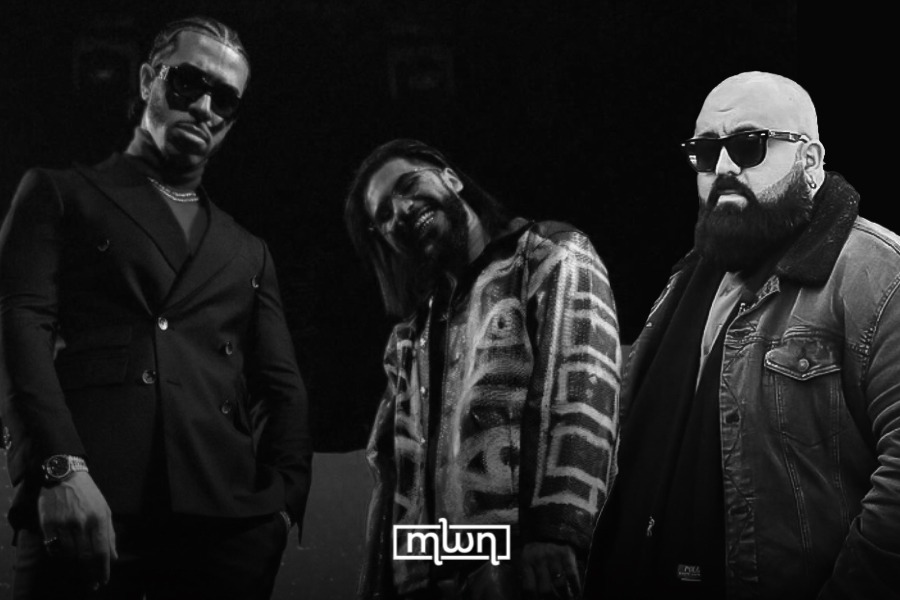
That era is dead. The new generation, led by figures like Dizzy DROS, ElGrandeToto, and Draganov, has abandoned the polite fusion of the past for a rawer, darker sound influenced by Atlanta trap and French drill.
“The Nayda generation wanted to be invited to the table,” explains a Casablanca-based music producer who requested anonymity. “The current generation built their own table, and it’s worth millions.”
This shift was linguistic as much as musical. The artists doubled down on Darija—the Moroccan vernacular Arabic often dismissed by pan-Arab purists as a “bastardized” dialect. By refusing to soften their tongue for Middle Eastern or Western audiences, they paradoxically achieved what decades of diplomacy could not: they made the world listen to Morocco on its own terms.
The Economics of Dissent
The most shocking discovery for older observers is the sheer economic scale of this rebellion. This is no longer an underground hobby.
- The Streaming Empire: With the decline of physical sales, platforms like Spotify and Deezer became the battleground. In 2021, ElGrandeToto’s album “Caméléon” amassed over 50 million streams globally.
- The “Opium” of the People: Critics argue that the commodification of rap—brand deals with Coca-Cola, luxury fashion endorsements—has blunted its revolutionary edge. Yet, the numbers suggest otherwise. The industry has created a micro-economy employing videographers, managers, and sound engineers in a country where youth unemployment hovers near 30%.
“It’s the neoliberal dream and the socialist nightmare combined,” notes sociopolitical analyst Dr. Amina Lemrini. “These kids are capitalists, but their product is the suffering of the proletariat.”
“We have much bigger problems in this country than a few song lyrics. Freedom of expression is guaranteed by the constitution. Whoever has something to say should be able to say it… The courts shouldn’t be chasing rhymes while the streets are chasing bread.”
— Don Bigg, Statement on Artist Freedoms
The Red Lines
The investigation reveals a fragile truce between the rappers and the State. While the government sponsors massive festivals like Mawazine to showcase openness, the “red lines” remain sharp.
The case of the track “Aach al Chaab“ (Long Live the People) in 2019 served as a grim warning. The song, directly criticized the King—a criminal offense—led to the imprisonment of one of its performers, Gnawi. Article 267-5 of the Moroccan penal code, incriminates anyone who “offends the Islamic religion or the monarchy, or incites against territorial integrity,” as all three are regarded as core symbols of Morocco. The sentences for offenders can range from six months to two years, depending on the offense.
Current superstars walk a tightrope. Dizzy DROS’s 2023 hit “M3a L3echrane” (With the Homies) masterfully critiqued the government, media, and society without crossing into prosecutable territory. It was a masterclass in “l’m3ani”—the Moroccan art of double entendre.
“This Moroccan youth isn’t backing down; they want a better tomorrow. If you don’t listen to the music, eventually you will have to listen to the noise.”
— ElGrandeToto, Instagram Statement
The Intergenerational Chasm
For the older generation—the parents and grandparents—this music is often viewed as a “cultural invasion.” The vulgarity, the drug references, and the aggressive posturing alienate conservative listeners.
“My father hears noise and cursing,” says Yassine, a 26-year-old graphic designer. “I hear the sound of someone who knows what it’s like to apply for 50 jobs and get zero callbacks.”
This disconnect is the heart of the story. To the older demographic, stability is paramount. To the youth, stability looks like stagnation. Rap has become the wedge driving these two worldviews apart, but also the only window through which they might eventually see each other.
Global Implications: The “Darija” Export
Perhaps the most intriguing finding is the international viability of the genre. Moroccan rap is charting in France, the Netherlands, and Belgium. It is no longer “world music” relegated to niche categories; it is pop music.
This cultural export puts Morocco on the map in a way tourism ads never could. It presents a country that is complex, gritty, creative, and undeniably modern.
The Unavoidable Voice
Moroccan rap has transcended music. It is now a documented historical record of the post-Arab Spring sentiment. For the international community and the older generation, ignoring it is no longer an option.
To listen to Moroccan rap is to listen to the heartbeat of a nation waiting for its turn. The youth are not just rapping; they are governing a digital state where their rules apply.