 Join on WhatsApp
 Join on Telegram
Across Europe’s top leagues, dozens of Muslim footballers are observing Ramadan 2026 while competing at the highest level. From England to Spain, France, Germany, and Italy, players are balancing their spiritual commitment with professional demands, running, passing, and scoring while fasting from dawn to sunset.
Clubs have adapted in different ways: the Premier League allows official sunset pauses for quick hydration, La Liga and Serie A rely on tailored nutrition and discreet breaks, and French teams require players to manage fasting mostly on their own. For stars like Noussair Mazraoui, Mohamed Salah, and Lamine Yamal, Ramadan is as much a mental and spiritual challenge as it is a physical one.
Premier League: 55 players and official sunset pauses
The Premier League counts 55 Muslim players across its 20 clubs this season, with nearly every team having at least one practicing player.
The Premier League has implemented a “Natural Pause” protocol to make life a bit easier for players who are fasting. For the 2025–2026 season, referees have a clear game plan: if a match is still going when the sun sets (Iftar), they’ll look for a quick break in the action, like a goal kick or a throw-in.
This gives players a chance to run to the sidelines and grab a quick drink or snack. Captains just need to give the referees a heads-up before the game starts, and the entire thing usually only takes about a minute.
At Liverpool FC, Mohamed Salah, Ibrahima Konaté, and Hugo Ekitiké are observing the fast.
Manchester City features Rayan Aït-Nouri, Rayan Cherki, Omar Marmoush, and Abdukodir Khusanov.
At Manchester United, Amad Diallo, Noussair Mazraoui, and goalkeeper Altay Bayındır observe Ramadan.
Mazraoui reflects on the spiritual and mental demands: “Faith is my number one priority. Playing while fasting is like playing any other month, but without food or water. I still have to play, I still have to run. There are no excuses. You have to dig deeper. You feel a lot more pain during the match than usual. But as I said, my faith is everything to me. So it’s a whole, whole, very small price to pay.”
Diallo adds, “It’s not easy when fasting, but I do it for Allah. I’m very happy to fast.”
Other notable Premier League Muslim players include William Saliba (Arsenal FC), Wesley Fofana (Chelsea FC), Amadou Onana (Aston Villa FC), Mohammed Kudus (Tottenham), Yves Bissouma (Tottenham), and Idrissa Gueye (Everton).
☪️ Lamine Yamal y millones de musulmanes empiezan el Ramadán
⏳ Millones de personas cumplen el ayuno desde el amanecer hasta el anochecer durante todo el mes más sagrado para la Ummah (comunidad) musulmana pic.twitter.com/8KKFNFkr9K
— MARCA (@marca) February 19, 2026
La Liga: 34 players and tailored plans
Spain’s La Liga has 34 Muslim players this season. Clubs rely on sports science departments to manage fasting athletes with specialized nutrition and recovery plans.
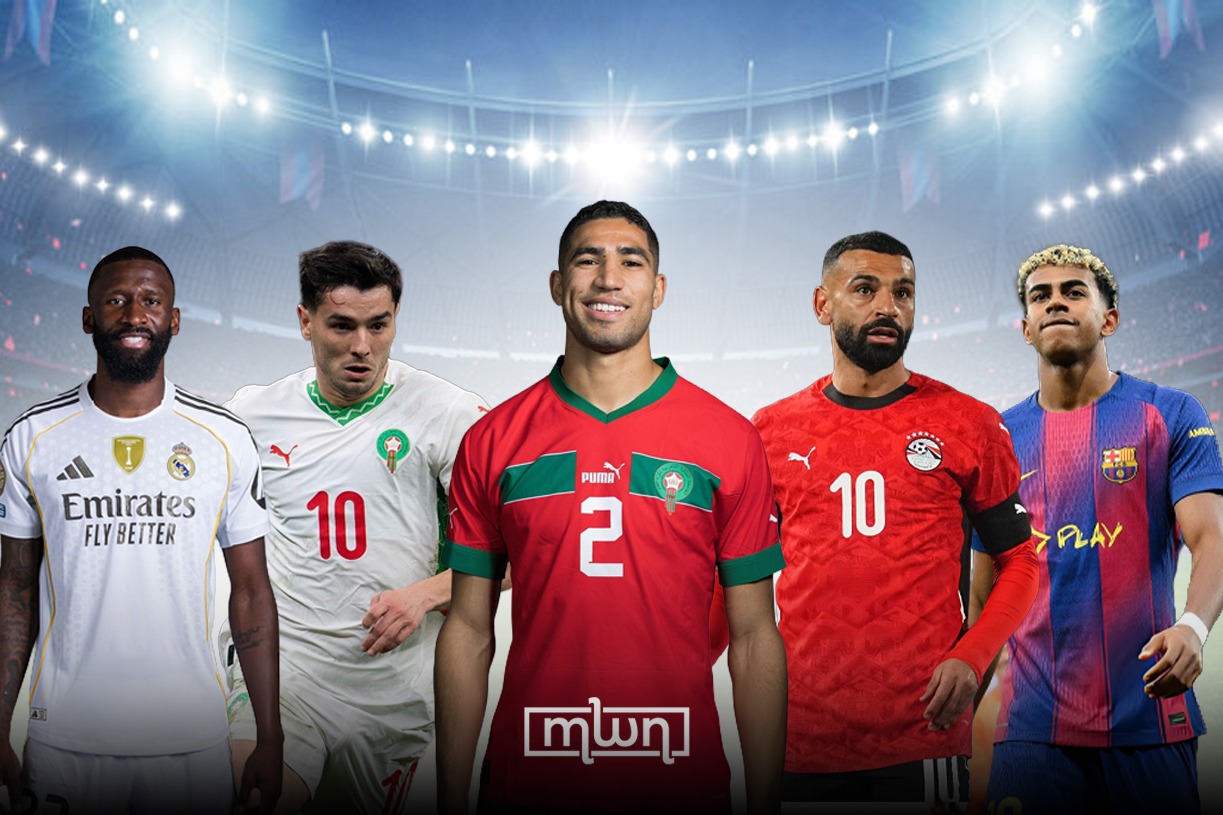
The focus in Spain is on high-performance preparation rather than official stoppages. At FC Barcelona, players like Lamine Yamal follow personalized nutrition plans focused on glycogen replenishment overnight.
Yamal said, “Fasting? It does not affect my performance. The club is fully prepared for this and provides us with everything we need to be able to perform at 100%.”
While there is no dedicated pause for Iftar, referees do not object if a player drinks quickly during a throw-in. Another muslim Barcelona player is Ansu Fati.
At Real Madrid, Antonio Rüdiger, Arda Güler, and Brahim Díaz are observing Ramadan.
Other fasting players include Vedat Muriqi (RCD Mallorca), Pape Gueye (Villarreal CF), Lucien Agoumé (Sevilla FC), and Pathé Ciss (Rayo Vallecano).
Ligue 1 / Ligue 2: The point of friction
France remains an exception in 2026. The FFF maintains its 2024–2025 position: official pause for breaking the fast is totally banned, in the name of “neutrality.” As a result, players like Achraf Hakimi (PSG) or Ilan Kebbal (Paris FC) must wait until halftime or the end of the match, unless a stoppage occurs naturally, such as an injury or VAR intervention.
Other Ligue 1 fasting players include Sofiane Diop (OGC Nice), Eliesse Ben Seghir (AS Monaco), Amine Gouiri (Stade Rennais), and Lamine Camara (AS Monaco).
Bundesliga and Serie A: Flexible approaches for fasting players
Germany and Italy have taken notably flexible approaches to accommodate fasting footballers. In the Bundesliga, referees allow short stoppages when needed, and clubs provide advanced medical support, including isotonic drinks consumed before dawn to maintain endurance.
Players such as Granit Xhaka (Bayer Leverkusen) and Serhou Guirassy (Borussia Dortmund) break their fast at the sideline when necessary.
In Italy’s Serie A, referees also show informal tolerance. High-profile players like Hakan Çalhanoğlu (Inter Milan), Ismaël Bennacer (AC Milan), and Youssouf Fofana (AC Milan) are allowed short, discreet breaks to rehydrate and refuel, usually during a natural stoppage or with staff coordination. Clubs in both countries carefully plan pre-dawn nutrition to help maintain performance throughout matches.
Many famous Muslim players who have left Europe’s top leagues continue to fast during Ramadan while playing abroad. Karim Benzema recently joined Al Hilal, who is famously known for maintaining strong performances during Ramadan, including exceptional and memorable performances for Real Madrid in 2022. Other players are Sadio Mané at Al Nassr, Riyad Mahrez (Al Ahli), Kalidou Koulibaly (Al Hilal), and Morocco’s Youssef En‑Nesyri (Al Ittihad).