



























































Fez — Moroccans gathered in large numbers this morning to perform Eid Al-Adha prayers, marking one of the most important religious occasions in the Islamic calendar.
Mosques and designated open-air prayer areas across the country welcomed worshippers early this morning, as families, neighbors, and local communities came together for Eid Al-Adha, also known as the Feast of Sacrifice.
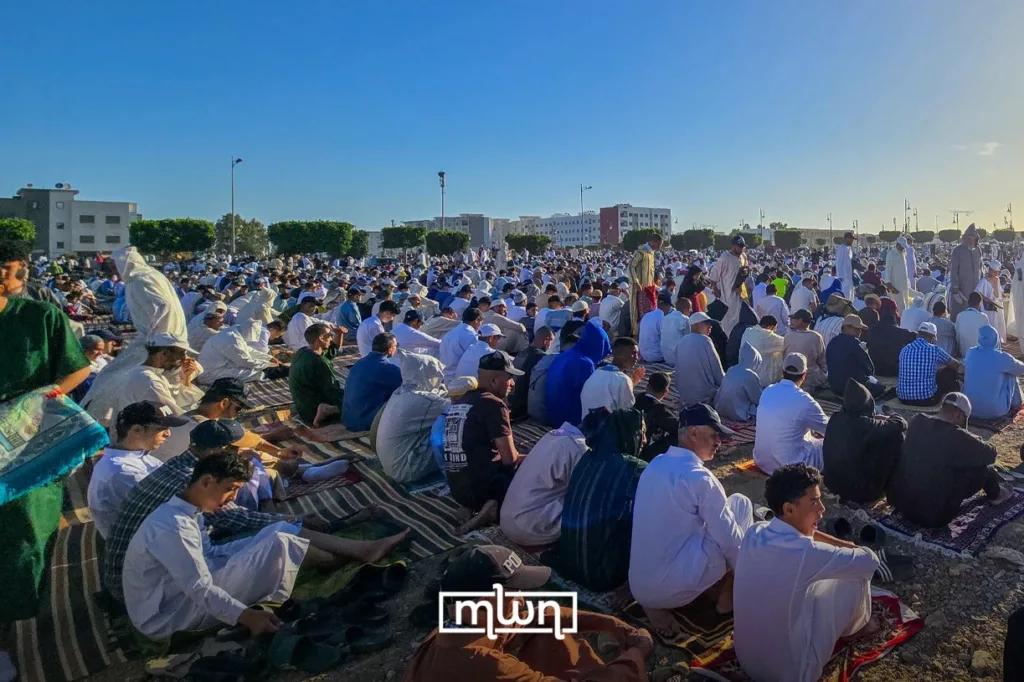
In Ain Aouda, in the Skhirate-Temara prefecture, thousands of worshippers gathered in a peaceful and spiritual atmosphere to perform the Eid prayer. Similar scenes unfolded across many other Moroccan cities and towns, where the morning prayer opened a day dedicated to devotion, sacrifice, family bonds, and solidarity.
A morning of prayer and reflection
Eid Al-Adha, also known as Eid Al-Kbir in Morocco, commemorates Prophet Ibrahim’s willingness to obey God’s command. In Islamic tradition, the sacrifice was replaced by a ram, giving the holiday its central meaning of faith, submission, and generosity.
The day traditionally begins with the Eid prayer, performed starting from sunrise in congregation. Worshippers often arrive as early as possible, dressed in traditional clothing, with men wearing djellabas or gandouras and families exchanging greetings after the prayer.
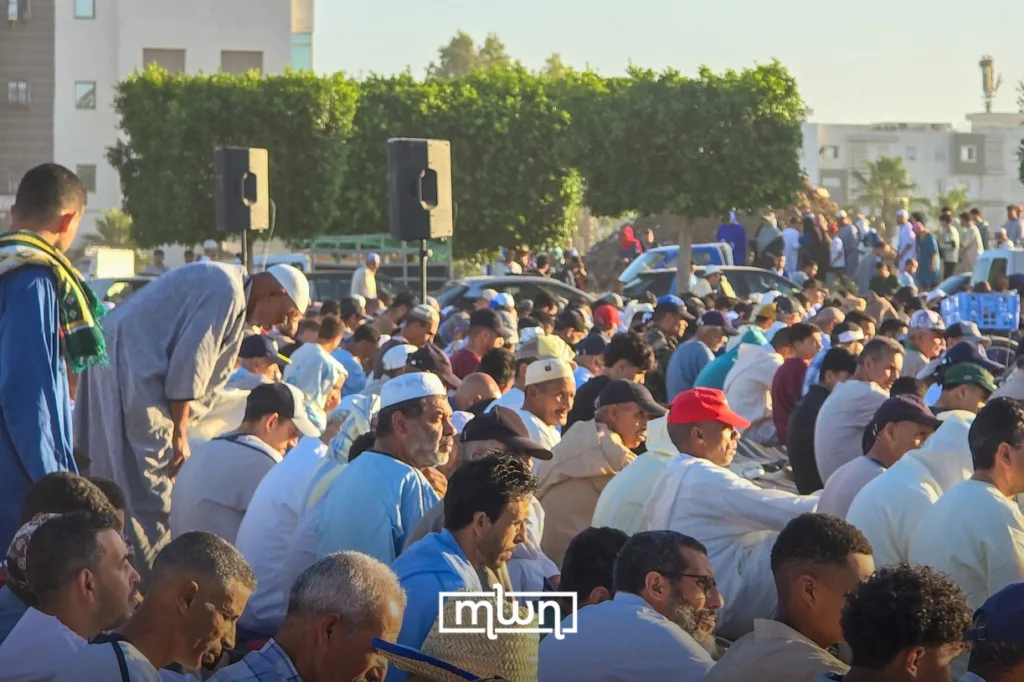
The calm scenes from Ain Aouda reflected the broader atmosphere across Morocco and the Islamic world in the morning. The prayer gathering brought together different generations, from elderly worshippers to young children accompanying their parents, perhaps for the very first time ever.
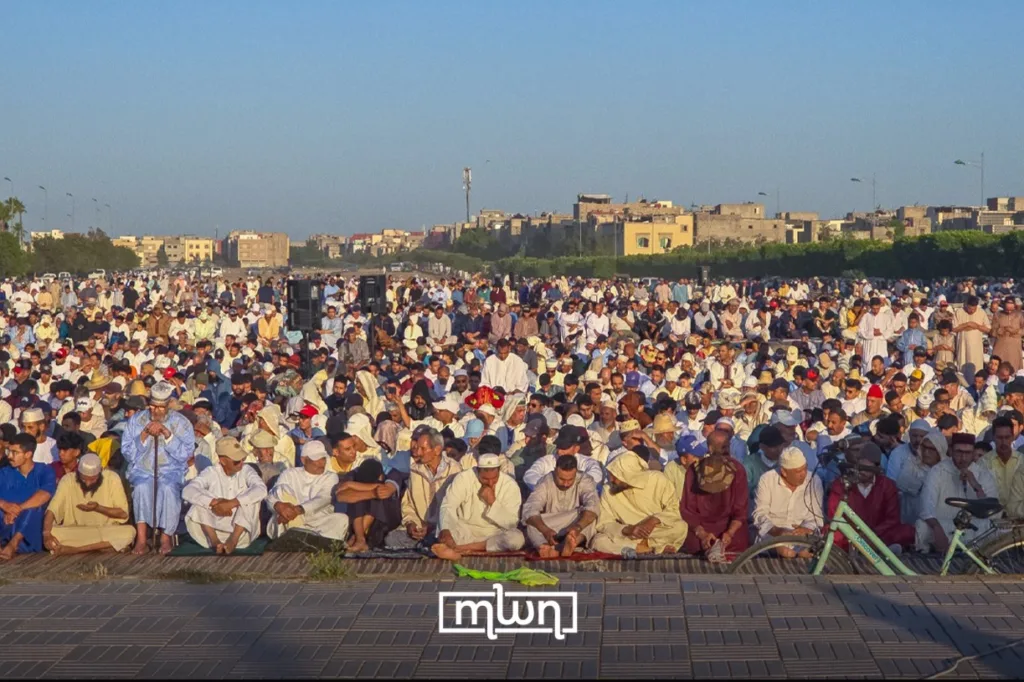
For many families, the prayer is the emotional opening of Eid. It sets the tone before the day moves into visits, shared breakfasts, the act of sacrifice, and the rituals linked to it.
A national moment of unity
Beyond its religious meaning, Eid Al-Adha remains one of Morocco’s strongest social moments. The holiday brings neighborhoods together and reinforces customs of helping relatives, neighbors, and vulnerable families.
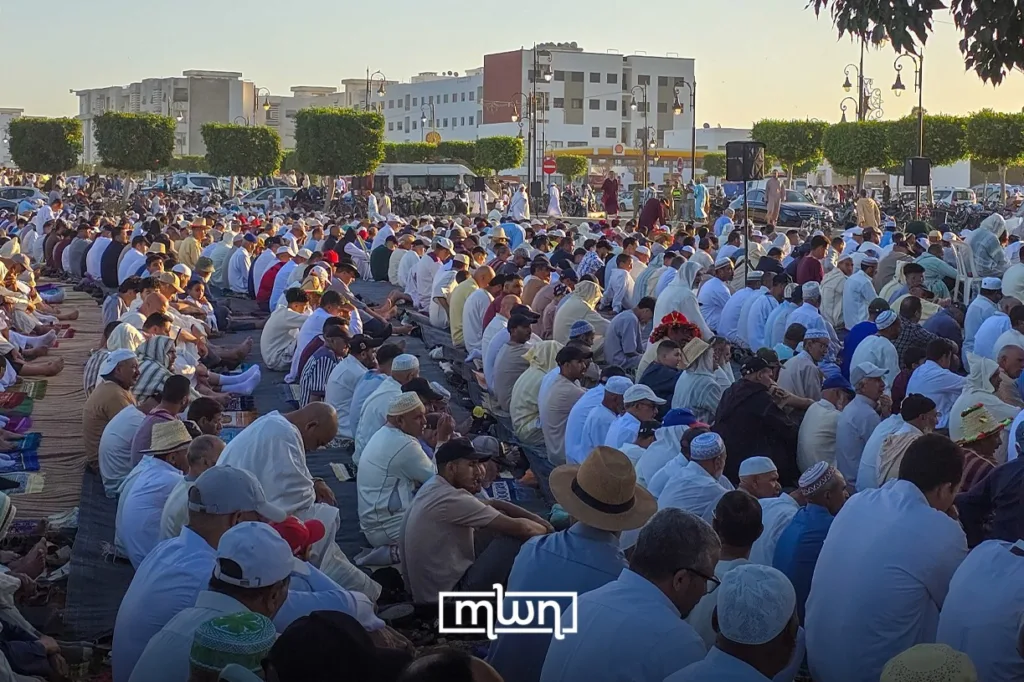
After the morning prayer, many Moroccans return home to continue the day’s traditions, namely performing the sacrifice. Others visit parents, call relatives abroad, or share greetings with neighbors before family gatherings begin.