 Join on WhatsApp
 Join on Telegram
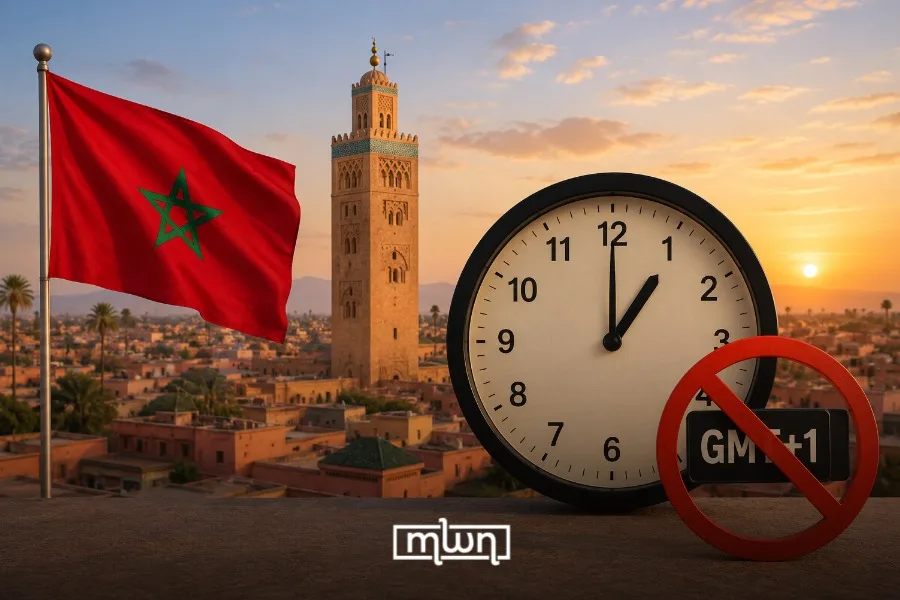
Marrakech – Morocco will permanently abandon GMT+1 and revert to Greenwich Mean Time on September 20, the government confirmed on Thursday. The Council of Government adopted Decree No. 2.26.530 on the country’s legal time, formally abrogating the October 2018 decree that imposed the additional hour on a permanent basis.
Government spokesperson Mustapha Baitas, addressing the weekly press briefing following the council session, declared the move “a definitive decision” no longer subject to debate. The decree, he noted, is backed by a binding legal framework that renders the reversal both final and enforceable within the officially stipulated timeline.
“The executive interacted positively with the demands of citizens and listened to them,” Baitas told reporters. He referenced Head of Government Aziz Akhannouch’s remarks to the press moments after the council adjourned, in which Akhannouch characterized the decision as “a positive response to the expectations expressed” by Moroccans.
Baitas disclosed that the question of legal time had been a recurring agenda item in majority coalition meetings for some time. The moment had arrived, he indicated, to formally inscribe the decree into the government’s agenda and ratify it. “It will enter into force on September 20,” he affirmed. “From then on, we return to normal time – Greenwich time.”
Years of deep-seated popular backlash
Under the decree’s provisions, clocks will be set back by 60 minutes at 2:00 a.m. on Sunday, September 20, restoring the legal time established by Royal Decree No. 455.67 of June 2, 1967. Baitas presented the text on behalf of the minister delegate in charge of digital transition and administrative reform.
The reversal follows years of mounting public backlash. Since the government of Saadeddine El Othmani institutionalized GMT+1 as Morocco’s permanent time zone in October 2018, citizens have organized sustained campaigns denouncing its toll on daily life.
A viral petition on Change.org, titled “We Want a Return to Regular Timing,” amassed about 350,000 signatures, far exceeding the 25,000-signature legal threshold required to trigger parliamentary debate. Petitioners argued that the time shift caused continuous disruptions to biological rhythms, negatively affecting academic and professional performance as well as mental and physical health.
Labor unions, parliamentary advisers, and business groups – including the National Federation of Café and Restaurant Owners – joined the chorus of opposition, citing adverse effects on workers, students commuting in the dark, and consumer habits.
The campaign had entered a formal legal phase under Morocco’s participatory democracy framework, with a national committee of roughly 200 volunteers coordinating signature collection across the country’s 12 regions.
Organizers had also announced plans to petition the Economic, Social, and Environmental Council (CESE) for a comprehensive evaluation of the policy and called on voters to support political parties committed to restoring standard time in future elections.
The timing of the announcement invites scrutiny. Morocco’s parliamentary elections are scheduled for September 23 – exactly three days after the GMT restoration takes effect. The GMT+1 issue had already taken on an unmistakable political dimension ahead of the vote, with parties across the spectrum positioning themselves on the question.
The Moroccan Liberal Party had pledged to abolish GMT+1 within its first 100 days in office if elected. The Justice and Development Party (PJD), which ironically presided over the government that institutionalized GMT+1 in 2018, formally adopted the demand for its repeal in 2026 – the first party to do so.
Its Secretary General declared on multiple occasions that scrapping the additional hour would rank among the party’s first acts should it return to power. In a statement published hours after Thursday’s announcement, the PJD claimed credit from the opposition benches, asserting it had driven the reversal before even rejoining government and describing itself as a party that “reviews and corrects whenever the public interest demands it.”
The ruling coalition’s decision to deliver on the demand just before polling day carries the heavy scent of electoral calculation.
For an electorate that had made GMT a litmus test for any party seeking their ballot, the government’s move reads less as responsiveness to public welfare and more as a pre-election concession – a calculated bid to neutralize a potent campaign grievance and shore up voter goodwill at the most politically convenient moment.
What the coalition presents as listening to the people, critics will recognize as a transparent attempt to defuse a ballot-box liability three days before Moroccans head to the polls.