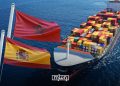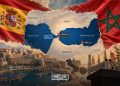
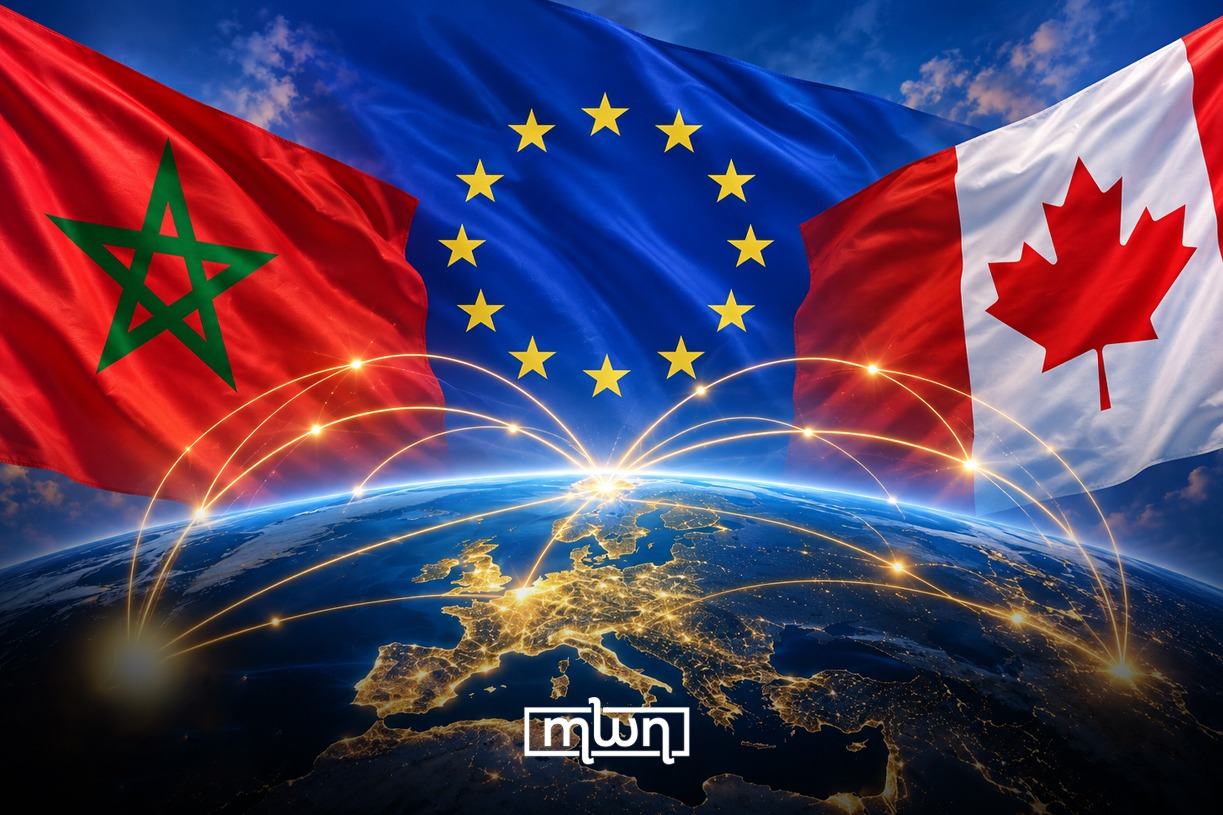
Ursula von der Leyen wants Canada to become the EU’s “first associate member,” a category found in no EU treaty. Morocco, about 14 kilometres from Europe across the Strait of Gibraltar, was told in 1987 that it could not join because it was not a European state. Brussels now speaks of a “Common Mediterranean Space,” yet the language of membership has been extended to a country across the Atlantic. Rabat is now forming a new government, and EU officials say Brussels wants to finalize a comprehensive partnership with Morocco by the end of the year. What Brussels puts on that table will say more than any speech.
In her State of the Union address on September 16, the European Commission President told MEPs: “I would like to work with you on opening the door for Canada to be the first associate member of the EU.” After a standing ovation, she walked across to embrace Prime Minister Mark Carney. An EU diplomat summed up the proposal’s legal clarity for Reuters: “nobody really knows what it means.”
It was a political proposal, not a decision. For Ottawa, the paperwork can apparently come later.
Measured with a map
Morocco applied to join the European Communities in July 1987 and was rejected because it was not a European state. Article 49 of the Treaty on European Union still limits eligibility for membership to “any European State.”
Rabat signed its first association agreement with the EEC in 1969; the current one entered into force in 2000, and in 2008 Morocco was granted “advanced status.” The relationship deepened; the terminology still stopped short of “member.”
Canada is not applying for accession; Carney speaks of a “unique alliance.” Yet Brussels chose the vocabulary of membership. For Rabat, geography closed the door. For Ottawa, the Commission is proposing a new one.
King Hassan II famously compared Morocco to a tree whose roots reach deep into African soil while its leaves breathe the winds of Europe. Brussels still prefers to look at the roots.
What Morocco already brings
EU–Morocco trade in goods reached a record €62.2 billion in 2025, and the EU accounts for 33.7% of Morocco’s goods trade. More than half of EU imports from Morocco are machinery and transport equipment, with the automotive clusters around Tangier and Kenitra deeply integrated into European supply chains.
Moroccan authorities say they thwarted 73,640 irregular migration attempts in 2025. Millions of people of Moroccan origin live in Europe. In 2030, Morocco will host the World Cup alongside Spain and Portugal.
The relationship is not free of friction. Farmers in Spain and France have protested against Moroccan produce, and trade in agriculture remains a sensitive issue on both sides.
The asymmetry is most visible in mobility. Schengen consulates in Morocco received about 620,000 short-stay visa applications in 2025; 114,320 were refused. Canadians already travel to the Schengen area visa-free, and, according to a senior Canadian official quoted by the Associated Press, Ottawa now wants them to be able to live and work in Europe without visas.
Rules that bend
Ukraine applied for membership on February 28, 2022, four days after Russia’s full-scale invasion, and became a candidate less than four months later. This year, EU officials and diplomats have discussed a model informally dubbed “reverse enlargement,” under which a candidate could join before acquiring full membership rights later. A country at war is an exceptional case. But it shows how far politics can bend procedure.
Ankara and Rabat have seen little of that flexibility. Türkiye has been a candidate since 1999, with talks at a standstill since 2018. Morocco was measured with a map. Canada was offered a status before anyone had defined it.
Von der Leyen opened no negotiations; under Article 218 of the Treaty on the Functioning of the EU, that takes a Council mandate. She offered a destination before member states had agreed on what the status would entail. The Reuters diplomat was less diplomatic: she “is overpromising and won’t be able to deliver.”
A new government, and a chance to start again
On September 29, King Mohammed VI appointed Fatima Ezzahra El Mansouri to form Morocco’s next government, the first woman to be asked to head one. The timing matters: Brussels is trying to close a comprehensive partnership with Rabat. The former housing minister and longtime Marrakech mayor comes to the job with a domestic agenda centred on economic modernisation, jobs, housing and public services rather than foreign policy. That domestic focus creates room to broaden the relationship with the EU beyond migration and diplomacy.
The monarchy retains the dominant role in foreign affairs, and Brussels will continue to deal closely with King Mohammed VI and Foreign Minister Nasser Bourita. But the priorities facing the next government, water, energy, housing and youth employment, match areas where Europe is already investing heavily, through Global Gateway, European Investment Bank lending and the Pact for the Mediterranean. Her experience in housing and urban development overlaps with several of them.
That creates an opening. The question is what Brussels brings to it.
Equals, on paper
In January, and again in April, the EU and Morocco jointly described their ties as a “partnership of equals.” Warm words. Partners, however, are not members.
The test will come within months. EU officials have told Euronews that Brussels hopes to finalise a strategic and comprehensive partnership with Rabat by the end of the year, and in January the Council authorised negotiations on a new fisheries agreement.
A partnership built mainly around borders and migration management would confirm what Rabat already suspects. A partnership built around industry, energy, research and mobility would be something new, and it would cost Brussels less than the vocabulary it offered Ottawa.
From Tarifa, on a clear day, you can see the Moroccan coast. Ottawa lies an ocean away. Brussels owes Rabat a simple answer: if this is a partnership of equals, why was the language of membership offered first to a country across the Atlantic, before the Union even knew what it meant?