

























































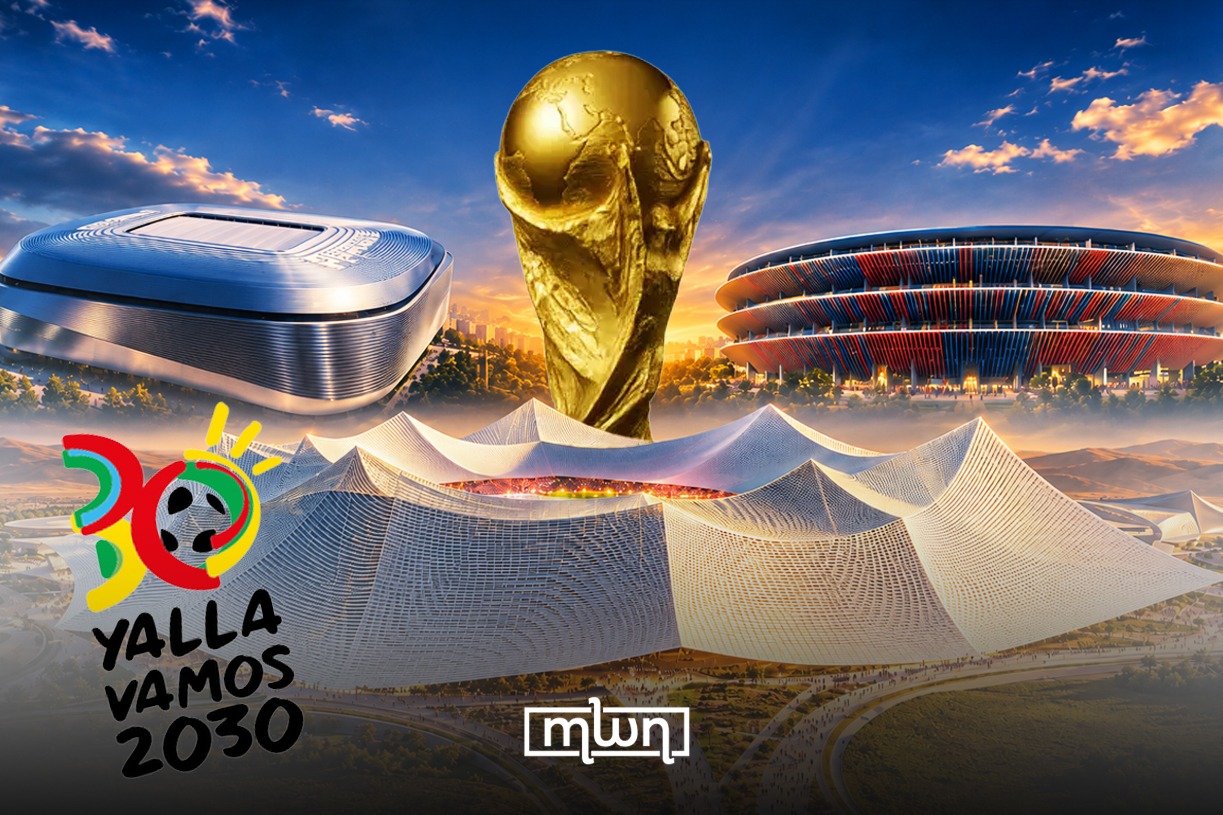
Casablanca – Spanish football officials initially assumed that hosting the 2030 FIFA World Cup final was practically guaranteed, with little expectation that Morocco would emerge as a serious competitor for the tournament’s biggest match, according to a Reuters investigation published on Wednesday.
The report, which draws on interviews with football executives, government officials, and individuals involved in the bidding process, reveals how Morocco’s ambitions have disrupted Spain’s initial expectations and exposed disagreements over which Spanish city should host the final.
A senior Portuguese official involved in the joint bid told Reuters that Spain had mistakenly assumed Morocco’s later entry into the project meant it would not compete for the final.
“They should have seen it coming,” the official said.
The revelations come just two days after Spanish Prime Minister Pedro Sanchez declared in an interview with Mundo Deportivo that the 2030 World Cup final would take place in Spain, despite FIFA having made no such announcement.
An old rivalry complicates Spain’s bid
While Morocco has concentrated its efforts on the Grand Stade Hassan II near Casablanca, Spain has yet to rally behind a single venue. The longstanding rivalry between Real Madrid and Barcelona has extended into the competition to host the final, with both clubs promoting their respective stadiums.
Barcelona President Joan Laporta’s public campaign for the Camp Nou reportedly frustrated some officials within the Spanish Football Federation (RFEF), who believed his intervention undermined the unity Spain needed to compete with Morocco.
Ricardo Trade, former CEO of the 2014 FIFA World Cup Organizing Committee, told Reuters that Spain should have resolved the question of its preferred venue during the original bidding process.
“Spain is terrified of losing the final, a final they were absolutely certain they’d be hosting,” Trade said.
He contrasted the competing interests of Madrid and Barcelona with Morocco’s united approach and its planned 115,000-seat stadium.
RFEF Secretary General Alvaro de Miguel, however, denied that divisions existed within the Spanish camp. He argued that having two potential venues competing against Morocco’s single candidate improved Spain’s prospects.
Morocco’s case is not just about capacity
The Grand Stade Hassan II, which FRMF President Fouzi Lekjaa expects to be completed in early 2028, forms part of a much wider infrastructure program. According to IMF figures cited by Reuters, Morocco plans to invest approximately $19 billion between 2024 and 2030 in stadiums, airports, hotels, and transport networks.
Morocco still faces challenges, particularly in accommodation capacity. FIFA’s technical assessment rated Casablanca’s accommodation offering for the general public below that of Madrid and Barcelona.
Trade nevertheless pointed out that the selection of a host venue does not necessarily depend solely on existing infrastructure. The potential long-term benefits for the host country can also influence such decisions.
Staging the final would represent an opportunity for Morocco to bring football’s biggest match back to Africa for the first time since South Africa hosted the World Cup in 2010.
FIFA told Reuters that it has no standard procedure for selecting the final’s venue and that its decision will involve consultations with host cities, countries and governments.
Its inspectors are visiting candidate host cities in November and December, but the governing body has yet to establish a public timeline for its announcement.
What Spanish officials initially regarded as a settled matter is now an open competition, with Morocco firmly in contention.