


 Join on WhatsApp
  Join on Telegram
 Rabat – On the night of March 31, 2022, Alae Aboussad’s father woke her up with an announcement she never expected to hear: She had been accepted into undergraduate studies at Harvard, a highly selective Ivy League university with a 3.19% acceptance rate in 2020.
Shocked and disoriented, the 18-year-old girl from Tamesna, Morocco sat in her bed, wondering if she was still dreaming.
“Then, it was euphoria,” Aboussad said.
While Moroccans tend to choose French universities because of their language skills, young Moroccans are now experiencing a shift toward learning English. With that, studying abroad in English-speaking universities is becoming increasingly attractive.
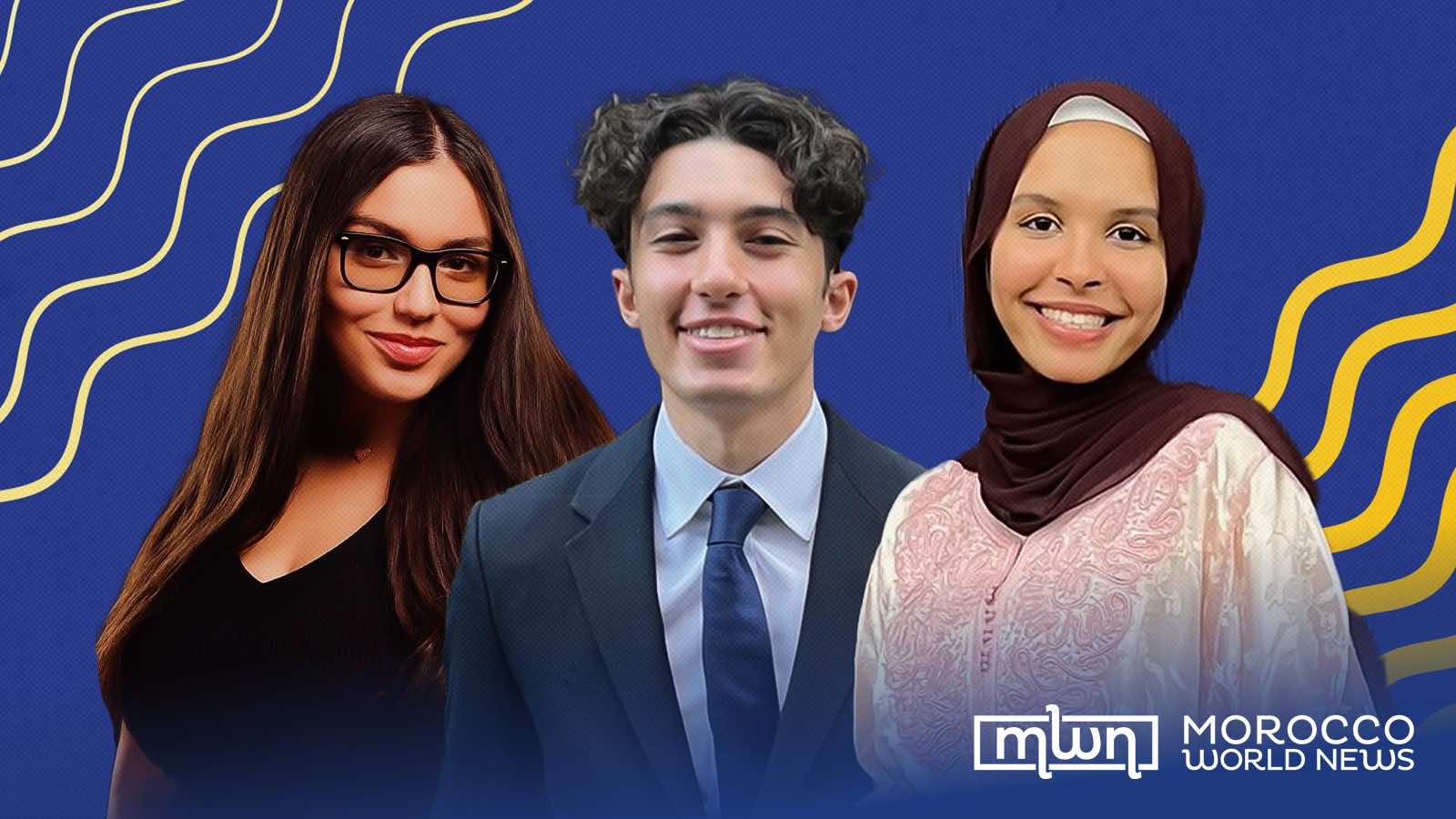
Morocco World News (MWN) spoke with four undergraduates who are Moroccan or of Moroccan descent, all of whom attend prestigious American universities.
From Tamesna to Harvard
Prior to university, Aboussad spent a year in North Dakota on the US government’s Kennedy-Lugar Youth Exchange and Study (YES) program, enrolled in an American high school, and living with a host family.
Aboussad learned English at a language center in Morocco, so she found the transition to life in the US rather smooth. She explained, “because movies, music, and social media are often centered around the US, there was never anything that shocked me.”
The American system’s flexibility was an appealing factor for Aboussad, as most schools in the US give students at least one year to explore different paths before they declare their major (main field of study), unlike universities in Morocco and most other countries.
For Moroccan students hoping to attend prestigious US universities, Aboussad advises them to create their own opportunities because Moroccan high schools do not have as many extracurricular activities as American high schools.
At Harvard, she misses Moroccan food, as the only Moroccan restaurant she has found in the area is inauthentic and pricey. However, she appreciates the student body’s curiosity toward the international student’s home countries.
“In North Dakota, most people don’t even know where Morocco was — many thought it was a city in Spain,” she said. “[But at Harvard], it’s really nice to have people who are genuinely interested in learning about my culture.”
Daughter of the American Dream
Unlike Aboussad, older generations of Moroccan immigrants to America generally had a non-existent or very low English level. Such is the case for the father of Layla Chaaraoui, a fellow Harvard student born in Pennsylvania to a Moroccan father and an Italian-American mother.
Chaaraoui’s father immigrated to America in 1999 from Casablanca, where his family still lives. At age twenty-five, he saw advertisements on TV enticing him to America, and he saw himself starting a life and raising a family there.
He learned English from scratch by listening to people. Throughout his time in the US, he has worked his way up from a clothing store employee, to busboy, to a server, and finally the owner of a diner for twelve years, overseeing many Moroccan employees.
“My dad is the definition of the American Dream,” his daughter said. “Now he has so many good connections both inside the community — a lot of prominent people eat at his place — and in other parts of the US.”
Chaaraoui, his daughter, continued his legacy by becoming the first person from her high school to go to Harvard, a feat widely celebrated by her community and her Moroccan family.
A Voice for Islamic Students
Born in New Jersey to Moroccan parents from Casablanca, Elias Benchekroun grew up in New York and is now an undergraduate student at UC Berkeley’s, ranked by Forbes as the number 1 university in the United States in 2021.
Benchekroun grew up in a Moroccan home speaking Darija and French, but he sometimes found it hard to keep in touch with his roots in his predominantly-white and non-Muslim neighborhood.
“There were times when I wanted to suppress and hide [my heritage], such as when I can’t eat pepperoni pizza [which always contains pork in the US] or when people say that my lunch looks weird,” he said. “But as I get older, [my heritage] is something I’ve grown to love and is a key part of my identity.”
Moving to UC Berkeley, Benchekroun is glad to have found more Moroccans and an even larger community of Arab students. Still, being Muslim can be a struggle, such as when the dining hall only served pork and refused to give students to-go boxes for the Ramadan pre-dawn meal, he said.
When Benchekroun found that the dining hall planned to serve pork on a big eid celebration, he called out the dining hall’s ignorance publicly on Instagram, eventually leading to a menu change for that day.
After his public petition, many non-Muslim students told Benchenkroun that they were not aware of Muslim dietary requirements and hoped to work as a community to actively fix the difficulties, a reaction Benchekroun described as “inspirational.”
It is a shame that many people do not understand Morocco and sometimes mysticize it as “a magical Arabian world with Aladdin, belly dancers, and Genies,” he said, which is why he is an advocate.
“When people ask me where I’m from, I usually say Morocco first,” he said.
Multi-faceted Identities
In a country as diverse as the US, identity can be more complex than simply Moroccan-American. Harvard student Suheila Mukhtar was born in Virginia to a Moroccan mother from Sale and a Nubian (an indigenous ethnicity in northern Sudan) father.
Although her mother speaks Darija and she can understand it, Mukhtar speaks a Sudanese dialect because she grew up surrounded by a higher Sudanese population.
“When I go to Morocco, I look Moroccan until I open my mouth and people hear the Sudanese dialect, then some questions arise,” she said.
Because of her hometown’s diverse ethnic background and her parents’ pride in their immigrant identities, Mukhtar felt connected to her culture growing up, so she was worried that transitioning to college would distance her from it.
To her surprise, Harvard has a strong Arab community, with cultural celebrations, political conferences, and Arabic debate competitions. Organizations such as the Society of Arab Students and the Islamic Society welcome diversity.
“Being an Arab in itself is in no way a hindering factor to your experience as a college student in America,” Mukhtar said.


