


 Join on WhatsApp
  Join on Telegram
 Marrakech – Family-owned enterprises account for 92.9% of Morocco’s entrepreneurial fabric, generate 60.5% of national value added, and employ roughly 6.3 million people – nearly 65% of the country’s workforce.
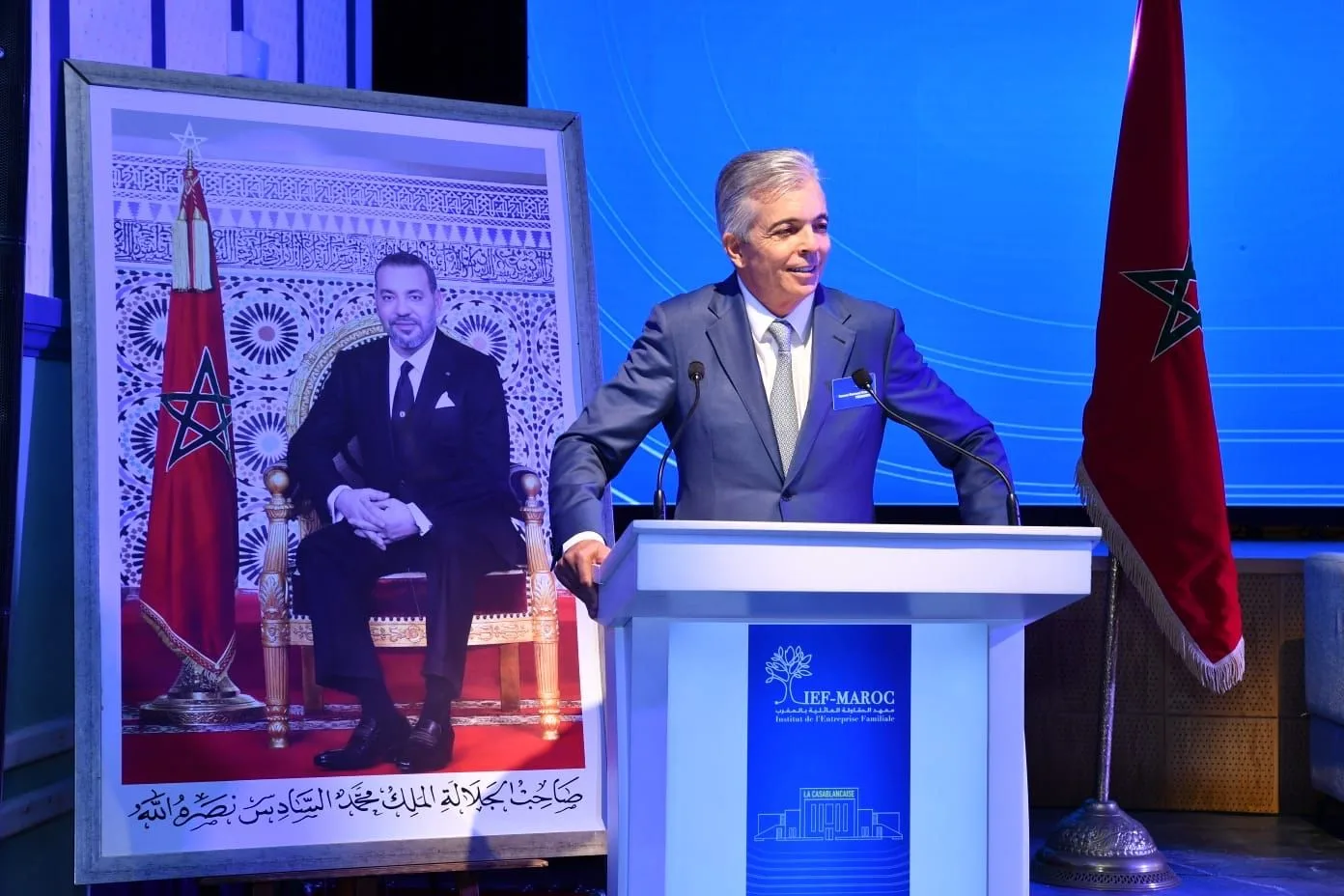
These are the headline findings of the first national study dedicated to the economic weight of family businesses, unveiled on June 4 in Casablanca by the Institut de l’Entreprise Familiale Maroc (IEF-Maroc) with support from the International Finance Corporation (IFC), a member of the World Bank Group.
The study, the product of two years of research, was presented during the third general assembly of IEF-Maroc. Its findings confirm what economic actors long suspected but lacked data to prove: family businesses constitute one of the primary engines of growth and job creation in the kingdom.
These numbers come with a significant caveat, however. Only 15% of Moroccan family firms survive to the third generation, and a mere 5% have crossed the 50-year threshold. The average age of a Moroccan family enterprise stands at 24.2 years, with 31% currently led by second-generation management.
IEF-Maroc President Kacem Bennani-Smires framed the succession challenge in broad national terms. “The family business is not merely a family matter – it concerns the entire economy and the country as a whole,” he declared.
He warned that when intergenerational transmission fails, the consequences extend well beyond the founding family: jobs vanish, strategic competencies erode, and decades of accumulated expertise disappear.
“Eighty-five percent of family businesses do not survive to the third generation – a genuine family and economic tragedy,” Bennani-Smires affirmed, calling for stronger succession planning and more professional governance structures.
Minister of Industry and Commerce Ryad Mezzour, speaking at the conference’s opening, described family firms as “the backbone of Moroccan commerce and the national economy.” He urged entrepreneurs to accelerate their international expansion, build proprietary brands, and capitalize on emerging technologies, particularly artificial intelligence.
Read also: Morocco Records 92,000 New Businesses in 2025 as Reforms Drive Growth
Cheick-Oumar Sylla, IFC Regional Director for North Africa and the Horn of Africa, noted that the study translates long-held intuitions into objective data. For him, the findings reinforce the relevance of World Bank and IFC efforts to support private-sector development, entrepreneurship, and employment across the region.
Beyond the macro figures, the study offers a granular portrait of the sector. Nearly 75% of Moroccan family firms qualify as very small, small, or medium-sized enterprises, indicating their critical role in local economic activity and territorial development.
Those that do achieve longevity tend to outperform non-family counterparts, benefiting from more structured governance and better-prepared leadership transitions.
Othman Benkirane, CEO of Kitea Group and a second-generation leader, pointed to the value of peer exchange within IEF-Maroc, crediting interactions with third- and fourth-generation executives as a vital source of insight into the challenges ahead.
The study identifies several priority levers: strengthening intergenerational succession mechanisms, improving financing access for family-owned SMEs, promoting governance best practices, and supporting digital transformation.
For IEF-Maroc, the publication marks the start of a broader effort to embed family enterprise considerations into public policy and national development strategies.


