
























































Rabat – As of April 2021, Morocco’s unemployed population stands at 1.6 million, an increase of 128 thousand unemployed people, according to the High Commission for Planning (HCP). Among the worst hit sectors in Morocco is the handicraft industry, which lost 53 thousand job positions.
However, Morocco’s agricultural, construction, and service sectors all recorded an increase in employment of 318 thousand, 108 thousand, and 40 thousand jobs respectively.
An economy’s performance is tracked using many indicators, including unemployment rate. The Indicator represents the number of unemployed people in the working age group (15-65 year-olds).
Unemployment rate is closely related to the Gross Domestic Production (GDP) indicator, which keeps track of the market value of goods and services produced in an economy. Economists agree that an increase in GDP results in a reduction in unemployment in a country.
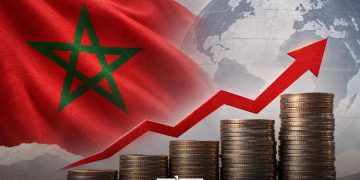
The North African country recorded $124 billion (MAD 1,12 trillion) in Gross Domestic Production (GDP) in 2021, marking an increase of 10.45% from 2020. These figures are not adjusted for inflation, which is the rate of increase in prices or the decrease of currency value.
Morocco’s economy recorded $ 32.4 billion (MAD 294.4 trillion) in Real Gross Domestic Production (RGDP), which is a more precise index that accounts for inflation. The inflation rate stands at 0.8%, meaning that the increase in consumer prices remains well below the 2% inflation rate recommended by experts.
Morocco’s economy contracted by 5.9% in Real GDP in 2020, according to the International Monetary Fund (IMF), due to the strict three-month lockdown in 2020 and the drought that affected rural income. Morocco’s main trading partners in Europe reduced demand on imports, which decreased exports by 10.1% in the first 10 months of 2020.
Public debt remains high as prior to the pandemic as a result of the government infrastructure plans, according to the African Development Bank.
However, in 2020, Morocco ranked 53th in the World Bank’s Doing Business, a list that tracks the ease of doing business in 190 countries based on how friendly the regulatory environment is. In 2021, the North African country is forecasted to further improve its ranking on the list by ranking 51.