


 Join on WhatsApp
  Join on Telegram
 By Mohammed Amine Benabou
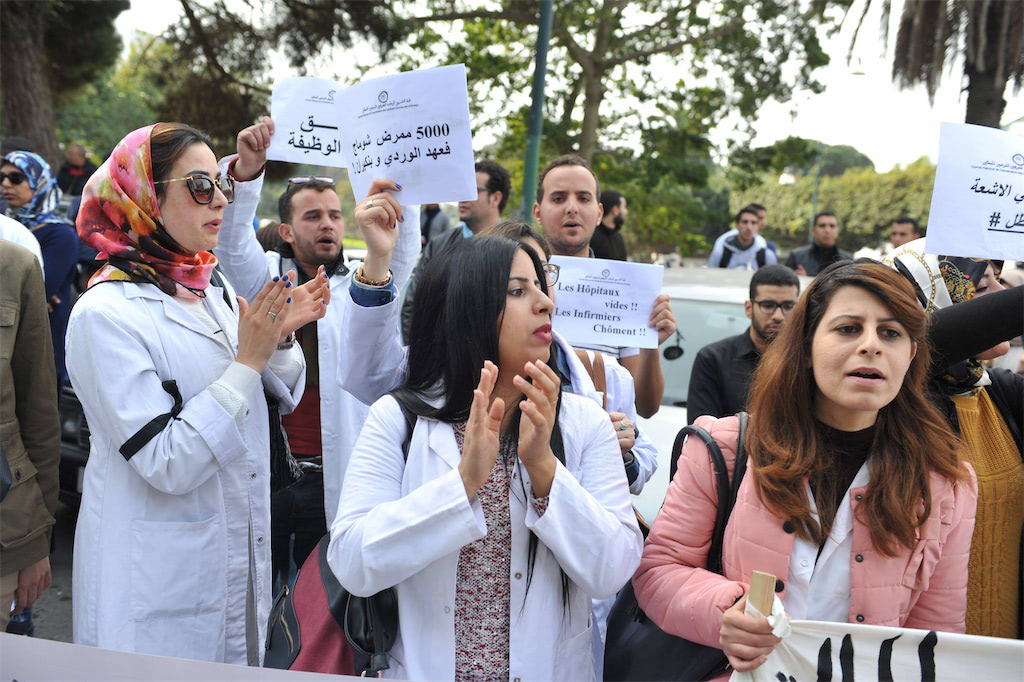
Rabat – Nurses are planning to stage three nationwide strikes starting next week. They decided to go on a weekly strike for the next three weeks, March 13, 21, and 28.
In a meeting organized by the Movement of Nurses and Health Technicians in Morocco (MITSAM) on Saturday, March 2, nurses outlined the details of their strike, which they say is in response to the Ministry of Health’s reluctance to take their demands seriously.
The nurses are calling for “equality in compensation for occupational hazards, revision of the unjust conditions for promotion, justice for victims, setting up a job and competency framework, and the integration of unemployed nurses into the public sector.”
Afaf Elam, a member of MITSAM’s national committee of media and communication, said in a statement, “If our demands are disregarded, we will stage a 24-hour nationwide strike on April 16-17 along with a march in the capital.”
She clarified that the strike will involve all hospital staff except for emergency departments and intensive care units.
Despite previous strikes carried out throughout 2018 up to today, Elam stated, nurses find themselves compelled to engage in more strikes, which are detrimental to patients, because the government “has been inattentive to our demands.”
In December 2018, police arrested a nurse for alleged infant negligence and subsequent death. The nurse served one month in prison and was released on bail early this year.
MITSAM ascribed the negligence to the absence of specialists, saying the hospital did not have a pediatrician or pharmacist, amid a severe shortage of human resources.
In a 2010 report, the World Health Organization (WHO) stated that it found in 2006 that Morocco was “among the countries that remain extremely vulnerable to the exodus of health care professionals to other countries.”
According to the WHO, in 2007, “the number of medical, nursing, and paramedical staff providing direct care to patients was well below the critical threshold of 2.3 health care providers for every 1,000 inhabitants,” which is “necessary to assure essential care,” especially in relation to the attainment of the Millennium Development Goals set by the United Nations in 2000.


