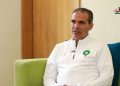
Rabat – In an interview with the French magazine JeuneAfrique, Moroccan Minister of Foreign Affairs Nasser Bourita discussed key issues related to Morocco’s foreign policy.
From Western Sahara, to the reintegration of the African Union (AU), the bid to join the Economic Community of Western African States (ECOWAS), and the relationships with main Polisario-supporters Algeria and South Africa, Bourita explained Morocco’s positions.
Western Sahara: No More Biased Terminology
With Morocco’s return to the AU, the continental organization turned into an arena between the kingdom and Polisario and its allies.
Backed by its friends, Morocco had in July a first confrontation with the self-proclaimed Sahrawi Arabic Democratic Republic (SADR) and its supporters over the terminology used by the African Commission on Human and Peoples’ Rights (ACHPR) and the Peace and Security Council (PSC), which referred to Western Sahara as “occupied” and “annexed” territories.
“These terms deviate from the fundamentals of the United Nation,” he said. “In the absence of Morocco, the UA was taken as a hostage by some who led it to become disconnected with reality and the examination of the issue inside the UN.”
With Morocco being reintegrated into the continental organization, the kingdom will make sure to impose its position as it did in July when the AU’s Executive Council adopted a text adding the term “Western Sahara” to the terminology already used by the AU, which is SADR, in reference to the disputed territories.
“We managed to correct those fallacious perceptions thanks to the understanding of member states and the presidency of the AU Commission,” noted Bourita.
AU: Reintegration Is Not an End in Itself
When asked about Morocco’s assessment of the seven months period since the kingdom was readmitted into the organization, Bourita answered, “Morocco’s return to the AU is a turning point, but it’s not an end in itself.”
Bourita affirmed that the reintegration of the AU, as explained by King Mohammed VI in previous speeches, has two main objectives: “Contribute in the collective action for Africa,” and make Morocco’s voice heard within the AU, especially when it comes to the issue of Western Sahara.
As for the first objective, Bourita said that Morocco’s contribution is highlighted by the respect King Mohammed VI enjoys for the migration policy he initiated.
Bourita said Morocco had already made a proposition to come up with an Africa agenda, and added that the kingdom also transmitted to Paul Kagame, the AU president, written suggestions to reform the organization, saying these are but examples of Morocco’s positive contribution.
ECOWAS: Morocco’s Admission Benefits Both Parties
The agreement “in principle” that ECOWAS gave to Morocco’s membership request proves the organization sees that its potential admission will benefit both parties, the minister suggested.
He noted that seeking membership of ECOWAS is a “gradual process,” during which the regional context should be taken into account.
“After the political agreement, we are now at the legal phase,” he said. “A stage of technical negotiations will ensue.”
The minister affirmed that Morocco is contact with ECOWAS’s commission ahead of the upcoming conference in Lomé, Togo, in December.
While Morocco’s geographical position raised questions, with some critics saying the kingdom does not belong to West Africa, Bourita responded by pointing to the case of Mauritania, which is too a member of the Maghreb Arab Union, but was also a member of ECOWAS before leaving in 2000.
“ECOWAS is a regional economic community, and not a geographical one,” he said.
Relations with Algeria: No Progress
When it comes to the stormy relations with neighboring Algeria, Polisario’s main sponsor since the seventies, Bourita has nothing but words of regret.
“Unfortunately, relations with Algeria haven’t seen any progress,” said the minister. “There has been no official relation from their part to Morocco for seven years. Coordination is at a standstill in all areas.”
Coupled with that is the fact that Algeria was totally hostile to Morocco’s readmission to the AU.
Bourita said that when the kingdom revealed its intention to return to the organization during the AU Summit in Kigali in July 2016, “Algeria led a relentless diplomatic and media campaign against this return.”
South Africa: The Right to Fight Back
While the Moroccan Minister of Foreign Affairs explained that the kingdom’s new continental foreign policy, as instructed by King Mohammed VI, is based in engaging in dialogue even with countries known for their long-standing positions of support to Polisario– as was the case with Angola, whose Minister of Foreign Affairs met with Bourita in June, the first official from the country to visit Morocco for 20 years – things remain different when it comes to South Africa.
“Morocco engages in dialogue with all countries which are not hostile to it,” explained Bourita, explaining that South Africa has held an anti-Morocco stance since 2004. As this hostile position continues, the kingdom sees itself fit to respond with firmness.
“Between states, divergences are accepted. But when they turn into a primary hostility, defending oneself becomes a right, even a duty,” the minister concluded.