
 Join on WhatsApp
 Join on Telegram
New York – Over the past few days, Moroccans have been holding their breath and following the latest developments regarding the question of the so-called Western Sahara, following reports that the Swedish government is considering recognizing the self-proclaimed Saharawi Democratic Arab Republic (SADR).
The apparent decision of the Swedish government stirred up outrage in Morocco and prompted the Moroccan government to react with firmness and hint at its readiness to retaliate against Stockholm.
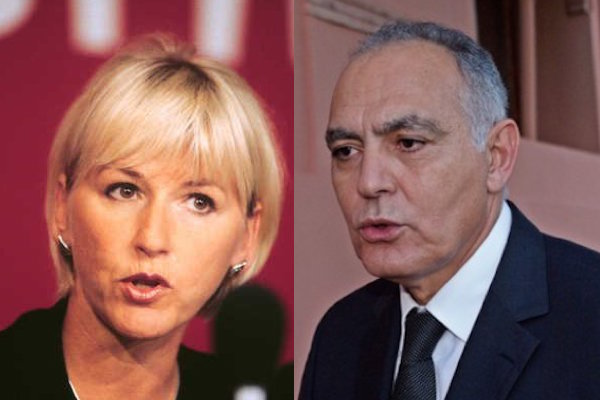
Meanwhile, the Swedish Minister of Foreign Affairs, Margot Wallström, said that recognition of the Polisario by her government is not on the table for the time being.
As part of the mobilization that is taking place in Morocco, a number of Moroccan politicians are readying themselves to travel to Stockholm to meet with their Swedish counterparts and try to enlighten them about the Moroccan position and the arguments that sustain it.
While this delayed mobilization is a move in the right direction, it also raises a number of questions. For example, what language should Morocco use to neutralize Sweden and convince it not to preempt UN efforts to help the parties find a lasting and mutually acceptable political solution to the territorial dispute? Does Morocco have solid arguments to convince Sweden to refrain from siding with the Polisario and Algeria?
It is not enough to travel to Sweden and meet with Swedish politicians if our politicians are not armed with solid arguments that can strengthen Morocco’s position. Neither would it be useful for Morocco to use the same language it uses regarding the Sahara and the Tindouf population. Speaking to a Moroccan audience is different from speaking to an audience that already has a bias against Morocco’s positions. What will convince the Swedish — or at least move them to refrain from taking any step that is hostile to Morocco — are the historical and legal arguments that exist, which are seldom used, or simply ignored by the majority of Moroccans, including political leaders.
Sweden among the signatories of the Treaty of Algeciras
Yet there exists a solid historical and legal argument that has to be brandished in the face of the Swedish government to show them that by siding with the Polisario, they fail to respect the commitment they made over a century ago with regards to Moroccan territorial integrity. This argument will demonstrate to Swedish politicians and its public opinion that their position on the conflict over the years is based on a false historical assumption.
Not only did the SADR not exist before 1976, but Sweden signed an international treaty with respect to Morocco in which it committed along with all Western powers to preserve Moroccan territorial integrity.
By virtue of the Treaty of Algeciras of April 7, 1906, all Western powers, including Sweden, committed to preserving Moroccan territorial integrity.
Was the so-called Western Sahara part of Moroccan sovereignty at the time? The answers is yes.
The spirit of the Treaty of Algeciras was based on the international agreements signed between Morocco and some Western powers, mainly the United Kingdom, which recognized that this territory was an integral part of Morocco.
According to Frank E. Trout, author of the book Moroccan Saharan Frontier, in accordance with the agreement signed between Morocco and the UK in March 1895, the British government recognized that the territory between Cap Juby (the area near Tarfaya) and Cap Bojador (present day so-called Western Sahara), belonged to Morocco.
Since then until 1904, when the UK signed an agreement with France, the British, as well as the French and Spanish recognized that this territory was under Moroccan sovereignty.
The premise on which the Swedish government bases its position is that the so-called Western Sahara never belonged to Morocco before 1975, and as such Morocco can lay no claim of sovereignty over this territory.
However, this premise itself is false. Contrary to common belief in the West, Spanish occupation of the territory was in total violation of international law at the time.
When the British government accepted the principle of a French and Spanish protectorate over Morocco, it clearly insisted in article 3 of the secret accord signed between Paris and London in April 1904 that Spain could not undertake any action that would alienate the sovereignty of territory of its sphere of influence.
This British position was based on the understanding that the so-called Western Sahara belonged to Morocco and was not to be alienated by any Western power.
However, in accordance with the French-Spanish accord of October 1904, Spain was given possession, but not sphere of influence, of the disputed territory, without informing Morocco or seeking the approval of the British, who had signed an agreement recognizing Morocco’s sovereignty over the territory.
The arrangements made between Western powers were carried out without consulting with Morocco, which was the main party in interest in the agreements signed between France and Spain on the one hand and the France and the UK on the other hand.
Without a renunciation of the agreement signed between the UK and Morocco in 1895, the agreement signed between Western powers in 1904 by virtue of which they defined their spheres of influence in Morocco contravened international law.
According to Frank E. Trout, even in the event London gave its formal approval and recognition that Seguia El Hamra (present-day so-called Western Sahara) was to become Spanish territory outside of the limits of Spanish sphere of influence in Southern Morocco, ”it would have meant a unilateral — and presumably secret — renunciation of the agreement signed with Morocco in 1859, [which would have been meaningless since Morocco was not informed of the renunciation.”
Additionally, Spain was given possession of the Sahara based on a secret accord of which neither Morocco nor the other Western powers were informed.
Based on the foregoing, it is evident that the Swedish government is taking a stance against Morocco, without taking cognizance of the historical fact that it was among the signatories of the Treaty of Algeciras, which committed those signatory countries to preserving Morocco’s territorial integrity.
Instead, as a signatory of the treaty, the Swedish government should seek to help Morocco secure its historical and legal rights over the territory. That the predominant narrative on the conflict omits mention of this fact gives no license to the Swedish to dismiss the fact that they have failed to fulfill their commitment to preserving Moroccan territorial integrity.
Morocco was the victim of Western colonialism and Moroccans have paid a costly price to regain the independence of their country and restore its territorial integrity. By going down this path, Sweden deepens the wound and turns its back on the commitment it made to the Moroccan people over a century ago.
On the other hand, the Swedish government should not disregard the growing consensus among both diplomats and scholars in recent years that the concept of self-determination as it was perceived in the 1960’s is not a one-size fit-it all approach that can be applied to every territorial conflict, and that the UN settlement plan of 1991 has proved to be unworkable.
Sweden’s Erik Jensen, who served as Head of MINURSO between 1994-1998 said in his book Western Sahara, anatomy for a stalemate that the 1991 settlement plan has showed its limits, and there is a need to find an alternative likely to help the parties to reach a settlement.
According to Jensen, Javier Pérez de Cuellar and Boutros Ghali, the two former UN Secretary Generals, were intimately convinced that the settlement plan was unworkable, and called on the Security Council to explore other ways.
“Perez De Cuellar’s memoirs show that he had doubts about certain aspects of the settlement plan, and Boutros Ghali repeatedly hinted to the Security Council that it might consider an alternative way forward,” said Jensen.
Therefore, rather than taking sides with one of the parties, it would be wiser for Sweden to help the parties explore the possibility of working out a middle ground solution where none of the parties would come out as loser.
Need to reconsider Moroccan strategy
Should we blame Swedish politicians and public opinion for ignoring or overlooking these facts about the conflict? Simply put, the blame should be put rather on the lack of mobilization on the part on Moroccan political stakeholders and the inertia of the Moroccan government, which still relies on old methods that have proven their limits.
The position of the Swedish government is the result of the large-scale and long-standing media and PR campaign conducted over the years by Algeria and the Polisario to garner the support of Swedish civil society. The latter is neither necessarily familiar with all the intricacies of the conflict nor is it obliged to be cognizant of all its historical and legal facts, including its country’s commitment to preserve Morocco’s territorial integrity over a century ago. It is Morocco’s responsibility to use these facts to its advantage and counterbalance the prevalent narrative on the topic.
The Polisario and Algeria are aware of the total absence of Morocco’s advocacy in Scandinavian countries and have been using this to their advantage.
The Moroccan government has to break away from its old methods and work tirelessly to garner support for its national cause. To achieve this goal necessitates the strengthening of Morocco’s presence in all countries where Morocco has a deficit of image, especially in English-speaking Africa, Scandinavian countries, and Latin America.
It also implies the implementation of a wide-ranging media and PR campaign with the aim of educating international public opinion about the multiple historical, cultural and legal facets of the conflict.
Morocco cannot simply keep relying on its lame media platforms to reach out to the wider spectrum of the international public opinion. To succeed in this task requires the existence of professional media that knows how to speak to the international audience and how to win its support for or sympathy with Morocco’s positions.
The ongoing diplomatic and media battle over the Sahara won’t be won by convincing small states that have little importance in the international arena to suspend their recognition of the so-called SADR. This all-consuming battle needs the presence of Morocco in all fronts, especially in countries known for their bias in favor of the Polisario.
Morocco should use the Swedish case as a wake up call to reconsider and revamp its diplomatic efforts on the Western Sahara. Without a dramatic and in-depth review of Morocco’s policy, similar scenarios will arise in the future whose outcomes will not always be in Morocco’s favor.
Samir Bennis is the co-founder of and editor-in-chief of Morocco World News. You can follow him@Samir Bennis
© Morocco World News. All Rights Reserved. This material may not be published, rewritten or redistributed without permission