














































By Ashley Okwuosa
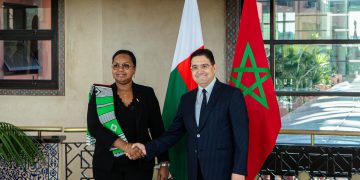
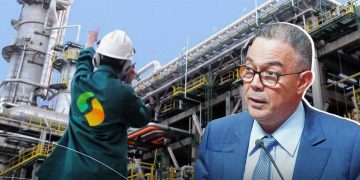
Rabat – After a meeting between Morocco’s Minister Delegate of Foreign Affairs, Nasser Bourita and President of Nigeria, Muhammadu Buhari, plans for OCP, world’s largest phosphate provider to collaborate on a fertilizer farm in Nigeria is underway.
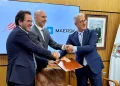
The industrial alliance between both countries will be facilitated by The Cherifian Office of Phosphates, (OCP) Morocco’s national phosphate company and Dangote Group, Nigeria’s largest industrial conglomerate.
With a background in cement, sugar, flour, salt, pasta, beverages and real estate, Dangote Group’s foray into fertilizer is another way to diversify Nigeria’s economy and promote self-sufficiency, especially in the wake of Nigeria’s struggle to cope with crude oil prices that have fallen more than 70 percent in 2 years. The choice to collaborate with Morocco’s OCP is also an indication of how prosperous the collaboration between both parties can be if it proves successful. OCP, which has projected total fertilizer production in Moroccan plants to reach 10 million tons in 2017, is the world’s largest producer of phosphate.
Nigeria and Morocco: How Can Both Countries Benefit From This Partnership?
Other than the immediate economic benefit to Nigeria, both countries have a lot to gain from this collaboration. Last month, Morocco announced its intent to return to the African Union after 30 years. Growing support for the Kingdom’s return has mounted and Morocco’s partnership with West Africa’s largest economic power might be the extra push the kingdom needs to reclaim its place on the African Union stage. In King Mohammed VI’s statement to the African Union, the Sovereign stated that Morocco might have quit the African Union, but it never “quit Africa.” The kingdom’s interest in the growth of other African countries will actualize the statement.
In an effort to diversify Nigeria’s economy, a fertilizer plant in one of Nigeria’s most populous states can also work to create a plethora of jobs directly and indirectly. According to the Nigerian Bureau of Statistics, Nigeria’s national unemployment rose from 10.1% to 12.1% in the first quarter of 2016, because Nigeria failed to create the 1.5 million jobs required to keep unemployment constant at 10.4%.
Statistics also show that although Nigeria’s labor force grew by almost 2 million people, the number of people with full time employment actually decreased by over 500,000 people. The increasing graduation rate of youths coupled with Nigeria’s lackluster performance in creating jobs to meet that demand has also contributed to a problem the country has been battling with for a few years, which is the increasing risk of terrorism in its northeastern states. The growth of Boko Haram, the Islamic extremist group based in northeastern Nigeria, can be loosely tied to the growth of underemployment and unemployment in rural areas.
Job creation as a result of this partnership is an immediate response to this issue, but so is having Morocco as an ally against terrorism in Nigeria. Morocco is considered a crucial partner in North Africa for deterring the spread and influence of terrorist propaganda and the flow of terrorist fighters. Morocco even helped French intelligence locate the whereabouts of Abdelhamid Abaoud, a Belgian-Moroccan terrorist and the mastermind behind the November 2015 Paris attacks.
Morocco’s adoption of utilizing security measures to tighten its borders, the implementation of its Operation Hadar, which deploys security forces to potential high risk areas before an attack, it’s focus on poverty as a catalyst for terrorism and religious education to combat Islamic extremism is something Nigeria can also adopt in its own way.
The Future of Moroccan and Sub-Saharan Africa Relations.
The partnership between OCP and The Dangote Group will be one of many relationships that will continue to flourish from Morocco’s return to the African Union. Although Morocco’s major trading partner remains Europe, there has been an increase in economic deals made with other sub-Saharan African countries. Between 2008 and 2013, Morocco’s exports to sub-Saharan Africa doubled and even peaked at MAD 1.4 million in 2014.
In the same year, King Mohammed VI visited Mali, Ivory Coast, Guinea and Gabon to promote economic and cultural exchange between said countries, and in 2016, 100 Ivorians joined students from Mali, Guinea, and Tunisia for a 2-year religious training at the Mohammed VI Institute for the Training of Imams.
With an increased banking presence in 22 African countries, Royal Air Maroc’s growing list of African countries on its flight list, and OCP’s legacy of sub-Saharan co-operation (the company has been running programs for small farmers in Mali and Senegal, as well as an industrial partnership with Gabon), an expansive transfer of skills, economic growth and the development of infrastructure and sustainable policies are some of the many benefits that will result from the growing relationship.
In a comment to Reuters, Aliko Dangote of Dangote Group noted that the partnership between the Dangote Group and OCP will increase Nigeria’s goal of “self-sufficiency” and in many ways, a sustained relationship between Morocco and other sub-Saharan countries can do the same for all parties while promoting the importance of a collaborative relationship between all African countries.
© Morocco World News. All Rights Reserved. This material may not be published, rewritten or redistributed without permission.
The views expressed in this article are the author’s own and do not necessarily reflect Morocco World News’ editorial policy