Join on WhatsApp
 Join on Telegram
Rabat – Communication between Morocco and Jordan has raised the possibility that Morocco will play a role in defusing the current diplomatic crisis in the Gulf.
King Mohammed VI and King Abdullah II of Jordan had a phone call on Wednesday, the Jordanian state agency Petra has reported.
“His Majesty King Abdullah II Wednesday discussed during a telephone conversation with Moroccan King Mohammad VI, the current regional developments and bilateral ties,” said Petra.The news has not been reported by Moroccan state-run media, and no further details were provided by the Jordanian agency.
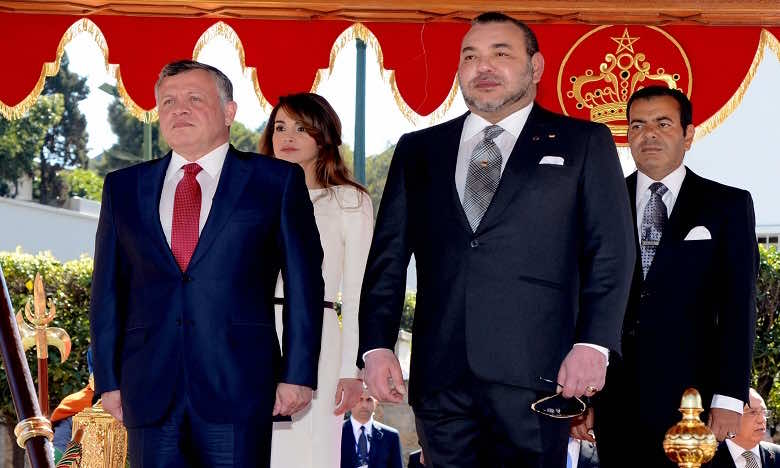
However, the timing of the phone call indicates the two monarchs suggests the ongoing crisis in the Middle East between Qatar and several Arab nations led by Saudi Arabia, which have all cut diplomatic ties with Doha over allegations the country was supporting “terrorist groups,” including the Palestinian resistance movement Hamas and the the Muslim Brotherhood in Egypt.
The list of the countries that severed ties with the Gulf country included United Arab Emirates, Bahrain, Egypt as well as the pro-UAE and Saudi Arabia governments in Yemen and Libya.
Later on, Mauritania followed the footsteps of Saudi Arabia, while Jordan, Chad and Djibouti reduced diplomatic status with Qatar.
The diplomatic wrangling highlighted differences in foreign policy choices between Qatar and its former allies, who sought to isolate Doha through cutting diplomatic relations.
Qatar has called the move “unjustified,” saying it rested upon “baseless” and “unfounded” allegations.
Mohamed Tajeddine Houssaini, a professor of international relations at Mohamed V University, told MWN that the decision taken by Saudi Arabi, Bahraina and UEA dealt a strong blow to the Gulf Cooperation Council (GCC), the only successful Arab bloc.
Georges Malbrunot, a French journalist and expert on the Middle East, tweeted that he had received information that the Emir of Qatar, Sheikh Tamim, will visit Turkey and Morocco in the coming days.
Ankara remains a strong ally of Doha. And Morocco too enjoys very good relationships with Qatar as well as long-held strategic relationships with Saudi Arabia, UAE and Bahrain. The Kingdom has been a key ally in the Saudi-led coalition against the Iranian-backed Houthis in Yemen. With Qatar, diplomatic and economic ties have grown stronger in recent years.
“Investment relationships with Qatar are highly developed today,” explained Housseini.
King Mohammed VI’s connections in Riyadh, Abu Dhabi, Manama and Doha make him a reliable mediator between the leaders of the four Gulf countries.
In April 2016, the King took part in Riyadh in a joint summit between Morocco and the countries of the Gulf Cooperation Council (GCC) to discuss shared interests and elaborate a common strategy to meet regional and global challenges such as the fight against terrorism and relationships with super powers.
The participation highlighted the strong relationships between Morocco and its Gulf allies, which could make the Kingdom a trustworthy mediator. Houssaini detailed the reasons why Morocco is the Arab country best fit to play a mediation role in the Qatar crisis. He pointed out the Kingdom’ strategic partnership with Gulf countries and its remote geographical position, which makes it immune from being influenced by the consequences of the current tension.
In addition, he noted that personal relationships between Moroccan and Qatari royalty could help ease tensions. “King Mohammed VI enjoys personal friendship with both King Salman and Sheikh Tamim,” Houssaini explained.
“Many were waiting [for] Morocco [to] cut [its] relationships with Qatar, something which the Kingdom has not done. I think this is a wise decision,” he concluded.