 Join on WhatsApp
 Join on Telegram
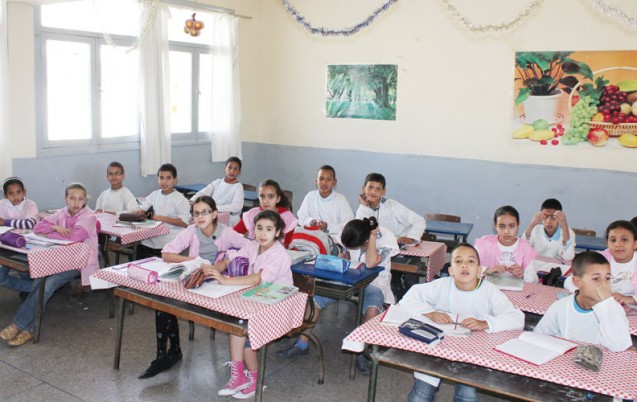
Rabat – Forty percent of students in the second year of primary school in Morocco are not able to read, write, or perform basic mathematical equations, warned the World Bank in its 2018 “Learning to Realize Education Promise” report.
The study also revealed that the rate of student failure is high in Morocco, with individuals aged between 25 to 30 taking six years to complete apprenticeship programs that should be done in three on average.
A longer duration of learning “does not necessarily mean that students develop their knowledge more,” as they acquire the same amount of knowledge.
The World Bank recalled that the quality of education directly impacts the quality of employment that students will have access to later in their working lives. Receiving better education is then reflected in seeking jobs in future markets.
Apart from these alarming statistics, the World Bank encouraged Morocco’s policies in integrating girls into schools over 11 years, comparing it favorably to the 40-year duration that the United States took to increase girls’ access to school.
The paper added that in Morocco, maternal education has improved children’s health by allowing mothers to acquire health knowledge.
“Each additional year of female primary schooling is associated with roughly six fewer deaths per 1,000 live births, but the effect is about two-thirds larger in the countries where schooling delivers the most learning,” said the World Bank.