


 Join on WhatsApp
  Join on Telegram
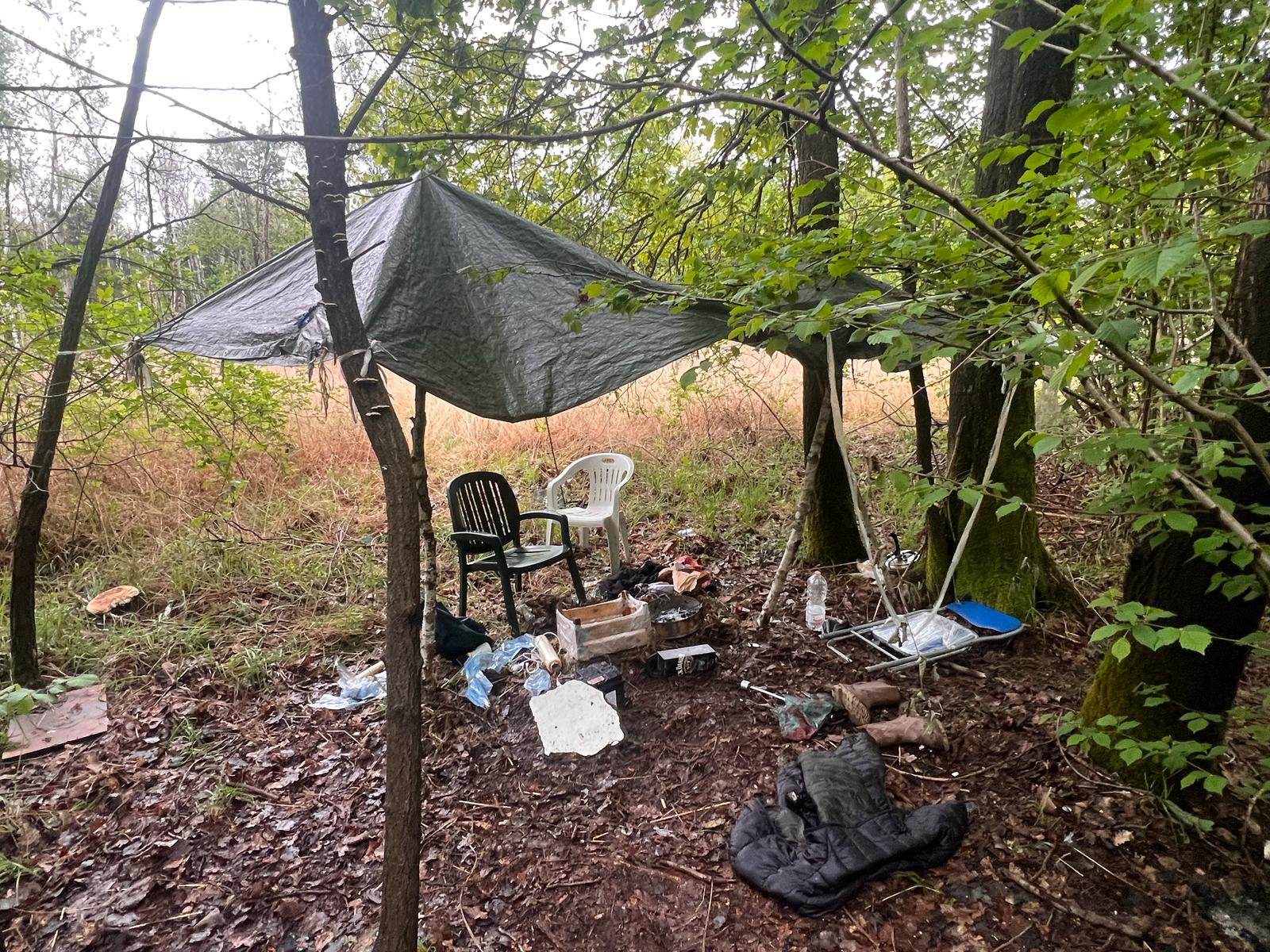
 Marrakech – A disturbing investigation by Italy’s Corriere Milano has uncovered what appears to be a modern “tratta dei pusher” (pusher trafficking) operation in the Parco delle Groane.
This criminal enterprise recruits young Moroccan men, primarily from the impoverished Beni Mellal region, to sell drugs in Italian forests. The investigation reveals just one facet of a broader pattern of Moroccan labor exploitation occurring throughout Europe.
The investigation began as an “intuition” or scenario elaborated by a “humble investigator who has seen and knows,” which the Corriere gave “strong credence” to after years of exploring drug dealing in these woods.
The Corriere’s investigation focuses on an 8,000-hectare park spanning three Italian provinces – Milan, Monza and Brianza, and Como.
Criminal organizations are recruiting young Moroccan men, mostly around twenty years old, specifically from the Beni Mellal region of central Morocco, an area plagued by “endemic problems of female subjugation, school dropout, and poverty.”
The drugs sold are of “high quality,” which helps the traffickers conquer areas and build customer loyalty among drug users.
These criminal networks provide the young men with comprehensive “packages” including lodging, food, clothing, weapons, and drugs to sell. The pushers are systematically controlled day and night, as drug users arrive around the clock. They are transported to the forests by compatriots specializing in transport and returned to their accommodations at agreed times.
The Milan prefect has committed to prevention and counteraction in agreement with city police and carabinieri leaders, though other important actors in civil society seem to underestimate or ignore the issue, which the reporter finds perplexing given the dramatic situation.
The investigation found that these Moroccan workers are housed in “old farmhouses and poorly renovated courtyards” rented or owned by North African accomplices or relatives. They are forbidden from going out, even to supermarkets or for walks.
“They must not appear in the community, must not be noticed, must not be caught in patrol checks, seen by neighbors, or leave distinctive faces and postures in a bar or at a barber’s shop,” reports Corriere Milano.
The Spanish route is particularly important in the traffickers’ paths, serving both as an entry route and as a place to escape to if they face arrests in Italy or their position becomes “burned.”
The pushers carry a bag or fanny pack containing drugs. If doses are missing without logical explanation or money is short upon return from sales hours, they face beatings and torture from their bosses. Defending the drugs becomes a matter of survival, leading pushers to carry machetes for protection – weapons they may use against police and carabinieri.
The Carabinieri Company of Rho has developed techniques and strategies to flush out the pushers, and intercepted phone calls show the pushers fear the “Cacciatori” (Hunters), a special carabinieri unit used in the woods who excel at reconnaissance and locating hideouts.
The European dream becomes a nightmare
What begins as a dream of economic opportunity in Europe quickly deteriorates into a nightmare of exploitation and abuse. The pattern repeats across multiple countries, targeting vulnerable Moroccans desperate for work.
In 2016, Italian authorities dismantled a network in Cesena where five Moroccan family members had established fake agricultural cooperatives. The case came to trial in 2021, with charges including “illegal labor exploitation, criminal conspiracy, illegal brokering, and illegal immigration.”
These operators employed undocumented Moroccan migrants in livestock farming, paying them only €4-5 per hour – far below union rates. Workers lived in cramped conditions, “up to 12 people in a few square meters,” while paying €150 monthly rent deducted from their wages.
The investigation revealed connections to Power Service, a cooperative in San Bonifacio (Verona), linking to a larger network across multiple cities. Court testimony showed the operation generated two million euros through worker exploitation and tax evasion.
Italian authorities concluded “Operation Stardust” in February 2022, arresting a 27-year-old Moroccan along with four others – two Moroccans, one Italian, and one Albanian. They were accused of exploiting dozens of Moroccan citizens across 35 farms in three provinces.
Exploitation spans borders
The exploitation extends beyond Italy into Spain and France, often targeting different demographic groups for specific industries.
In Spain’s strawberry industry, Moroccan women face particularly harsh treatment. Recent reports detail two Moroccan women being sent back from Spain under disturbing circumstances – one five months pregnant and another diagnosed with cervical cancer.
Both had been working in Spain’s lucrative strawberry harvest when they were effectively discarded.
According to Workers’ Commissions union (CCOO), some women worked without formal contracts, pay slips, or social security registration. After sending their April wages home, they were left “in a situation of extreme economic vulnerability” with “no money, no legal protection, and were pressured to leave the country ‘by their own means.’”
The second case involved Zahra, a 47-year-old Moroccan woman with seven years’ experience in Huelva’s berry fields, who was sent home after a cervical cancer diagnosis despite ongoing treatment. As a single mother of six with three children still in her care, she now lacks funds to continue treatment in Morocco.
The Association of Immigrant Women in Action (AMIA) argues she should have received medical leave, not deportation, after seven years of legal seasonal work.
Huelva’s strawberry industry, spanning 11,700 hectares and producing over 350,000 tons annually, contributes roughly 8% of Andalusia’s GDP. The sector heavily relies on migrant labor, particularly through Spain’s GECCO program, which brought 17,000 Moroccan women to Spain in 2025 alone.
Similar exploitation has been documented in France. A 2025 StreetPress investigation exposed systematic abuse in Lot-et-Garonne.
Moroccan agricultural workers reportedly paid €14,000 each for seasonal work contracts while enduring substandard living conditions and receiving below-minimum wages.
Alain Aunac, an elected member of the far-right Rural Coordination agricultural union, allegedly employed dozens of Moroccan workers in apple orchards under dire conditions. Mohammed, known as Java, who spent 20 years on the farm, told investigators: “My soul is sick, it needs to end. I don’t want to work here anymore.”
Workers lived in decrepit housing infested with rats and mold, working up to 10 hours daily, often seven days weekly, for as little as €4.57 per hour – far below France’s €11.65 minimum wage.
The investigation revealed an elaborate trafficking scheme where Moroccan intermediaries charged workers €14,000 each for seasonal work contracts approved by France’s Immigration Office (OFII).
The report noted that despite a 2019 labor inspection, Aunac only received a warning for unpaid overtime. When contacted about substandard wages and living conditions, he repeatedly responded: “Yeah, and so?”
Most recently, in August 2024, Spanish authorities on Mallorca arrested two agricultural business owners.
The Spanish National Police detained them for allegedly charging Moroccan seasonal workers between €15,000 and €22,000 for work contracts enabling legal entry into Spain, plus an additional €6,000 to €8,000 to regularize immigration status. A total of 26 individuals obtained legal residency through this scheme.
The resulting debt and the pressure to maintain legal status pushed workers to endure “abusive” conditions that blatantly violated labor agreements – what some media outlets at the time dubbed the Spanish version of “Goat Life.”
These stories are not isolated tragedies; they are the visible cracks in a broader, deeply exploitative system that feeds off Moroccan labor – sometimes at the hands of fellow Moroccans themselves.
Across Europe, whether in agricultural heartlands or in the shadows of illicit and informal work, countless Moroccans chasing the illusion of opportunity find themselves trapped in a cycle of coercion – stripped of dignity and reduced to tools in a system that echoes the brutal mechanics of modern-day slavery.


