


 Join on WhatsApp
  Join on Telegram
 Rabat – A group of Sudanese professional associations have called for a march on President Omar Al Bashir’s presidential palace in Khartoum, the latest event in ongoing protests. The march, scheduled for today, the eve of Sudan’s Independence Day, is set to proceed from Qandil Square to the presidential palace.
Marchers have called for “Bashir’s immediate resignation.”
Amid fears of escalating protests, the Parliament earlier today passed its 2019 budget. The budget is set to reduce inflation rate and increase economic growth by 5.1 percent.
But given lack of trust in the regime and widespread support for protesters, it remains to be seen whether Parliament’s last-minute intervention will ease tensions.
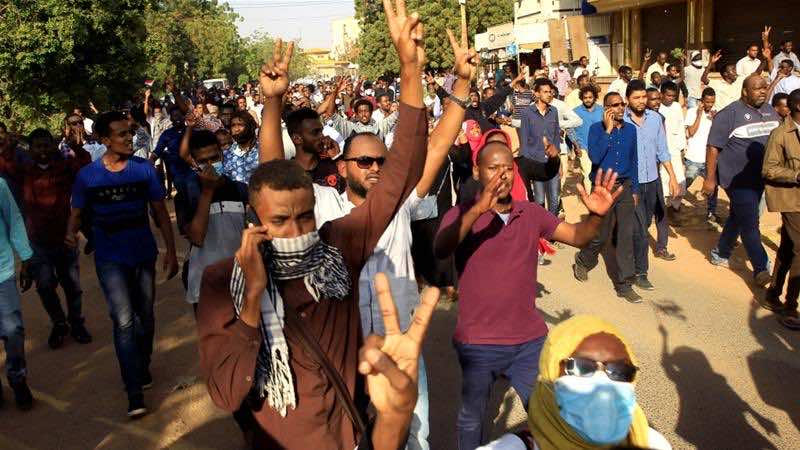
Sudan is in its 13th day of Arab Spring-like protests, with violent clashes between police and protesters and an estimate of 37 killed in the first days of the unrest.
Organized by grassroots neighborhood associations and professional trade unions—especially teachers, doctors, and lawyers, the protests are calling for President Omar al-Bashir to step down.
Brutal crackdown
Bashir has been in charge since October 1993 and is no stranger to repressive methods to maintain his grip on power. In 2010, the International Criminal Court charged the now 74-year old president with war crimes and crimes against humanity, including genocide and rape in relation to the February 2003 Darfur war.
As with the Arab Spring in 2011, spikes in the prices of bread and oil ignited an anti-government mood. And by Friday last week, what started off as a protest against rising food prices quickly became an intense outcry against the current regime.
But while Bashir’s long-standing oppressive regime was a contributing factor to the current uprisings, the sudden rise in commodity prices in mid-December was the immediate causal factor of the protests.
Read Also: South Sudan Supports Morocco’s Autonomy Plan, Denies Ties with SADR
In the city of Atbara, where the protests broke out on December 19, protestors set fire to and burned down the headquarters of the ruling National Congress Party.
“Our demands started with improving the situation – we’ve been facing a problem of shortages in cash flow, bread and oil for a while. But when they started killing, our demands converted to toppling the regime,” the Guardian quoted a protester as saying.
While protesters are believed to have been marching with hands in the air and shouting “Peace, peace,” to indicate their peaceful intentions, the police crackdown has been heavy-handed and disproportionate, according to Amnesty International. The rights group estimated that the government crackdown killed as many as 37 protesters in just five days of clashes.
Determined protesters
But the government’s violent response has not yet forced Al Bashir out.
More people turned up to protest over the weekend. Shouting “Leave, Bashir,” protesters showed their dissatisfaction with a regime which they accuse of large scale corruption and mismanagement. “He cannot rule 40 million people who all hate him,” Amjid Farid, a leading Sudanese civil society member, said of the president.
Read Also: South Sudan Foreign Minister Says His Country Does not Recognize SADR
As more people joined the protest in defiance of the government’s heavy-handed response, the president appeared to change his strategy by late Sunday. In a meeting with police commanders, President Bashir called on security authorities to “use as little force as possible.”
The president said: “Vandalism, destruction and theft only worsen the situation and will not fix things. Our duty is to not allow these acts of looting and violence. We want to maintain security and we want the police to do that by using less force.”
However, Al Bashir also praised the police response to protests, saying they showed “model behavior” and “were conducting their duties with utmost professionalism,” according to CNN.
He argued that the “ultimate goal” of the crackdown “is not to kill citizens,” but “to maintain the security and stability of civilians.”
Protesters have largely ignored the president’s call, which they perceived as meant to buy him more time to eventually quell the momentum the protests have garnered. “I have little faith in the government,” said Khartoum resident Ehsan Babiker.


