


 Join on WhatsApp
  Join on Telegram
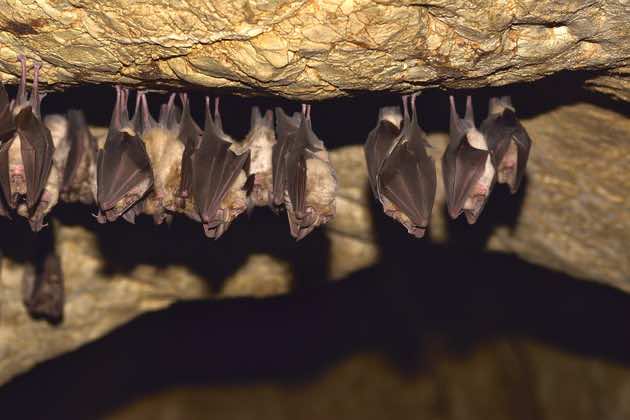
 Rabat – A collaboration of researchers from Spain, Switzerland, and France have determined that a group of bats, which were once thought to be the same as the known species Myotis escalerai, are instead an entirely new bat species, the Myotis crypticus or cryptic myotis.
After a genetic analysis published by “Acta Chiropterologica,” scientists were able to conclude that the two kinds of bats have significantly different genes.
While the bat species share many of the same physical characteristics, the genetic analysis proved what superficial observation alone could not determine.
#EBDpub A new species of bat was hiding in our forests // Una especie nueva de murciélago se escondía en nuestros bosqueshttps://t.co/xKxHA2dErs pic.twitter.com/Dn0f2xbQf8
— E.B. Doñana-CSIC (@ebdonana) February 19, 2019
The study describes the bats to share similar habitats in the forests of the northern mountains of Morocco. However, the habitat of the new species, Myotis crypticus, extends into Spain, the south of France, Italy, and Switzerland.
According to Javier Juste, a scientist at the Donana Biological Station in southern Spain, “Given that the new species lives in forests in Italy, Switzerland, France, and Spain, which are under human development, it is urgent to study the species with detail to determine its protected status.
Read Also: Scientists Find Oldest Bone-Knife in North Africa in Morocco
While completing the same research, the scientists also discovered another new North African bat species, the Myotis zenatius or zenati myotis. The second species is estimated to be at a more critical level of endangerment.
Zenati myotis are extremely rare, probably vulnerable, and only found in certain caves in the mountains of Morocco and Algeria, most notably Azrou and Errachidia.
?Un estudio liderado por @ebdonana identifica dos nuevas especies de murciélago: el murciélago ratonero críptico (en Europa) y el murciélago zenate (norte de África).
➡️https://t.co/q0zxXNwtIb pic.twitter.com/jZJoyWMdW3— CSIC (@CSIC) February 19, 2019
Their habitats border an intensively exploited quarry. The effects of the disruption of their natural habitat remains unknown. However, just having been discovered, this species may be included on the endangered list.
The two new bat species are of the family of Vespertilionidae and had “gone unnoticed until now,” since they “are represented by 53 species in Europe, but many of them are enormously similar,” Juste said in a statement.


