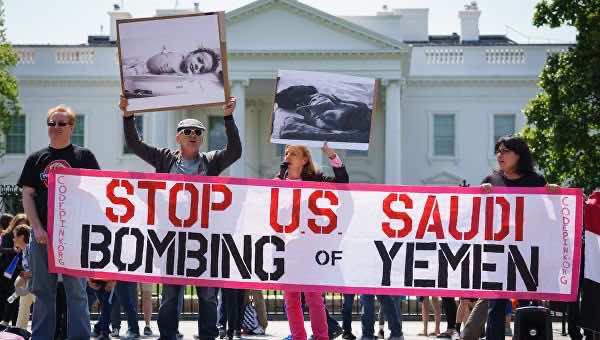
Rabat- “If you truly care about Yemeni lives, you’d support the Saudi-led effort to prevent Yemen from turning into a puppet state,” US Secretary of State Mike Pompeo said at a press conference on March 15. He pledged the Trump administration’s continued support for the Saudi-led intervention in Yemen.
His statements chided US senators for their March 13 vote to cut off US military support to the Saudis—a blow to the Trump administration, which has stood by Riyadh. The US House of Representatives has not yet voted on the resolution, but its message was clear: Congressional support for Trump’s Yemen policy is waning.
Since Saudi Arabia launched their military campaign in Yemen in 2015 with a coalition of nine other nations, including Morocco, the conflict has spiraled into the world’s worst humanitarian crisis. Famine, airstrikes, and fighting have taken tens of thousands of civilian lives, according to UN sources.
While Morocco’s involvement in the coalition had decreased, foreign minister Nasser Bourita seemed to imply Morocco was withdrawing from the coalition entirely in February, to the delight of Houthi opposition forces. But the US remains a major ally for the Saudis in the conflict, providing arms, aircraft support, and training services to their military.
US politicians, though, have felt empowered to push the Trump administration on the issue in recent months after Saudi agents’ horrific murder of journalist Jamal Khashoggi spurred global condemnation and scrutiny.
“Today is a day that we can make a clear and unequivocal statement that we do not support this continuing conflict and humanitarian disaster,” said US Senator Bob Menendez on March 13, in support of the resolution. “There is a consequence for acting in the way that the coalition has done.”
Read Also: Morocco Stands by Principle of Non-Interference in Algeria Protests
At Friday’s press conference, Pompeo insisted that the administration wanted solutions for Yemen’s humanitarian crisis. “We all want this conflict to end,” he said.
But severing US military assistance to the coalition was not the solution, he explained, stressing the dangers that “corrupt, brutish” Iran, which allegedly backs the Houthi rebels, posed for the region.
Morocco did not disclose the full reasoning behind its changing status in the Yemen coalition. In an interview with Al Jazeera, Moroccan Foreign Minister Nasser Bourita cited only “political and humanitarian developments on the ground.” The decision heightened tensions between Saudi Arabia and Morocco, although the two countries have since made efforts to reaffirm their diplomatic ties.
Despite the opposition, US funding for the Saudi-led coalition in Yemen will likely continue, at least for the near future, as Trump has threatened to veto the resolution once it arrives at his desk.
Read Also: Christchurch Terrorist’s ‘Manifesto’ Cites Trump as Inspiration