Rabat – Growing up, Moroccan entrepreneur Faiza Hajji saw plastic bags everywhere. Strewn plastic covered neighborhoods of her city Berkane, in the far northeast of Morocco. She would bike through the streets as a child, she said, frustrated by the waste and wondering how to put it to good use.
“And at the same time, I was really sensitive to women’s conditions. My mom was a doctor, and she was receiving a lot of patients from the villages,” Hajji told Morocco World News. “Many women didn’t have enough [to] pay for the consultation.” The price for a visit? Only $7.
Her mother treated the women anyway. One day, as a gift of thanks, a woman brought Hajji’s mother a bread basket she had woven out of grass. But the handicraft glittered with something else—biscuit wrappers, Hajji realized. The woman had threaded them into the basket.
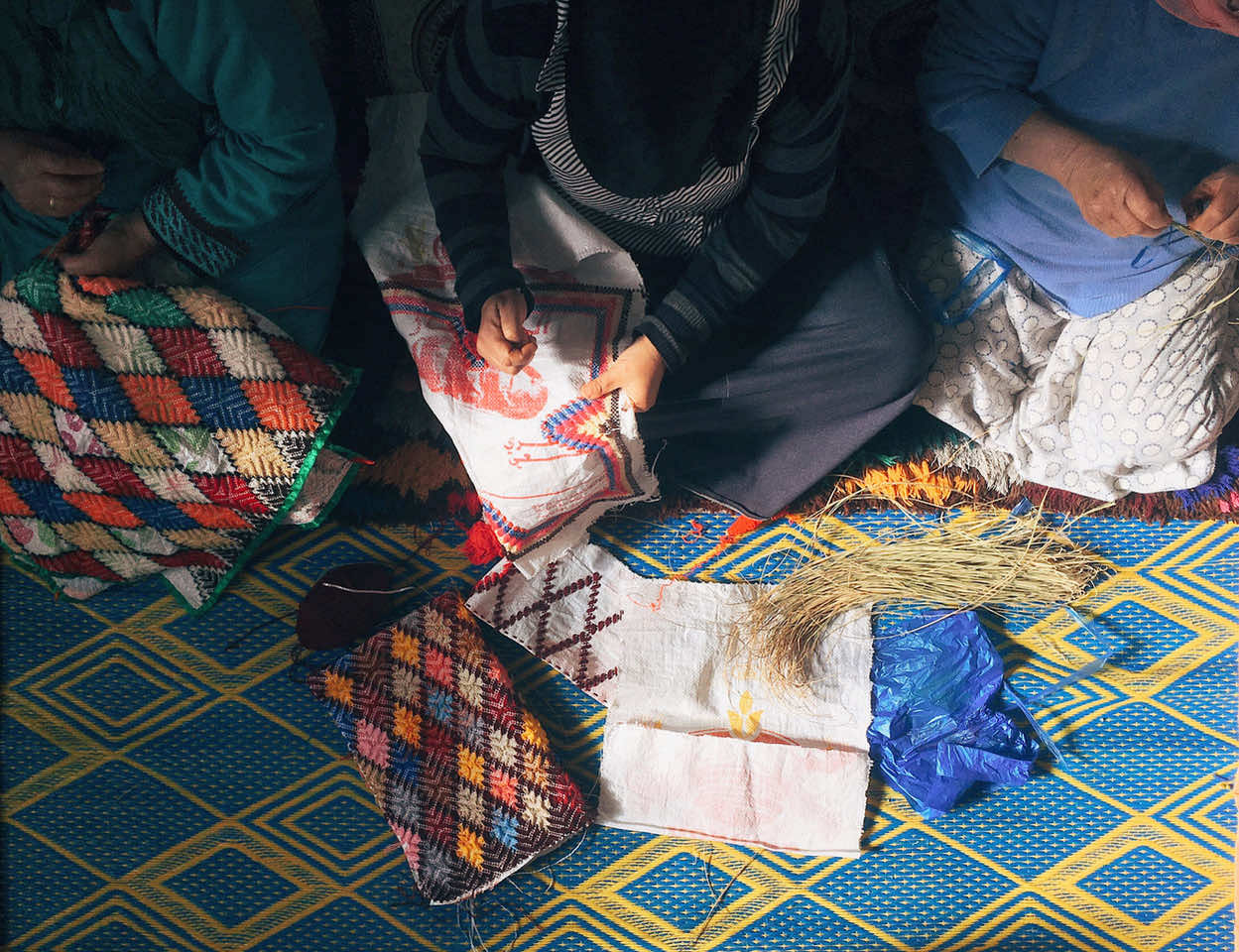
“And this is how it all started,” Hajji said. In 2006, she launched a social enterprise called Ifassen (which means “hands” in Tamazight), inspired by the recycled basket she had seen in childhood. The company reuses plastic bags and other discarded materials to create accessories and home decorations. They employ Moroccan women artisans, partnering with local women’s collectives.
“The idea is to preserve the local know-how, handicrafts, and create jobs for women, mainly in rural areas,” Hajji said.
In the 12 years since its start in Berkane, Ifassen has grown, now working with women’s collectives across Morocco. The company is just one project of Hajji’s nonprofit she launched in 2008, Association du Docteur Fatiha (Association of Doctor Fatiha, ADF), named for her mother.
Last week, the media group Sparknews featured Ifassen in its international Earth Day campaign, “Earth Beats,” which highlighted regional solutions to environmental problems around the world. Outlets like L’Economiste and the Nation, participating in the campaign, also highlighted Ifassen’s work.

Lighting up a sustainable future
As Ifassen grew, it began to push its designs beyond functionality into the artistic sphere. Hajji brought globally-known designers, artists, and architects to Morocco to work with Ifassen artisans. The collaborations produced designs that synthesized traditional Moroccan artisanship with cutting-edge design work. The Quai Branley Museum in Paris and the Copenhagen Museum in Denmark both have displayed Ifassen designs.
Ifassen’s most recent design project is a collaboration with Moroccan architect Aziza Chaouni, known for her work landscaping and revitalizing the Fez river, Wed El Jawahir.
Together, Chaouni and Ifassen’s team designed an artisanal lamp, which they were invited to show at the 2019 Venice Biennale—an art extravaganza Hajji described as a “very big event in the design world.” Their design would be the first ever to represent Moroccan women at the event.
The lamp’s skeleton is 3D-printed from recycled materials. Moroccan women artists then weave colorful, traditional tapestry across the body.
A lantern is a fitting symbol for Ifassen’s work. The employment opportunities and support the organization brings to women in rural areas are empowering, Hajji said. An income allows women greater independence. It can let them send their children to school.
“Because when they don’t have money, that’s the first place where they cut the costs, is taking out the girls from school,” Hajji explained. Ifassen’s work changes that.

Morocco: One of Africa’s greenest nations
While Hajji was transforming Ifassen from a fledgling company to an established social enterprise, Morocco was looking again at its use of plastic bags.
Morocco banned all plastic bags in 2016 and has upped its enforcement of the law in recent months. The law helped reduce Morocco’s consumption of raw materials used in plastic bag manufacturing by 50% from 2015 to 2018, although plastic bags are still a common sight in the country.
The ban was part of Morocco’s sustainability agenda, which has established the kingdom as a regional leader in sustainable energy with a growing sustainable development sector.
The plastic bag law, Hajji said, was “really good news.” But it was not the end of the story. “There’s still a long way to go, because the alternatives are not great,” she said. Replacements for plastic bags often are costly or pose different environmental problems.
ADF has tried to address this problem by designing and distributing reusable bags made out of folded flour sacks. The initial market surveys of the product proved promising, demonstrating public interest in its use.
Like Hajji’s other initiatives, the project employed local Moroccan women. It’s another example of the intersection of sustainability and female entrepreneurship that runs throughout her work. For Hajji and Ifassen, the two problems are inherently linked—as are their solutions.