 Join on WhatsApp
 Join on Telegram
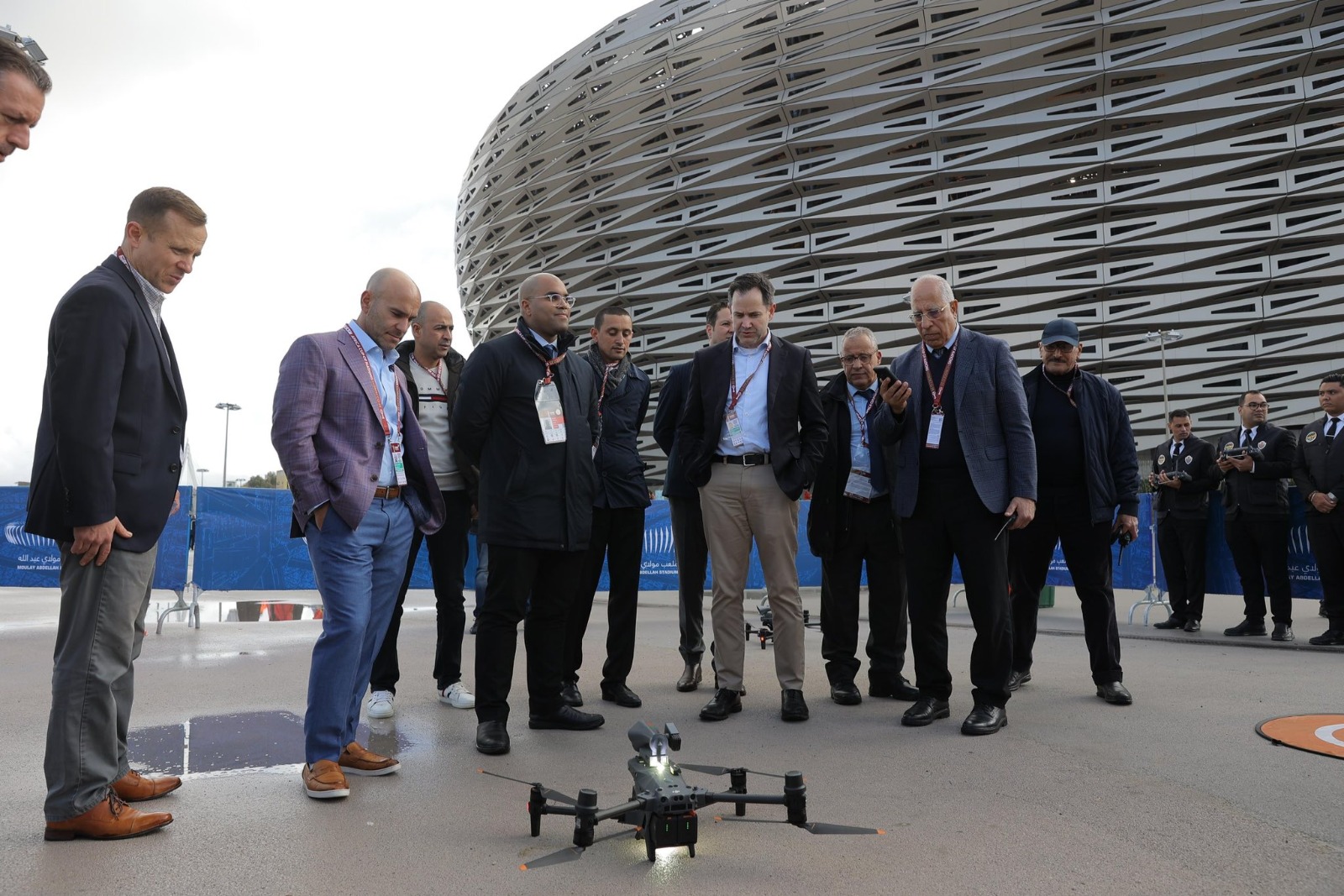
Marrakech – A high-level FBI delegation is conducting an official visit to Morocco from January 4-6 to examine the country’s General Directorate of National Security (DGSN) security protocols for the Africa Cup of Nations (AFCON) 2025.
The American team, led by Douglas Olson, Director of Operations at the Field Intervention Services Division, and Kevin Kowalski, Deputy Director of the Emergency Response Group, aims to study Morocco’s comprehensive security framework ahead of the 2026 World Cup, which the United States will co-host alongside Mexico and Canada.
The FBI representatives began their mission yesterday with a field assessment at Prince Moulay Abdallah Stadium in Rabat during the Morocco-Tanzania match.
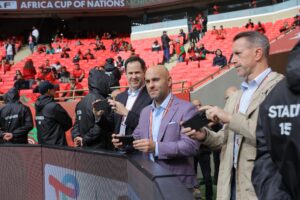
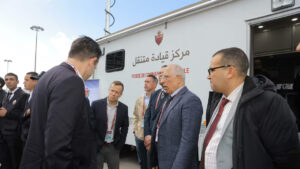
They observed security deployment patterns, surveillance systems including drone monitoring and high-definition cameras, and electronic coordination mechanisms between various security components through fixed and mobile command centers.
The delegation also visited the African Security Cooperation Center, which serves as the liaison hub between Moroccan security services and police officers representing African nations participating in the continental tournament.
FBI officials examined the center’s operational mechanisms and advanced technical and logistical capabilities while participating in a working session to evaluate security arrangements for the Morocco-Tanzania fixture.
The American team’s program continues with a visit to Moulay Hassan Stadium in Rabat to observe additional security arrangements during the Algeria-Democratic Republic of Congo match.
This includes securing foreign fan entry points and operational coordination between national security services and foreign police officers working at the African Security Cooperation Center, as well as field-deployed “spotters” accompanying supporters.
A comprehensive, integrated security system
Morocco has established an unprecedented security infrastructure for AFCON 2025. The country deployed 6,000 mobile cameras across 75 sensitive sites, prioritizing major highways, including the Rabat-Casablanca axis, Marrakech-Agadir route, and Fez-Tangier corridor.
Some cameras utilize artificial intelligence for real-time image analysis and facial recognition capabilities.
The tournament security framework includes 3,387 newly graduated police officers assigned specifically to AFCON duties. Additional reinforcements comprise over 100 officers deployed to border crossings in host cities.
New anti-gang brigades were established in Marrakech and Fez, while K-9 units and mounted police expanded their personnel. Sixteen drone teams operate across tournament venues for aerial surveillance.
Security equipment includes 1,025 new vehicles and motorcycles for patrol duties and 790 Taser electroshock weapons for complex situations. Each stadium features an integrated police station and command room for real-time intervention management.
The African Security Cooperation Center, inaugurated on December 18 in Salé, represents the continent’s first structured security coordination facility.
The center brings together Moroccan security representatives and liaison officers from 23 qualified African nations, working alongside CAF and FIFA delegates. Spanish and Portuguese experts also participate as partners for the 2030 World Cup organization.
Beyond physical surveillance, the center monitors digital threats, including online terrorist propaganda, extremist content, and hacking attempts. This cybersecurity component operates in coordination with Interpol’s Stadia project for major sporting event security.
Entry restrictions for tournament venues prohibit numerous items, including fireworks, smoke devices, laser pointers, glass bottles, cans, alcohol, and water bottles exceeding half a liter. Oversized bags, professional cameras without accreditation, personal drones, and selfie sticks are banned. Political or religious banners face strict prohibition.
Morocco temporarily requires electronic visas for visitors applying to travel between September 25, 2025, and January 26, 2026, in response to the expected surge in arrivals during the AFCON. The “Yalla” application centralizes e-visa, Fan ID, and ticket services for tournament attendees.
The FBI visit demonstrates American interest in Morocco’s security model for major sporting events as the US prepares to co-host the 2026 World Cup, a tournament that, under FIFA regulations, requires the establishment of an international security cooperation center bringing together security representatives from participating nations.
This engagement reflects a shared commitment to deepening bilateral security cooperation through the exchange of operational expertise, particularly in risk assessment, emergency response coordination, and the deployment of security technologies.
The partnership is set to extend beyond 2026, as Morocco and the US prepare to host consecutive World Cup editions in 2030 and 2026, respectively.
Rabar’s evolving security architecture – developed in anticipation of co-hosting the 2030 World Cup with Spain and Portugal – also situates the African Security Cooperation Center within a wider international framework, notably Interpol’s Stadia project.