 Join on WhatsApp
 Join on Telegram
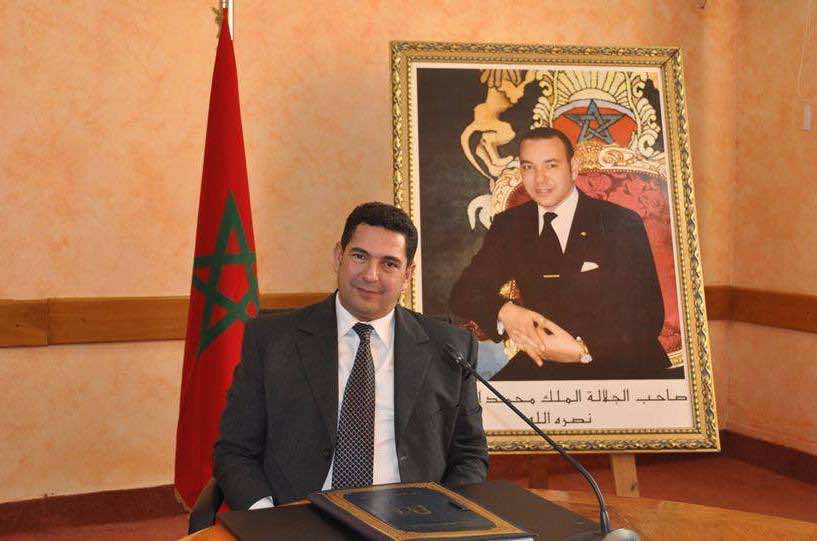
Rabat – Morocco’s Minister of Education Said Amzazi has said that Morocco has a “balanced and harmonious” language policy that preserves the position of all languages both the foreign and official languages.
Speaking at the Parliament on Tuesday, the minister announced that his administration has already started to implement all the strategic requirements for education reform.
Amzazi said that the reform will encompass the much-debated language policy. He emphatically explained that the policy is part of the strategic implementation of the requirements and basic references of the Moroccan Constitution.
The minister quoted the provisions of Chapter 5 of the Constitution, which emphasized the importance of the Arabic and Amazigh (Berber) language for Morocco. His point was that adopting foreign languages as for teaching scientific subjects in schools does not equal total abandonment of the country’s national languages.
Importance of foreign languages
While the constitution acknowledges the special importance of Arabic and Amazigh, the minister argued, it also stresses the importance of the widely spoken foreign languages because they are essential for communication, knowledge, and openness to different cultures and civilization.
Read Also: The Challenges of Morocco’s Many Languages Lead to Academic Debate
Amzazi said that the education strategic vision 2015-2030 “ensures the presence of the two official national languages.”
The minister’s comments on the importance of foreign languages in the education system comes amid an intense debate about which language should be used in teaching scientific subjects in Moroccan schools.
As the debate intensifies, however, it has also involved the role of languages in affirming or questioning national identity, pride, and honor.
Several Moroccan politicians emphasize the importance of preserving the official national languages in the education system. For other, more left-leaning teaching scientific subjects is a more reasonable choice to propel Morocco in the era of global competitiveness.
In his speech before the Parliament, Amzazi attempted to convince the parliament to vote on the draft framework Law 51.17, a bill which he said seeks to make students proficient in foreign languages.
The bill has been vigorously criticized by several politicians and scholars defending Arabic language. They argued that adopting foreign languages in schools will subsume Moroccan culture and identity.
In April the National Coalition for the Arabic Language launched a petition to oppose Amzazi’s proposed draft law. The coalition also held a press conference to oppose the government’s plans to prioritize French in some subjects in Moroccan schools.
But the heavy criticism does not seem to have discouraged Amzazi. The minister is adamant that teaching technology and science in foreign languages will enable the Moroccan system to overcome the problems associated with the different languages used in secondary schools and universities.
As far as Amzazi is concerned, foreign languages remain “essential for scientific and technological research as they provide more references, especially in technology, engineering, and scientific teaching.”