
 Join on WhatsApp
 Join on Telegram
Marrakech – Yennayer, also known as Id Yennayer or Id Suggas (meaning “night of the year”), is the first month of the indigenous Berber (Amazigh) calendar, marking the Amazigh New Year. The very name “Yennayer” comes from the Amazigh words yan (“one”) and ayyur (“month”), literally signifying “the first month.”
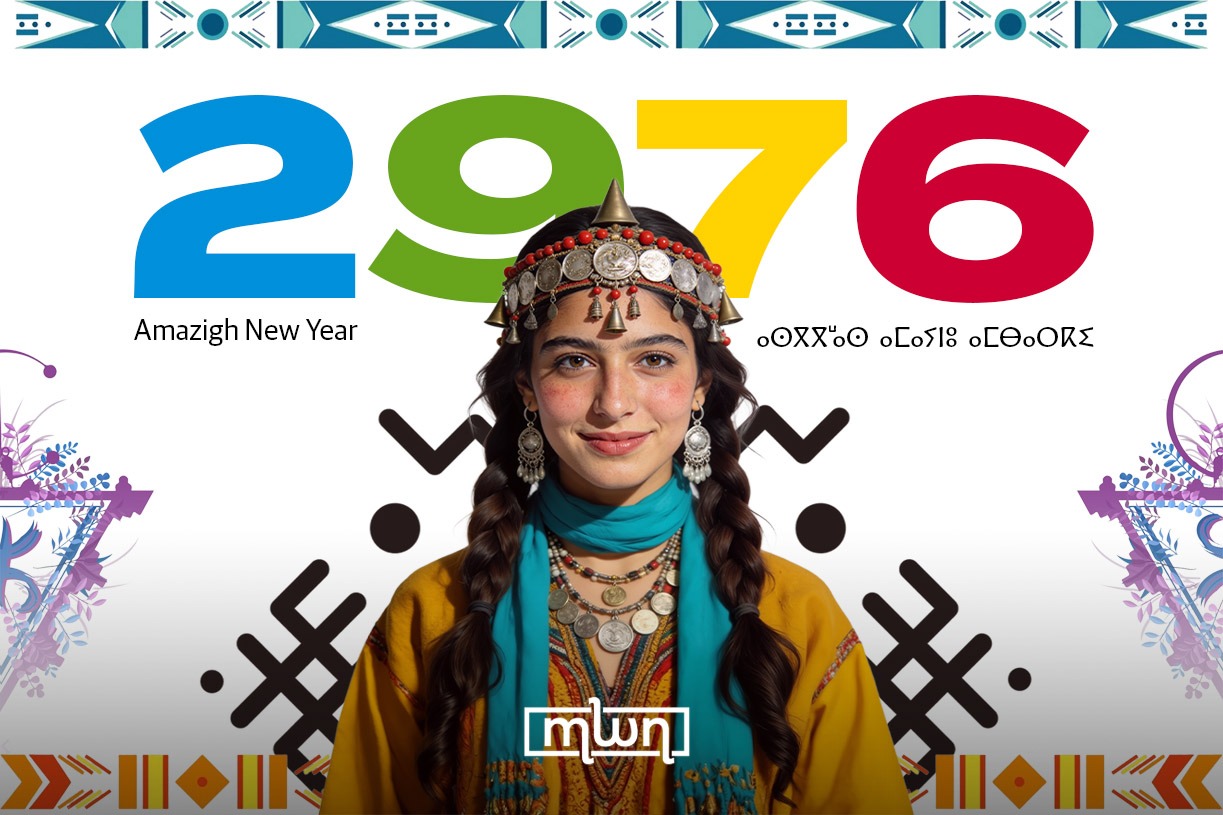
According to Amazigh cultural tradition, this calendar is currently in its 2976th year – a count that traces its mythical origin to 950 BCE, when the Amazigh king Shoshenq I (also spelled Chachnaq or Sheshonq) ascended the throne of pharaonic Egypt.
Algerian Amazigh scholar Ammar Negadi formalized this calendar in 1980, choosing 950 BCE as “Year 1” to honor that ancient Amazigh triumph. Thus, by Amazigh reckoning, the year 2026 CE corresponds to the year 2976.
This origin story of Yennayer celebrates a proud historical narrative – the Amazigh victory over an Egyptian Pharaoh – but it is important to note that it blends myth and history. Some historians point out that Pharaoh Ramesses II, whom Shoshenq is often said to have defeated, actually died centuries before Shoshenq’s reign, casting doubt on the literal accuracy of the legend.
Nonetheless, the symbolic truth remains potent: Yennayer represents the longevity and continuity of Amazigh civilization. Equally importantly, Yennayer has long been a celebration of agriculture and the earth. Many view it not as a commemoration of a battle at all, but as a New Year for farmers – a time to honor the land’s fertility and to pray for abundant crops in the coming season.
In fact, the holiday is widely shared among Moroccans of all backgrounds, including Arabic-speaking rural communities, who often call it the start of the “agricultural year” (ras l-‘am al-filāḥī) and celebrate it around 12-14 January each year.
This year carries particular resonance, as recent rainfall has revived long-parched fields after nearly seven consecutive years of drought, lending Yennayer renewed meaning as a marker of hope, fertility, and agricultural renewal.
When and how Yennayer is celebrated
By convention, Yennayer falls in mid-January. The Amazigh calendar’s first day corresponds to the 12th or 13th day of January in the Gregorian calendar, reflecting the ancient Julian calendar still used in rural almanacs.
Traditionally, many Amazigh communities begin celebrations on the evening of January 12, with festivities continuing into January 13 and 14. January 13 has become the focal point of the celebration (recently formalized as the national holiday date) in Morocco, marking the New Year’s Day of ⵣ2976. Yennayer ushers in joyous gatherings and elaborate rituals that have been passed down for generations.
Cataloguing the full range of Yennayer customs across Morocco’s regions would require pages, as what is described here represents only a small fraction of a far richer and more varied cultural repertoire.
One of the most distinctive features of Id Yennayer is the preparation of special communal meals that symbolize plenty and prosperity. Families work together to cook dishes that are richer and more festive than everyday fare, using the bounty of the land.
In many regions of Morocco, the centerpiece is a lavish seven-vegetable couscous or a hearty porridge. In the southeastern oases (Draa-Tafilalet and surrounding areas), people speak of “sebaa khodhar” – literally “seven vegetables” – as an alternate name for Yennayer, because of the custom of preparing couscous with seven kinds of crops from the field.
Likewise, in communities of the Atlas and Souss, a thick porridge called Tagoula (asida) holds pride of place. Tagoula, made from barley or cornmeal slow-cooked with water and a pinch of salt, is served warm and generously drizzled with smen or oudi (aged butter), honey, and argan or olive oil.
In other regions, families prepare berkoukch – a hand-rolled couscous of coarse semolina – or orkimen, a rustic grain-based dish associated with winter sustenance. Together, these foods form an ancient culinary repertoire, simple yet deeply nourishing, that connects Yennayer celebrations to the staple diets of Amazigh ancestors.
Around the Yennayer dinner table, families engage in playful rituals of augury and sharing. A time-honored custom is to hide a token – typically a date stone or almond – in the couscous or tagoula dish.
As everyone eats together from the large communal bowl (tazlaft), they eagerly search for the hidden token. The person who finds the “lucky bite” – known in some areas as the amnaz (the “seed of the year”) – is believed to be especially blessed for the new year.
Traditionally, that fortunate family member may be symbolically “entrusted with the household granary keys” for the year – a lighthearted way to confer responsibility for the family’s prosperity on the one who uncovered the auspicious token.
This role was taken seriously in older custom: the finder of the date pit would act as a sort of “providence master” of the home, ensuring food supply and good management until next Yennayer. Children are often exempt from this duty, but they join in the fun – elders sometimes intentionally hide the token so that it is only found after everyone has eaten heartily, encouraging even the little ones to fill their bellies.
The underlying message is one of abundance: no one should go hungry into the new year, and by finishing the meal together the family symbolically banishes famine in the coming cycle.
Yennayer night is also a time for family storytelling and games by the fireside. As the special meal cooks slowly – tagoula, for instance, might simmer for hours over a wood fire – grandparents and parents recount old Amazigh folktales, legends, and life stories to the children.
This oral heritage transmission in the long winter night knits the generations together, reinforcing identity and wisdom. Families may play traditional games; one described in southeastern Morocco is “waz tyuy,” an odd-or-even guessing game played with almonds, in which players wager almonds based on guessing whether the number hidden in the other’s hand is odd (waz) or even (tyuy).
Such activities keep the atmosphere lively and teach the values of competition, wit, and sharing. All the while, traditional music and dance can be heard in many communities. In Amazigh villages, troops perform collective dances like ahwach – rhythmic singing and dancing in groups – and troubadours (rouaiss) play ancestral melodies on lutes and rebabs late into the night. These arts invoke communal harmony and joy as the old year turns to new.
Another widespread practice on Yennayer is to mark the occasion with symbols of renewal and auspicious beginnings. It is common in many families that children receive new clothes or a first haircut at Yennayer as a sign of growing up in the new year.
Farmers take omens from nature: men might plant an olive tree sapling on New Year’s Day or place tall stalks of fennel or reeds in their fields – gestures to encourage a fruitful growing season and “high crops.” In some areas, women perform a rite called “azegzaw asgas” (literally “greening the year”) by going out at dawn to gather fresh green grasses, herbs, and palm leaves from the fields, bringing armfuls of green into the village to ensure the year is verdant and peaceful.
And before the family breakfast is eaten on New Year’s morning, a small portion of the unsalted porridge or soup may be left outside as an offering. The custom is known as “asifd,” which means feeding or giving the spirits their due. Only after that do the women salt the dish and serve it, the idea being to start the year by honoring the invisible guardians of nature and ensuring harmony between humans and the spirit world.
While they vary across regions, these practices all reflect a common theme: Yennayer is a celebration of fertility, renewal, and the balance between people and their land.
Amid these celebrations, Amazigh families and neighbors exchange good wishes. In Tamazight, people greet one another with expressions such as “Aseggas Amaynou,” “Aseggas Ighoudan” (Happy New Year), or “Aseggas Ambarki” (Blessed New Year), formulations widely used in Morocco, while “Aseggas Ameggaz” – though familiar through Amazigh media and Kabyle usage in Algeria – remains less common in Moroccan everyday speech.
These greetings are as ubiquitous during the Amazigh New Year as “Happy New Year” is on January 1st. The atmosphere is one of gratitude for having made it through the previous year and hope or optimism that the new one will bring health, prosperity, and peace.
Indeed, Yennayer has traditionally been a time to settle disputes and reset social harmony – a sort of cultural New Year’s resolution time. In rural communities, neighbors might reconcile any outstanding disagreements on this occasion, and families reaffirm their bonds with visits, shared food, and laughter. All are gestures toward starting the year with a clean slate, in unity.
Cultural significance and Amazigh identity
Beneath the feasting and folklore, Yennayer carries profound cultural and symbolic significance for the Amazigh people. Anthropologically, it is a classic rite of passage for the year, packed with symbols of regeneration. Nearly every element of the celebration – the bountiful harvest foods, the green herbs, the first haircuts, the planted trees, the hidden seed in the meal – is meant to usher in baraka, the blessing of abundance and good luck.
By eating richly on Yennayer, communities symbolically stave off hunger for the whole year. By welcoming in the “invisible forces” of nature and spirit with small offerings and prayers, they seek protection and balance. Many Amazigh see Yennayer as a celebration of fertility (of both the earth and the people) and a thanksgiving for the cyclical gifts of nature.
It is, in essence, a New Year festival of the land, observed at the threshold of the agricultural cycle when fields are green, and the promise of spring beckons. It is a time to celebrate Mother Earth and the life she makes possible – a theme resonant with ancient agrarian traditions around the world.
Just as importantly, Yennayer has acquired a powerful role as a marker of Amazigh identity and resilience. For centuries, Amazigh communities across North Africa (in Morocco, Algeria, Tunisia, Libya, Egypt’s Siwa oasis, as well as in the Sahara and Sahel) quietly maintained these New Year customs in the private sphere.
During colonial times and after the formation of modern nation-states, the Amazigh language and culture were often marginalized in favor of Arabic or European cultures. Open celebration of Amazigh heritage was, at times, discouraged or even repressed in the 20th century.
Yet Yennayer endured as a folk tradition, especially in rural areas and within families. Amazigh farmers continued to refer to the Julian-agricultural calendar for planting seasons, and “hagouza” (a local Moroccan Arabic term for Yennayer) was observed in villages as a cherished annual feast even if it had no official recognition.
This persistence has made Yennayer a symbol of cultural survival. Celebrating the Amazigh new year was a way for the community to assert its identity and connection to an ancestral heritage spanning three millennia. In the Amazigh narrative, Yennayer’s continuity shows that Tamazight (the Amazigh language and culture) can weather attempts at erasure – much like an olive tree living through harsh seasons and still bearing fruit each year.
In recent decades, Yennayer moved from the private to the public arena as part of a broader Amazigh cultural revival. Starting in the 1960s and increasingly by the 1980s, Amazigh cultural associations and researchers began to promote Yennayer openly as “Amazigh New Year’s Day” and to lobby for official acknowledgment.
They highlighted that the holiday encapsulates core Amazigh values of unity, sharing, and respect for nature, and they argued that recognizing it would affirm Morocco’s Amazigh roots. Each January, Amazigh activists organized cultural evenings, street parades, carnivals, concerts, and conferences to celebrate Yennayer and educate the public.
These grassroots festivities gained popularity not only among Amazigh but among many Moroccans, prompting even local municipalities to support them with public programs.
The events often featured people dressing in beautiful Amazigh caftans and djellabas with traditional jewelry, performing ahwach dances and playing drums and nafir trumpets in city squares – a vibrant display of Morocco’s indigenous heritage.
The growing visibility of these celebrations signaled a “reclamation of identity” in a country that had officially long described itself as Arab and Islamic. Making Yennayer a public feast emerged as one of the central cultural demands of the Amazigh movement, framed as a means of reclaiming civilizational symbols and ensuring that Amazigh communities do not feel alienated within their own land.
From marginalization to official recognition
After years of activism, Morocco has recently embraced Yennayer at the state level, reflecting a new appreciation for the country’s Amazigh heritage. A major turning point came in 2011, when Morocco’s constitution was reformed to recognize Tamazight as an official language of the kingdom (alongside Arabic). This constitutional change paved the way for further cultural recognition, acknowledging the Amazigh as a fundamental component of national identity.
Amazigh advocates intensified their calls for Yennayer to be made a national public holiday, noting that the Islamic Hijri New Year and Gregorian New Year were already official holidays. Year after year, petitions were submitted and cultural demonstrations held to press this point.
Resistance persisted for a time – some officials argued that the state should wait until Amazigh language reforms were fully in place, while others harbored ideological reservations, fearing that elevating an “Amazigh” holiday might diminish the status of Arab-Islamic traditions. A few detractors even dismissed the Amazigh New Year as a “recent invention” or a “pagan custom,” suggesting (incorrectly) that it was created to undermine the Islamic New Year.
However, these arguments were met with strong rebuttals from academics and community leaders. Amazigh voices have widely and forcefully rejected the notion that Yennayer is a French invention, pointing out that it has been celebrated by families for generations, long before France’s colonization of North Africa.
Proponents stressed that Yennayer is a cultural celebration with no religious conflict, one that Moroccans had long observed alongside Islamic holidays without issue. They also pointed out that neighboring Algeria officially recognized Yennayer in 2018, setting a precedent for honoring Amazigh culture.
Ultimately, the advocacy bore fruit. On May 3, 2023, King Mohammed VI announced that Yennayer would become a national holiday in Morocco, “just like the 1st of Muharram (Islamic New Year) and January 1st.” This royal decision was implemented by the government, which amended the law to add January 14 as a paid public holiday every year in celebration of the Amazigh New Year.
The news was met with jubilation by Amazigh communities and supporters. After decades (if not centuries) of informal observance, 2974 (2024 CE) became the first Amazigh New Year to be officially celebrated across Morocco’s institutions.
Indeed, in January 2024, Morocco saw an unprecedented flourishing of public events for Yennayer: schools held special lessons on Amazigh culture, municipalities hosted concerts, exhibitions and communal couscous feasts, and even national TV featured programs on the New Year traditions. What had often been a private family feast was now a matter of national pride, celebrated openly from the smallest village to the King’s palace.
For many, this official recognition of Yennayer carries profound weight. It is both a victory for indigenous rights and a joyful affirmation of Morocco’s pluralistic identity. As Amazigh cultural experts put it, the holiday’s acceptance reflects a significant cultural transformation in Morocco – a maturation in which diversity is embraced as part of the country’s richness.
Importantly, Yennayer is not seen as belonging only to the Amazigh, but as a shared Moroccan heritage. Arabic-speaking villagers in the Rif, Atlas, and Souss have always partaken in “hagouza,” and now urban centers like Agadir, Casablanca, and Marrakech are joining in one big national celebration.
The sounds of Amazigh music and the aroma of couscous each January reaffirm a deeper truth: Moroccan identity rests on an Amazigh socle through which Arab, Islamic, African, and Jewish elements have historically converged. Yet decades of post-1970s Arabization policies have produced a contradictory legacy, which manifests today in waves of online harassment and cyberbullying targeting Amazigh identity, particularly around Yennayer.
Arabic was institutionalized during an era when Arab nationalism carried global prestige, and Morocco sought alignment with broader decolonial currents in the post-1960s world. Language policy became a political instrument of belonging – privileging imagined unity over historical depth, and sidelining Amazigh identity in the name of ideological solidarity.
This hostility ignores a basic historical fact: North Africa is demographically, genetically, culturally, and linguistically Amazigh at its core, even where Arabic is spoken, as Arab tribes that accompanied Islam gradually dissolved into Amazigh society rather than replacing it. Yennayer’s recognition thus marks not only a cultural celebration, but a corrective – reasserting the indigenous foundation upon which Morocco’s plural identity was built.
As Morocco and other North African nations move forward, Yennayer is a vibrant testament to the endurance of Amazigh culture. Each year on the 12th or 13th of January, when families gather to say “Aseggas Amaynou!” and share a bowl of seven-vegetable couscous, they participate in a ritual virtually as old as agriculture itself on these lands.
The 2976th Amazigh year is being welcomed not only with feasting and folklore, but with a new sense of official respect and cultural renaissance. By lighting the fires of community, memory, and hope in the heart of winter, the Amazigh have kept that cold at bay for millennia, and will no doubt continue to do so for generations to come. Aseggas Amaynou – Happy New Year!