


 Join on WhatsApp
  Join on Telegram
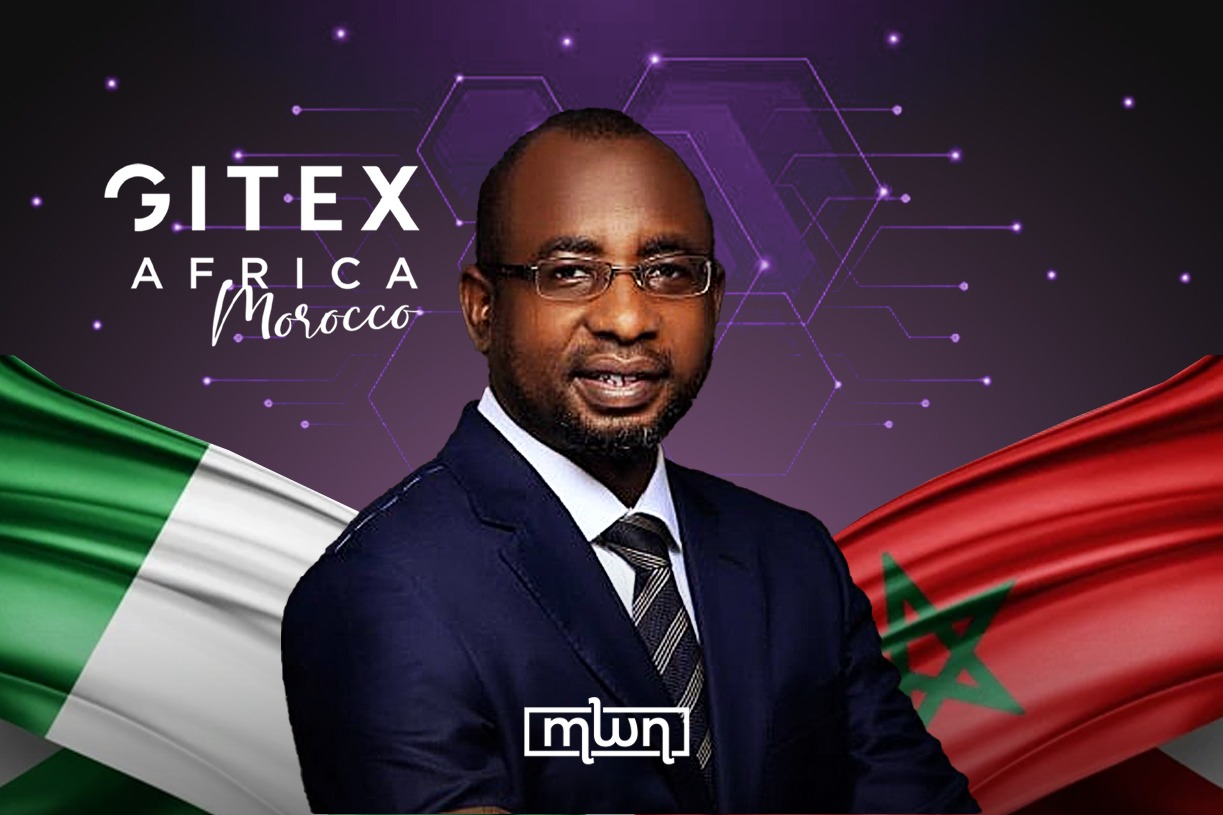
 Marrakech – As Marrakech gears up to host the fourth edition of GITEX Africa from April 7 to 9, one of the continent’s most influential technology officials is calling for deeper collaboration between Nigeria and Morocco – and framing it as the single most promising frontier for African digital cooperation.
In an exclusive interview with Morocco World News (MWN), Kashifu Inuwa Abdullahi, Nigeria’s Director-General of the National Information Technology Development Agency (NITDA) and the country’s Chief Technology and Information Officer, described the potential for bilateral tech partnership as “perhaps the most compelling and underappreciated opportunity” on the continent.
A graduate of the Massachusetts Institute of Technology (MIT) and one of the key architects of Nigeria’s digital transformation, Abdullahi has spent the past six years steering the country’s technology policy through a pandemic, a startup boom, and the global rush toward artificial intelligence. Under his watch, NITDA has rolled out national AI and data protection strategies, launched Africa’s largest tech talent program, and brought GITEX – one of the world’s biggest tech expos – to Nigerian soil for the first time in 2025.
Now, with GITEX Africa returning to Marrakech under the theme “Catalyzing Africa’s Digital Economy in the Age of Artificial Intelligence,” Abdullahi is turning his attention to what he considers the next logical step: intra-African partnerships built not on extraction, but on mutual capability.
“Morocco has made impressive strides in connecting its manufacturing base to digital systems,” he told MWN. “Nigeria has depth in fintech and startup ecosystem development that Morocco’s private sector could benefit from.” Those knowledge exchanges, he added, “are where real cooperation becomes concrete.”
He pointed to the African Continental Free Trade Area (AfCFTA) as a historic framework for intra-African commerce, but cautioned that the digital infrastructure to support it – e-invoicing standards, interoperable payment systems, cross-border data governance – is still under construction. “Nigeria and Morocco aligning on these frameworks could set standards that the entire continent follows,” he argued, calling the two nations “two of the continent’s most ambitious digital economies.”
On AI research, he identified agriculture, renewable energy, and manufacturing as sectors ripe for joint work. “Both countries together carry more weight than either would alone,” he insisted, noting that the climate challenge “demands that African countries pool their data and their talent rather than each building isolated systems.”
Slowing down to build on stronger foundations
Abdullahi’s approach to Nigeria’s digital trajectory has been defined by a willingness to resist the pressure for speed when it risks structural weakness. Reflecting on the hardest decisions he faced after taking over NITDA in 2019 – just before the COVID-19 pandemic struck – he recalled choosing to overhaul how government IT projects are reviewed and cleared, even when it meant sending proposals back for redesign.
“That meant saying no to proposals that were poorly designed, sometimes frustrating people who simply wanted to get moving,” he recounted. “It was not popular. But that discipline ultimately saved the government significant resources and, more importantly, prevented us from building on a weak foundation.”
A second pivotal shift came when his team began questioning who controls the infrastructure that millions of Nigerians now depend on. “As adoption deepened, we began asking the harder questions: who controls the infrastructure that millions now rely on? Who owns and governs the data being generated at scale?” he recalled.
That line of inquiry led to a suite of enabling frameworks – the National AI Strategy, the Nigeria Cloud First Policy, and the Nigeria Data Protection Regulation, among others. “It is the difference between countries that merely adopt technology and those that ultimately shape how it is used,” Abdullahi observed.
Yet the initiative he considers most consequential for the long term is the investment in people. Through the 3 Million Technical Talent (3MTT) program, NITDA is building a pipeline of digitally skilled Nigerians, while the Digital Literacy for All initiative targets 50 million citizens across formal, informal, and vocational pathways. “Technology makes our lives better, but people make the technology better,” he offered. “That is the philosophy behind everything we have done.”
AI, agriculture, and speaking Nigeria’s languages
Asked which AI applications will deliver the fastest impact on Nigerian lives, Abdullahi did not hesitate: agriculture. With over 70% of the population involved in farming – mostly as smallholder producers – he described AI-enabled precision agriculture as a direct path to better earnings and food security. He cited the AgriConnect Ogun project, a pilot in Ogun State that gives local farmers access to smart agriculture tools through cloudphones at minimal cost.
Nigeria’s youthful demographics present another decisive advantage. With a population north of 200 million, roughly 60% under the age of 25, Abdullahi sees AI-powered education as a way to leapfrog traditional learning gaps. The 3MTT program, which he called “arguably the largest tech accelerator in the world,” trains participants across 12 technical tracks, including AI. A complementary National AI Developer Training Program graduates over 1,500 young Nigerians annually in applied AI skills.
But for AI to serve Nigerians, he insisted, it must speak their languages. That belief was central in the creation of N-ATLAS, Nigeria’s multilingual, multimodal, open-source large language model, trained on Igbo, Hausa, Yoruba, and Nigerian-accented English. “N-ATLAS allows Nigerians to own their datasets and build language models that fully represent their history, culture, and on-the-ground realities,” he explained, adding that the model is accessible “not just to the digitally literate, but anyone who can speak their mother tongue.”
Across healthcare, education, fintech, and security, Abdullahi rattled off the most pressing challenges – food insecurity, doctor shortages, a deficit of teachers, the farmer-herdsman conflict – and maintained that AI solutions addressing them through disease detection, cattle tracking, personalised learning, and smart city applications “will have the greatest and most immediate impact.”
Africa as builder, not just emerging market
When Nigeria hosted the inaugural GITEX Nigeria across Abuja and Lagos in September 2025 – making it the first West African edition of one of the world’s largest tech expos, with participants from 78 countries and over 650 startups – Abdullahi saw this as more than a milestone. It was a corrective to a persistent misperception.
“The biggest misunderstanding is treating Africa as an emerging opportunity rather than recognizing it as an active contributor,” he declared. “Those are very different postures, and the difference matters.” What global visitors found in Nigeria, he noted, were “hundreds of active startups, including several of Africa’s billion-dollar technology companies.”
Abdullahi’s message to international tech players was direct: “Do not come to extract. Come to build with us rather than for us. The ecosystem is ready for that kind of partnership.”
Lessons for a continent still building Its digital spine
NITDA’s chief distilled three lessons from Nigeria’s experience that he believes apply across the continent. The first: infrastructure without people is wasted investment. Nigeria is expanding its fibre-optic network through Project BRIDGE and advancing digital public infrastructure for identity systems and data exchange – but recognized early that access without literacy produces no real impact. The National Digital Literacy Framework targets 95% digital literacy by 2030, with ICT embedded from kindergarten through university.
The second lesson concerns regulatory philosophy. He advocates what he calls “developmental regulation” – rules designed not merely to restrict, but to create markets, protect citizens, and stimulate innovation simultaneously. Nigeria’s Data Protection Regulation, now elevated to a full Commission, is being studied by governments across Africa. “That tells me there is a real appetite for learning from each other rather than defaulting to frameworks imported from Europe or the United States,” he remarked.
The third lesson, and the one Abdullahi returned to most insistently, is sovereignty. “If we are honest, African countries do not yet fully control their own digital infrastructure: the servers, the cloud systems, the AI models,” he acknowledged. Building that control, he contended, “requires collaboration between countries, because no single African nation can accomplish it alone. Shared infrastructure, aligned standards, interoperable systems. That is how the continent competes globally without losing its identity in the process.”
GITEX Africa 2026 in Marrakech is projected to draw over 1,500 exhibitors and tens of thousands of professionals from more than 130 countries. The flagship event arrives at a moment when questions of sovereignty, partnership, and who gets to shape Africa’s digital architecture are no longer theoretical. For Abdullahi, the answer starts with African nations building together. And Morocco, he made clear, is a natural partner in that effort.
Read also: Africa’s Creators Have the Audience, Now Investors Are Catching Up


