Rabat – When it comes to Western Sahara, US Republican Senator James Inhofe has a strained relationship with facts.
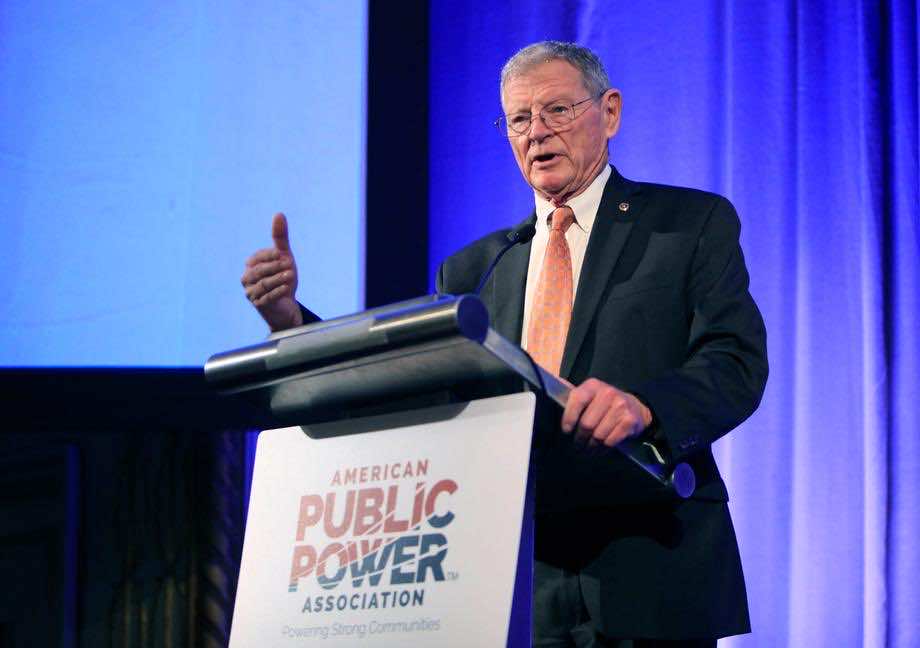
On November 10, the Oklahoma representative, who is also the chairman of the US Senate Armed Services Committee, took the stage of the Senate floor to bring Western Sahara’s decades-long conflict to America’s attention.
One of the most ardent pro-Polisario voices in the highest corridors of power in Washington, the Republican representative is also apparently proficient in the Trumpian art of redefining reality on one’s own terms.
“Last week, while most of the world was focused on our election and the pending results, a very significant action was taking place halfway around the world in Western Sahara,” the Oklahoma representative prefaced his short diatribe on Morocco’s “colonization” in Western Sahara.
Inhofe was most likely referring to the current tensions in Guerguerat, where Polisario elements have defied UN warnings for three weeks and interfered with civil and commercial traffic.
Until November 13, Morocco chose not to forcefully engage Polisario elements blockading the area. Instead, in a Green March commemorative speech on November 7, Morocco’s King Mohammed VI set some boundaries regarding which acts the country would eventually consider intolerable and worthy of a swift response.
Earlier today, Morocco announced it was deploying troops in Guerguerat to set up a “security corridor” to “restore free circulation of civilian and commercial traffic.”
Rabat reassured it had given ample time to the UN to reason with Polisario and that its “non-offensive operation” was a self-defense move in the face of repeated hostile acts from armed Polisario elements.
Predictably, Morocco’s response has since been framed in pro-Polisario quarters as an outright act of war and a “military aggression against peaceful protesters.”
Inhofe cited “concerning reports” to hint at the Polisario camp’s framing of an eventual Moroccan response. “We’re also hearing concerning reports that he’s sending military forces to the region as well in a clear escalation,” he said of the royal speech.
In his speech on November 7, King Mohammed VI was adamant that the country will not respond to “provocations” designed to stain its commitment to the ongoing UN mediation and the diplomatic gains it has made as a result. He insisted, however, that “Morocco will not waiver in its position” and will respond to any “attempts designed to undermine the security and stability of its southern provinces.”
Ahistorical history
In Inhofe’s world, however, the King’s speech was but a glowing example of Morocco’s inherently repressive and colonial state machinery.
That the royal address came in the week when the US and the world apprehensively waited to discover the name of America’s next president, he argued, was proof that “Morocco chose that time — likely purposely — to push back on protests by Western Saharan on their own land.”
For somebody who claims to have above-average knowledge of the history of the Western Sahara conflict, it takes staggering audacity to find some sense of staged coincidence between the US election week and Morocco’s celebration of the 45th anniversary of the Green March of November 6, 1975.
With or without the US elections, Morocco’s King would have, as has been the case for 45 years, given a speech on the Sahara issue.
In a sense, Senator Inhofe’s comments on Morocco’s supposedly dubious timing of a national celebration were at best a juvenile amalgamation of two things not even remotely linked.
When writing or speaking about Western Sahara, the journalist and anthropologist Attilio Gaudio wrote in his comprehensive history of the origins of the Sahara dispute, most Western intellectuals and politicians fall prey to a caricatural recounting of history.
The result, he writes, is the triumph of outrage and conviction over historically grounded analysis. Where does this stem from? It comes, according to Gaudio, from a “profound ignorance of the history and social realities of the Maghreb.”
Read also: Polisario’s ‘American Friends’ and Politics of Evangelical Humanitarianism in Tindouf Camps
Inhofe’s speech is rife with such a skewed, ahistorical telling of history. Unwilling — or perhaps unable — to navigate through the muddy history of the Sahara conflict, he offers moralistic distortions and blame-casting. He reduces the region’s convoluted history to one simple, misguiding episode: Spain left and Morocco invaded.
In this incomplete, misleading version of history, all you need to know is that Morocco is responsible for the escalations and the perceived failure of the UN mediation. Morocco, Inhofe pronounced, has pushed for the conflict to be “frozen” so that it can plunder Sahrawi resources while the world looks away.
This is obviously overblown, inaccurate. But then again, to convince the self-proclaimed “friends” and “advocates” of the world’s downtrodden, you have to present Morocco, as Inhofe so shrewdly does, as always poised to escalate hostilities with unarmed civilians “to claim more and more land, resources and rights that they have no lawful claim to.”
So, nothing about the recent waves of development projects and local’s satisfaction with them. Nothing about centuries-old tribal history and most Sahrawi tribes’ historical and continued identification with Morocco. Nothing about the struggle of Moroccan nationalists in the 40s and 50s to liberate both the Rif and the then Spain-occupied Sahara. Nothing about the Madrid Accords between Morocco, Mauritania, and Spain, or the series of pre-hostility agreements between Algeria and Morocco regarding the Moroccan nature of the disputed region. History began in 1975.
But Inhofe’s historical gaslighting is not even the strangest, daringly ahistorical, part of his tirade.
“Morocco has repeatedly attempted to use a road in this region to transport goods in violation of the UN ceasefire agreement,” he said, again speaking of the tensions in Guerguerat. He added: “It was this illegal use of the territory that the Western Saharans were peacefully protesting.”
Who needs facts?
Both claims are false. Civil and commercial traffic is guaranteed by the UN ceasefire agreement, as the UN has made clear in a series of warnings to the Polisario Front.
What violates the UN agreement, however, is Polisario’s obstruction of traffic in Guerguerat. Also, the pro-Polisario “protests” in the area are fundamentally due to the sepratist group’s growing discontent with the ongoing UN-led political process.
What’s more, Inhofe’s description of the latest developments in the Sahara dossier begs the question of whether he has really been, as he claimed, closely following recent debates about the conflict.
Despite a mountain of contradictory evidence, including unwitting acknowledgment by the Polisario leadership that Morocco has been winning on the diplomatic front in recent years, Inhofe has his own make-believe theory of what has really happened in the last months.
“Everyone is in agreement—on our side we have the African Union, which is comprised of 55 member states.We have most of the European Community, who support the UN efforts,” he claimed. “So the rest of the world is on our side.”
A cursory glimpse at the latest UN Resolution and an even sloppier googling of the African Union’s current stance on the Sahara question are enough to see what is really at play as Inhofe audaciously refuses to deal with reality on reality’s terms.
For much of the past few years — since 2007 at the UN and since January 2017 at the African level — Polisario has found itself increasingly cornered and even abandoned by some former allies.
Morocco, in the meantime, has secured the support of the overwhelming majority of African countries, made new friendships in Latin America, including with erstwhile Polisario sympathizers, and received plaudits for its “credible” and “pragmatic” proposal to end the Sahara crisis.
Read also: Western Sahara: Everything You Should Know About Morocco’s Autonomy Plan
But it is easy enough, judging from post-2016 lenses, to make perfect sense of Inhofe’s disregard for facts that do not corroborate his account of the Western Sahara conflict.
In the aftermath of Brexit and Donald Trump’s victory over Hilary Clinton in 2016, the Oxford Dictionary chose “post-truth” as its word of the year. This was probably the first official, institutional recognition of the diminishing value of the truth and historical facts in a world that worships (personal) opinions, beliefs, or convictions.
But there was more to this Trump era vogue than the “death of truth” or the fetishization of headline-grabbing grandiosities. There was “post-lie,” which UCL professor Peter Zusi has felicitously theorized as the reign of provable falsehood or plausible falsity. “If post-truth is inherently cynical,” Zusi wrote, “post-lying requires a hypertrophic belief in one’s truth…. Post-lying is therefore hardened against persuasion.”
Then there were “alternative facts,” that very Trump administration-defining art of replacing supposedly boring and irrelevant facts with spectacular, grand falsehoods.
And then came the much more resounding triumph of the outrage merchants — those Manichean identity politics and social justice gurus for whom, as American essayist Coleman Hughes has put it, “being on the right side of history is worth being on the wrong side of facts.”
Senator Inhofe may not be well-versed in the language and aesthetics of left-leaning “woke-ism.” But his pro-Polisario activism readily falls in the category of the seductive gospel of being on the right side of a truncated history.
After all, who needs facts in a world where moral outrage is fashionable and revered? Why bother about context and nuance when passionate and relatable grandstanding is almost always rewarded over a level-headed analysis of history’s complex episodes?