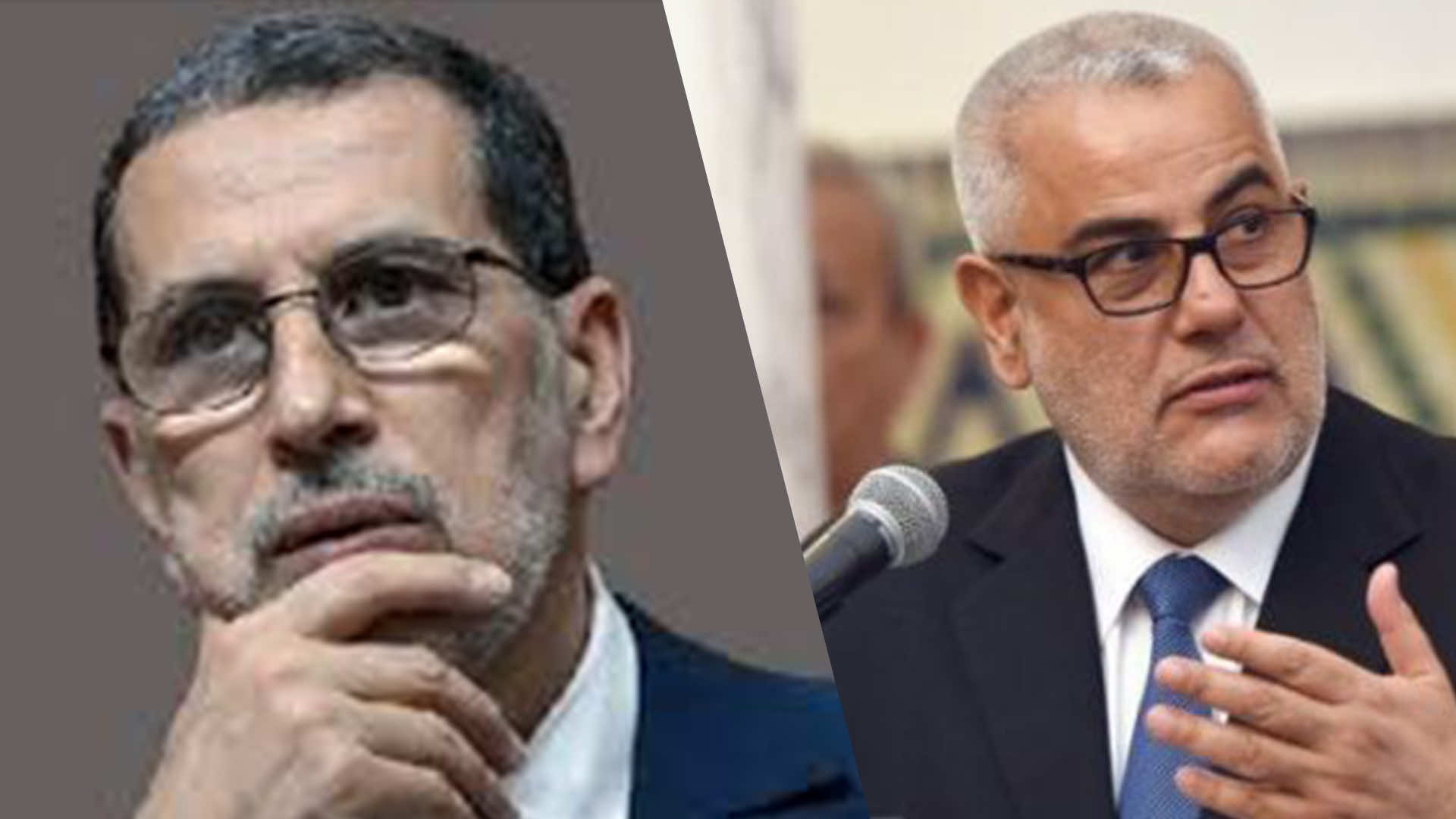
Morocco’s ruling party, the Islamist Justice and Development Party (PJD), is not happy with a game-changing bill calling to amend the country’s electoral code.
In a statement on Friday, March 12, Mustapha Ibrahimi, the president of PJD’s parliamentary group at the Moroccan House of Representatives, announced the party will refer to the constitutional court to appeal against adopting a newly passed bill on electoral quotas.
As Morocco prepares for general elections, scheduled for September this year, a number of political parties have called for updating in the country’s electoral system. Some proposed amendments have concerned gender equality and the extension of the voting and representation rights to Moroccans residing abroad.
The PJD leadership, however, appears to have been especially upset by one of the proposals calling to change the current electoral regulations for electoral quotas to be calculated on the basis of registered voters.
Ibrahimi’s announcement came just within hours of the adoption of the new electoral quota regulations by the House of Councillors.
Read Also: Abdelilah Benkirane Slams PJD’s Stance on French Teaching Law, Calls on El Othmani to Resign
The “organic law” provides for distributing parliamentary seats based on the number of registered voters — a substantive change to the current system, which bases the calculation on the number of valid votes.
PJD is building its appeal on articles of the Moroccan constitution that appear to hold the act of voting — preferably valid votes — as one of the most essential pillars of the country’s flawed, but budding, democracy.
“The constitution says that the nation expresses its will directly or through its representatives. The vote is a right and a national duty,” Ibrahimi said in his Friday announcement.
He noted he is “confident” the Constitutional Court will side with the PJD’s reading of the constitution’s stance on the debate over electoral quotas. But should the court validate the newly adopted amendments, he cautioned, “we will be faced with three contradictory applications of the electoral quota.”
Ibrahimi explained, “For the legislative elections, it will be calculated on the basis of registered voters. At the communal level, seats will be distributed on the basis of valid votes. And in professional elections, the calculation is made on an average,” he said. “At least one of these three provisions is unconstitutional.”
A divided PJD
PJD’s appeals come in a profoundly sensitive period for the Islamist party. To most observers of the Moroccan political scene, the party’s visceral opposition to the draft bill on electoral quotas is one of the many fights its embattled leadership is waging for its political survival.
In addition to fighting to keep its parliamentary majority in this year’s elections, the argument goes, the Islamist party is battling hard to stay politically relevant in the coming years and decades.
One reason for such a gloomy assessment of the party’s present situation — and future — is the ungainly sight of ideological divides and far-reaching leadership wranglings of which it has been the theater in recent months.
Since December 2020, the month when Morocco announced its diplomatic rapprochement with Israel, a number of dissenting PJD voices vented their frustration with “normalizing” the “Zionist entity.” Some, though marginal, voices even urged Saad Eddine El Othamni, the party’s Secretary-General and incumbent Head of Government, to resign from both posts.
Most recently, the ongoing debate on the legalization of cannabis further deepened the internal squabbling that the “normalization” episode had revealed.
Earlier this week, Abdelilah Benkirane, a PJD founding member and former Prime Minister, announced his decision to suspend his membership of the party. Benkirane, known to be the voice of PJD’s hyper-conservative wing, takes issue with his party’s support to legalize cannabis.
For Benkirane, both the cannabis debate and other deeply fraught socio-political issues that have animated Morocco’s political life in the past few years are attempts to rob the country of its fundamentally conservative and Islamic soul.
As internecine wars add to the concerns of a party increasingly faced with “progressive” demands from large segments of an inexorably changing Morocco, it remains to be seen what the future has in store for Morocco’s Islamist party.