


 Join on WhatsApp
  Join on Telegram
 Rabat – Morocco’s Court of Cassation settled the debate surrounding the legal bindings of biological fathers to illegitimate children (children born out of wedlock).
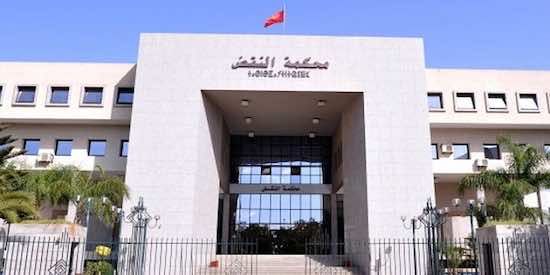
After nearly five years of deliberation surrounding a case submitted to the Family Justice Department of Tangier in 2016, the Court of Cassation ruled that biological fathers are not responsible for children born outside of marriage and only the mother has a legally binding relationship with the child.

The recent ruling by the Court of Cassation contradicts the 2017 ruling of the Tangier Court of First Instance concerning the same case.
Read also: Historic First in Morocco: Justice Recognizes Natural Filiation
A highly unexpected ruling by the court declared that the father would have to pay MAD 100,000 ($11,200) to the mother. The court stated that the father committed “debauchery” (having a sexual relationship outside the institution of marriage) according to Chapter 490 of the Criminal Code. Additionally, the judge ruled that the UN’s Convention on the Rights of a Child (OHCHR) takes precedence over the Moroccan family code in this case.
The mother argued that the father’s absence damaged her and the child mentally and the prosecutors supported the lofty settlement by citing tort liability.
Tort liability refers to the code of Dahir, enacted in 1913, which states: “Any act of a man who, without the authority of the law, knowingly and intentionally caused material or moral damage to another, is obliged to compensate for it.”
Although Moroccan law is heavily influenced by the French penal system, family matters refer to the Moroccan family code (Moudawana).
The family code
The family code was established in accordance with Islamic law and deals with issues of polygamy, minimum age of marriage, degradation of women in society, and the right to divorce.
In a legitimate marriage, the family code declares the father to have a legal responsibility to raise a child. “Children’s interests with respect to custody are also guaranteed by awarding custody to the mother, then to the father, then to the maternal grandmother,” states the document.
Tangier’s Court of Appeals overturned the ruling of Tangier Court of First Instance in October 2017 after the biological father argued that the family code protects his right to dispute paternity.
The final ruling by the Court of Cassation on illegitimate children is controversial as it adheres to the Moroccan constitution and family code but must also recognize international law on children’s rights.
Legal contradictions
Article 32 of the constitution states that “the family based on the relationship of legitimate marriage is the basic cell of society,” but adds “the State will ensure equal legal protection, and equal social and moral consideration for all children regardless of their familial status.”
Article 148 of the Moudawana contradicts Article 32 of the constitution, stating that “Illegitimate filiation does not produce any of the effects of legitimate filiation in relation to the father.”
The mother does not receive the same ruling as Article 146 states, “filiation, whether it results from a legitimate or illegitimate relationship, is the same in relation to the mother, as regards the effects which it produces.”
Additionally, Article 148 contradicts Article 7 of the UN’s Convention on the Rights of a Child that states children bear “the right to know and be cared for by his or her parents.”
The Court of Cassation closed the case on illegitimate children in September 2020 and released the ruling to the public mid-April 2021.
International organizations for women’s rights have yet to comment on the ruling, but public backlash is expected as the ruling denies the mother and child alimony payments and other benefits.


